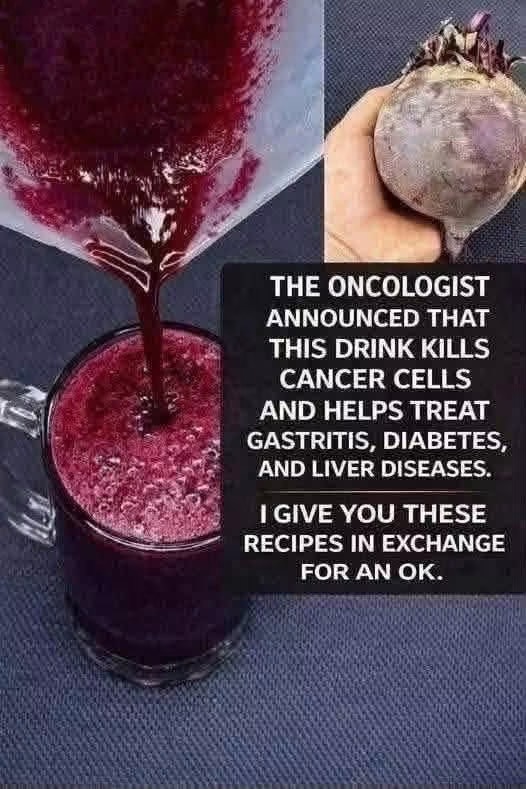
Beetroot creates one of the most beautiful homemade drinks you can make from an ordinary vegetable. Its naturally deep ruby color looks almost too dramatic to be real, while its mildly sweet, earthy flavor pairs wonderfully with apple, carrot, lemon, and ginger.
A fresh beetroot drink can provide fluids, plant compounds, vitamins, minerals, and a colorful addition to breakfast or lunch.
It is sometimes promoted as a drink that “kills cancer cells” or treats diabetes, gastritis, and liver disease. Beetroot is nutritious, but no individual food or juice has been proven to cure cancer or replace cancer treatment. A balanced diet can support health during treatment, but diet alone cannot control cancer.
The better reason to make this recipe is much simpler: it tastes refreshing, adds vegetables to the day, and makes an ordinary glass of juice considerably more interesting.
What Makes Beetroot Special?
Beetroot is the edible root of the beet plant.
It can be eaten raw, roasted, boiled, steamed, pickled, or blended into drinks.
Its intense purple-red color comes largely from natural pigments called betalains.
Beetroot also provides nutrients such as folate, potassium, fiber when the pulp is retained, and naturally occurring dietary nitrates.
Research has explored beetroot for cardiovascular health, exercise performance, and other possible effects, but it should still be treated primarily as a nutritious food rather than a medicine.
Beetroot and Everyday Wellness
A glass of beetroot juice can be part of a varied diet containing vegetables, fruit, legumes, whole grains, healthy fats, and appropriate protein foods.
Its strongest everyday advantage may simply be helping people eat more plants.
A homemade version can also replace heavily sweetened sodas or packaged fruit drinks.
If you blend the whole beet and keep the pulp, you retain more of the vegetable’s fiber.
Straining gives the drink a smoother texture, but removes much of that pulp.
Both versions work. It really depends on whether you prefer your drink smooth or slightly thick.
Can Beetroot Juice Kill Cancer Cells?
Beetroot contains compounds that have attracted research interest, and laboratory studies have examined beet-derived substances in relation to cancer cells.
But results observed in laboratory experiments are not evidence that drinking beet juice cures cancer in people.
The National Cancer Institute states that there is no proof that popular diets or supplements can treat cancer and that no single food or special diet has been shown to control the disease.
Someone receiving chemotherapy, radiation, immunotherapy, targeted therapy, surgery, or another cancer treatment should not stop or delay treatment because they have started drinking vegetable juice.
Healthy food can complement medical care.
It cannot replace it.
Beetroot and Blood Sugar
Beetroot naturally contains carbohydrates.
When an entire beet is blended and the pulp is retained, some fiber remains in the beverage.
When juice is heavily strained, it becomes easier to consume the natural sugars more quickly.
People with diabetes do not necessarily need to avoid beetroot, but portions matter and the drink should be considered as part of the day’s overall carbohydrate intake.
Healthy food and beverage choices can help people with diabetes manage blood glucose, blood pressure, and cholesterol, but diabetes remains a chronic condition requiring an individualized care plan.
For a lower-sugar version of this recipe, skip honey and use more cucumber and water instead of extra fruit.
Beetroot and Liver Health
Beetroot is also frequently marketed as a “liver cleanser.”
Your liver does not need a special juice to perform its normal functions.
For common metabolic fatty liver disease, established recommendations focus much more broadly on healthy eating, appropriate portions, physical activity, and gradual weight management when needed.
A beetroot drink may fit comfortably into that overall pattern when it is not loaded with added sugar.
It simply should not be presented as something that washes fat or toxins out of the liver overnight.
Beetroot and Gastritis
Some people tolerate beetroot drinks very well.
Others with sensitive stomachs, reflux, or gastritis may find that acidic additions such as lemon or large amounts of ginger make the drink uncomfortable.
If you have a sensitive stomach, prepare a gentler version.
Use less lemon.
Reduce the ginger.
Drink a smaller serving alongside food instead of having a concentrated glass on an empty stomach.
Persistent upper abdominal pain, repeated vomiting, black stool, unexplained weight loss, or vomiting blood requires medical evaluation rather than another homemade drink.
Beetroot Apple Ginger Juice
This colorful recipe makes approximately 2 liters.
It is naturally sweet enough that added sugar is usually unnecessary.
Preparation time: 15 minutes
Yield: Approximately 2 liters
Serving size: ¾ to 1 cup
Ingredients
- 3 medium fresh beetroots
- 2 medium carrots
- 2 sweet apples
- 1 large cucumber
- 1 medium orange
- 1-inch piece fresh ginger
- Juice of 1 lemon
- 4 cups cold drinking water
- 6 fresh mint leaves, optional
- 1 teaspoon honey, optional
- Ice cubes for serving
How to Prepare It
Wash your hands and clean the blender, knife, cutting board, pitcher, and storage bottles.
Rinse the beetroots, carrots, cucumber, apples, orange, lemon, ginger, and mint thoroughly.
Trim the beetroot tops and root ends.
Peel the beets if their skin is thick or damaged.
Cut them into small cubes.
Trim the carrots and cut them into smaller pieces.
Core the apples and remove the seeds.
Chop the cucumber.
Peel the orange and remove any visible seeds.
Slice the ginger thinly.
Place half of the beetroot, carrots, apple, cucumber, orange, and ginger in a strong blender.
Add two cups of cold water.
Blend until very smooth.
Add the remaining produce and water.
Blend again.
Pour everything into a large pitcher.
Stir in the fresh lemon juice.
Taste before adding honey.
The apples, carrots, orange, and beetroot usually provide plenty of natural sweetness.
Add the mint leaves if desired.
Refrigerate until cold.
Shake or stir before pouring.
Should You Strain It?
For more fiber and a thicker texture, leave the drink unstrained.
For a smoother juice like the one shown in many bottled recipes, pour it through a fine-mesh strainer.
You can also strain only half.
Mix the strained and unstrained portions together for a drink that is smooth without losing quite so much pulp.
That is my favorite compromise—the blender gets to work hard, but the strainer doesn’t steal all the good bits afterward.
Lower-Sugar Version
If you are watching carbohydrate intake, make the recipe more vegetable-focused.
Use:
- 2 beetroots
- 1 carrot
- 1 cucumber
- ½ apple
- ½ lemon
- ½ inch ginger
- 5 cups water
Do not add honey.
Serve one moderate glass alongside a meal rather than drinking several large servings at once.
Beetroot Berry Version
For an even deeper red drink, blend:
- 2 medium beetroots
- 1½ cups strawberries
- ½ cup blueberries
- 1 apple
- ½ lemon
- 4½ cups water
This version is fruitier and usually needs no sweetener.
Frozen berries work perfectly well.
Beetroot Orange Cooler
For a brighter citrus flavor, use:
- 2 beetroots
- 2 oranges
- 1 carrot
- ½ cucumber
- ½ inch ginger
- 4 cups water
Blend until smooth.
Serve over plenty of ice.
This version is naturally sweeter, so a smaller serving may be more appropriate for anyone monitoring blood sugar.
When to Drink It
There is no medically special time.
You can enjoy beetroot juice:
- With breakfast
- Alongside lunch
- After exercise
- As an afternoon drink
- Over ice during warm weather
It does not need to be taken on an empty stomach.
People who are sensitive to ginger or citrus may actually prefer having it with food.
One glass is enough.
Drinking two liters in one day will not multiply the benefits.
Why Your Urine May Turn Pink
Do not be surprised if your urine or stool becomes reddish or pink after eating a generous serving of beetroot.
Beet pigments can pass through the digestive system and cause a harmless color change in some people.
However, persistent red urine or stool should never automatically be blamed on beets.
If the discoloration continues when you have not eaten beetroot, or appears with pain, weakness, dizziness, or other symptoms, seek medical advice.
Storage
Fresh homemade vegetable juice is best consumed quickly.
Pour the drink into clean glass jars or food-safe bottles with tight lids.
Refrigerate immediately.
For the best freshness, prepare enough for about 24 to 48 hours rather than keeping a huge batch in the refrigerator for an entire week.
Natural separation is normal.
Shake well before serving.
Discard the drink if you notice:
- Mold
- Unexpected bubbling
- Pressure inside the bottle
- A fermented smell
- Sliminess
- An unpleasant or unusual flavor
Can You Freeze It?
Yes.
Freeze extra juice rather than leaving it refrigerated for many days.
Pour it into freezer-safe containers, leaving a little empty space at the top.
You can also freeze it in ice-cube trays.
Use the frozen portions within about one month for the freshest flavor.
Thaw overnight in the refrigerator.
Stir or shake before drinking.
Who Should Be Careful?
Anyone following a medically prescribed diet for kidney disease, diabetes, low blood pressure, or another chronic condition should make sure concentrated vegetable juice fits their individual plan.
People taking multiple medications should also avoid assuming that concentrated foods or supplements are automatically harmless.
And anyone receiving cancer treatment should tell the oncology team about supplements, herbal extracts, powders, or unusually concentrated wellness preparations. Some complementary products can interfere with treatment.
Normal food is very different from swallowing concentrated extracts.
Frequently Asked Questions
Can beetroot juice cure cancer?
No.
Beetroot is nutritious, but there is no evidence that drinking beetroot juice cures cancer or replaces established cancer treatment.
Can people with diabetes drink beetroot juice?
A moderate portion may fit into some diabetes eating plans.
Because beetroot and fruit contain carbohydrates, portions should be considered as part of overall blood-glucose management.
Does beetroot cleanse the liver?
It does not perform a special liver detox.
Healthy eating, physical activity, and weight management when appropriate are more established approaches for common metabolic fatty liver disease.
Can I make it without a blender?
Yes.
Use a juicer if available.
You can also cook the beetroot until tender, cool it completely, and blend it with water and the remaining ingredients.
Can I use cooked beetroot?
Absolutely.
Cooked beetroot creates a milder, sweeter drink and is easier for ordinary blenders to process.
Do I need honey?
No.
Taste the finished recipe first.
Ripe apples, carrots, oranges, and beetroot usually provide enough sweetness.
Can children drink it?
A small serving may suit many older children when they tolerate the ingredients.
Keep the drink lightly diluted and avoid making juice the main replacement for whole fruit, vegetables, meals, or plain water.
Final Thoughts
Beetroot juice does not need an impossible cancer-curing promise to be worth making.
Its naturally ruby color, earthy sweetness, and compatibility with apple, carrot, ginger, citrus, and berries make it one of the most interesting vegetable drinks you can prepare at home.
Enjoy it cold, keep some pulp for extra texture, avoid unnecessary added sugar, and refrigerate leftovers promptly.
A glass of beetroot juice can contribute vegetables, fluids, and variety to the day.
That may sound less dramatic than “kills cancer cells,” but it is a much more useful reason to keep a few beets in the kitchen.