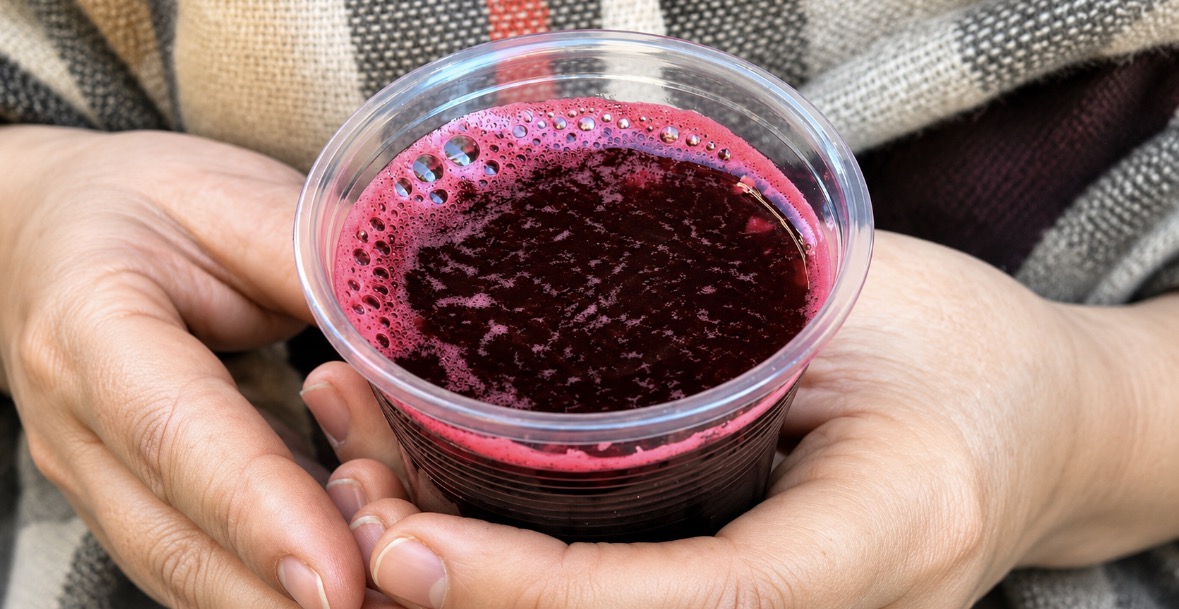
That deep burgundy drink with the pink foam is the kind of thing that makes you want to ask for the recipe. Its color is consistent with beetroot juice, although a photo alone can’t reveal the ingredients. The promise underneath it is much harder to support. Drinking a juice for three days hasn’t been shown to eliminate cholesterol, arthritis, or fatigue. Research on beetroot has explored some health effects, but the findings are more limited than the caption suggests.
For a drink worth making for its flavor, try the beetroot, apple, and lemon recipe below. It’s earthy, lightly sweet, and bright enough to serve over ice. Start with a small beet and taste before adding all the lemon. Those two choices make a big difference to the finished glass.
What Can Beetroot Juice Actually Do?
Beetroot Juice and Cholesterol
A systematic review of clinical trials found no significant overall effect of beetroot consumption on blood cholesterol or triglycerides. That gives little support to a claim that a few glasses can clear cholesterol from your blood.
Your body also needs cholesterol to build cells and make hormones. The goal is to manage levels that raise cardiovascular risk, particularly LDL cholesterol. A blood test can show your levels and help your healthcare professional decide whether dietary changes, medication, or both are appropriate.
Beetroot Juice and Arthritis
There’s no established three-day beetroot drink treatment for arthritis. Arthritis includes several conditions, and treatment depends on the type you have. For rheumatoid arthritis, early treatment can reduce inflammation and help protect joints from damage. Keep following your prescribed treatment plan if you decide to try a new food or drink.
Beetroot Juice and Fatigue
Beetroot contains dietary nitrate, which the body can convert into nitric oxide. Researchers have studied nitrate-rich beetroot juice for exercise performance, and some trials have found improved endurance, particularly in recreational exercisers. Results vary, and those studies don’t establish that homemade juice treats everyday fatigue.
If you’ve been unusually tired for several weeks, or tiredness affects daily life, arrange a medical appointment. Fatigue can have several causes, including sleep problems, anemia, and thyroid conditions. Finding the cause gives you a better chance of getting effective treatment.
Beetroot Apple and Lemon Juice Recipe
Makes 2 small glasses · Ready in about 10 minutes
This recipe is inspired by the drink’s appearance. Apple and lemon are additions chosen to balance the beetroot flavor.
Ingredients
- 1 small raw beetroot, about ½ cup peeled and chopped
- 1 medium sweet apple, cored and chopped
- 1 cup cold water
- 1 tablespoon fresh lemon juice, divided
- Ice, optional
How to Make It
- Wash the produce. Rinse the beetroot, apple, and lemon under running water before peeling or cutting. Trim the beetroot and cut it into roughly ½-inch pieces so the blender can break it down more easily.
- Prepare the apple. Remove its core and seeds, then chop it. Leave the peel on if you enjoy a thicker blended drink.
- Blend with cold water. Pour the water into the blender first. Add the apple and beetroot, then blend for 45 to 60 seconds. If the mixture stops circulating, switch off the blender and add a splash of water before continuing.
- Add the lemon gradually. Start with ½ tablespoon, blend briefly, and taste. Add the rest if you want a sharper finish.
- Choose your texture. Pour it straight into glasses for a thicker drink, or strain through a fine-mesh sieve for a smoother juice.
- Serve cold. Divide between two small glasses and add ice if desired.
How to Make Beetroot Juice Taste Less Earthy
A large beet can overwhelm the apple, so measure the chopped beetroot for your first batch. You can always increase it next time if you enjoy the flavor.
If the juice tastes too earthy, blend in another quarter of an apple. Choose a sweet variety such as Gala or Fuji for a mellower result. A tart green apple makes a noticeably sharper drink, especially once you add lemon.
If the flavor tastes concentrated but already balanced, add cold water a tablespoon at a time. Taste after each addition. Diluting gradually helps you avoid turning a good glass into something watery.
Straining changes the texture, too. If you’re unsure what you prefer, strain half the batch and leave the other half thick. Serve both equally cold so you can compare them fairly.
Blender or Juicer for Homemade Beetroot Juice
A blender works well for occasional batches and lets you choose how much pulp to keep. A dedicated juicer can be convenient if you regularly make vegetable juice, but consider the preparation and cleanup before buying.
| Equipment | Useful for | What to check |
| Countertop blender | Making two servings, smoothies, and other kitchen recipes | Whether the manual supports hard raw vegetables and how easily the jar rinses |
| Personal blender | Smaller batches | The maximum fill line and the amount of liquid needed to blend |
| Juicer | Making extracted juice regularly | How easily you can remove and clean the filter and pulp container |
| Fine-mesh strainer | Smoothing juice made in a blender | A size that rests securely over your bowl or pitcher |
For a juicer version, process the beetroot and apple, then stir in the lemon. Taste before adding water, since the recipe’s cup of water mainly helps a blender circulate the ingredients.
Where to Buy the Ingredients
Fresh beets are usually in the root vegetable section of grocery stores, produce markets, and farmers’ markets. Choose firm roots for this recipe. Small beets are convenient when you only need half a cup.
Plain cooked beetroot is another option if your blender struggles with raw vegetables. Check the package ingredients before buying. Pickled beetroot brings vinegar and seasoning into the drink, which changes its flavor considerably.
If you choose bottled beetroot juice for convenience, compare serving sizes and added sugars. Look for a pasteurized or otherwise treated product, particularly if you’re pregnant, older, or have a weakened immune system. Untreated fresh juice can contain harmful bacteria.
Storage and Preparation Tips
Make a small batch close to serving time. If you have leftovers, refrigerate them promptly in a clean, covered container and stir before pouring. Some separation is expected when a blended drink sits.
For quicker preparation, wash the vegetables and set out the blender and strainer ahead of time. Cut the apple just before blending, and rinse the equipment soon afterward so the pulp doesn’t dry onto it.
Frequently Asked Questions
Do I Need to Drink It for Three Days?
There’s no established three-day schedule for this recipe. Enjoy it when you want a vegetable-and-fruit drink, and follow your healthcare professional’s advice for cholesterol, joint symptoms, or persistent fatigue.
Can I Use Cooked Beetroot?
Yes. Use ½ cup of plain, chilled cooked beetroot. It blends more easily and gives the drink a softer texture. Start with a little less water and adjust after blending.
What If I’ve Had Kidney Stones?
Beets are high in oxalate. If you form calcium oxalate stones, ask your clinician or kidney dietitian whether you should limit beetroot. Advice depends on your stone history and urine test results.
Can I Leave Out the Apple?
Yes. Blend the beetroot with water and add lemon gradually. The result will taste more earthy and less sweet, so start with a small glass.
For your first batch, keep a little apple and lemon aside until you’ve tasted the blend. A small adjustment at the end can turn a drink you’re merely curious about into one you actually want to make again.