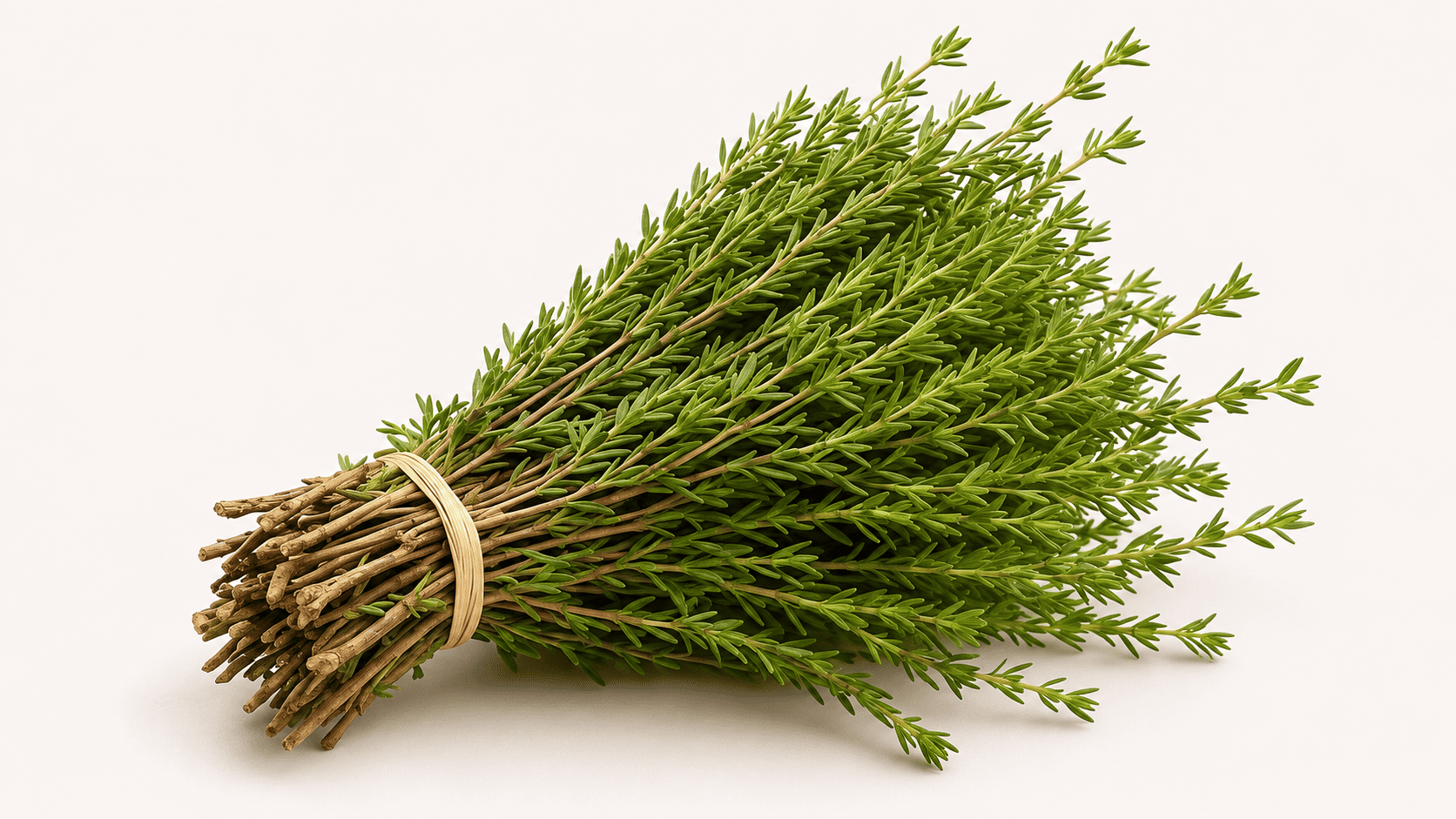
A sprig of thyme can make a pot of soup smell like it’s been simmering all afternoon. Put a couple of sprigs in hot water instead, and you get a lightly herbal drink that tastes good with a squeeze of lemon. The trick is to start with a short steep. Leave the thyme in too long and the cup can start to taste more like broth than tea.
The bundle in the photo looks like thyme, but the exact plant can’t be confirmed from the image alone. The post also claims it cleanses several organs and treats everything from bladder infections to arthritis. There’s no reliable evidence that a cup of thyme tea does those things. Here’s what the research actually looked at, plus an easy recipe using thyme sold for cooking.
What Is the Herb in the Photo?
The small leaves and woody stems look consistent with thyme. Common thyme, Thymus vulgaris, is a culinary herb you can buy in fresh bunches or in jars of dried leaves. Fresh thyme is usually near the other packaged herbs in the produce aisle. Dried thyme is in the spice aisle.
For the recipe below, use a package labeled culinary thyme or a plant you’ve already identified with confidence. If someone gave you an unlabeled bundle, don’t use the photo alone to decide what to brew.
Can Thyme Cleanse the Blood or Kidneys?
There’s no convincing evidence that thyme tea cleanses the blood, skin, kidneys, liver, or pancreas. The National Center for Complementary and Integrative Health notes that research on detox diets and cleanses hasn’t shown that they reliably remove toxins from the body. In this recipe, thyme adds flavor and aroma to hot water.
What About Coughs and Colds?
The European Medicines Agency recognizes a traditional use for certain thyme preparations for chesty coughs associated with colds. Its assessment explains that the clinical evidence is limited and that the recommendation rests on long-standing use. That’s a much narrower claim than saying a homemade thyme tea kills flu viruses or treats other infections.
Can Thyme Tea Treat a Bladder Infection?
Thyme tea hasn’t been shown to treat a urinary tract infection. If you have burning when you urinate or a frequent urge to go, contact a healthcare professional. Bacterial bladder infections often need antibiotics. Fever or chills with pain in your back or side needs prompt medical attention, since these can be signs of a kidney infection. A cup of thyme tea also hasn’t been established as a treatment for herpes, Candida infections, parasites, arthritis, or sciatica.
Lemon Thyme Tea Recipe
Makes 1 mug · Ready in about 7 minutes
Ingredients
- 1 cup freshly boiled water
- 2 small sprigs fresh culinary thyme or ¼ teaspoon dried thyme leaves
- ½ teaspoon fresh lemon juice, optional
- ½ to 1 teaspoon honey, optional
How to Make It
- Prepare the thyme. Rinse fresh sprigs under running water. Put them straight into your mug. If you’re using dried leaves, a fine-mesh infuser makes them easier to remove.
- Pour in the hot water. Cover the mug with a small saucer and steep for 3 minutes.
- Taste before steeping longer. Let a spoonful cool. If the tea tastes too mild, give it another minute or two. Remove the sprigs or strain out the leaves once the flavor is where you want it.
- Add lemon or honey to taste. Start with the lemon if you want a brighter flavor. If you like a little sweetness, stir in ½ teaspoon of honey and taste again.
How to Keep Thyme Tea From Tasting Too Strong
If the first sip tastes too savory, add a splash of hot water and a few drops of lemon. Next time, check the flavor after two minutes. The size of a fresh sprig varies, and two short tips can taste quite different from two long branches.
For a cold version, strain the tea before chilling it. Leaving the sprigs in the pitcher makes it harder to control the flavor. If you’re making two glasses, try the first with lemon and the second plain to see which one you go back to.
Fresh Thyme vs Dried Thyme
| What to buy | Where to find it | When it’s handy |
| Fresh thyme sprigs | The fresh herb section of a grocery store or produce market | When you want to lift the sprigs out of the cup without a strainer or use the rest in dinner |
| Dried thyme leaves | The spice aisle | When you want to make one mug at a time without buying a fresh bunch |
| Lemon thyme | A specialty herb shop or culinary plant nursery | When you want a citrus aroma before adding lemon juice |
Look for plain thyme leaves if you’re buying dried herbs for the tea. A seasoning blend may include salt, garlic, or other ingredients that are better suited to dinner. Keep thyme essential oil out of this recipe. Essential oils are concentrated and can be harmful if swallowed or misused.
What to Do With the Rest of the Bunch
- Roasted potatoes. Toss 1 pound of chopped potatoes with 1 tablespoon olive oil, 1 teaspoon fresh thyme leaves, and a pinch of salt before roasting.
- White bean soup. Add a couple of sprigs while the soup simmers, then lift them out before serving.
- Lemon thyme dressing. Whisk 2 tablespoons olive oil, 1 tablespoon lemon juice, ½ teaspoon fresh thyme leaves, and a pinch of salt. Taste it on a lettuce leaf before adding more lemon.
Frequently Asked Questions
Can I make thyme tea ahead?
Yes. Strain it, refrigerate it promptly in a clean, covered container, and add lemon when you’re ready to serve. For the brightest flavor, make it the day you plan to drink it.
Do I need honey?
No. Taste it plain first, especially if you’re using fresh thyme. If you choose to add honey, don’t serve it to a baby under 12 months because of the risk of infant botulism.
If you already have thyme in the kitchen, try one small mug before using the rest in dinner. Would you make it again warm with honey, or chilled with lemon?