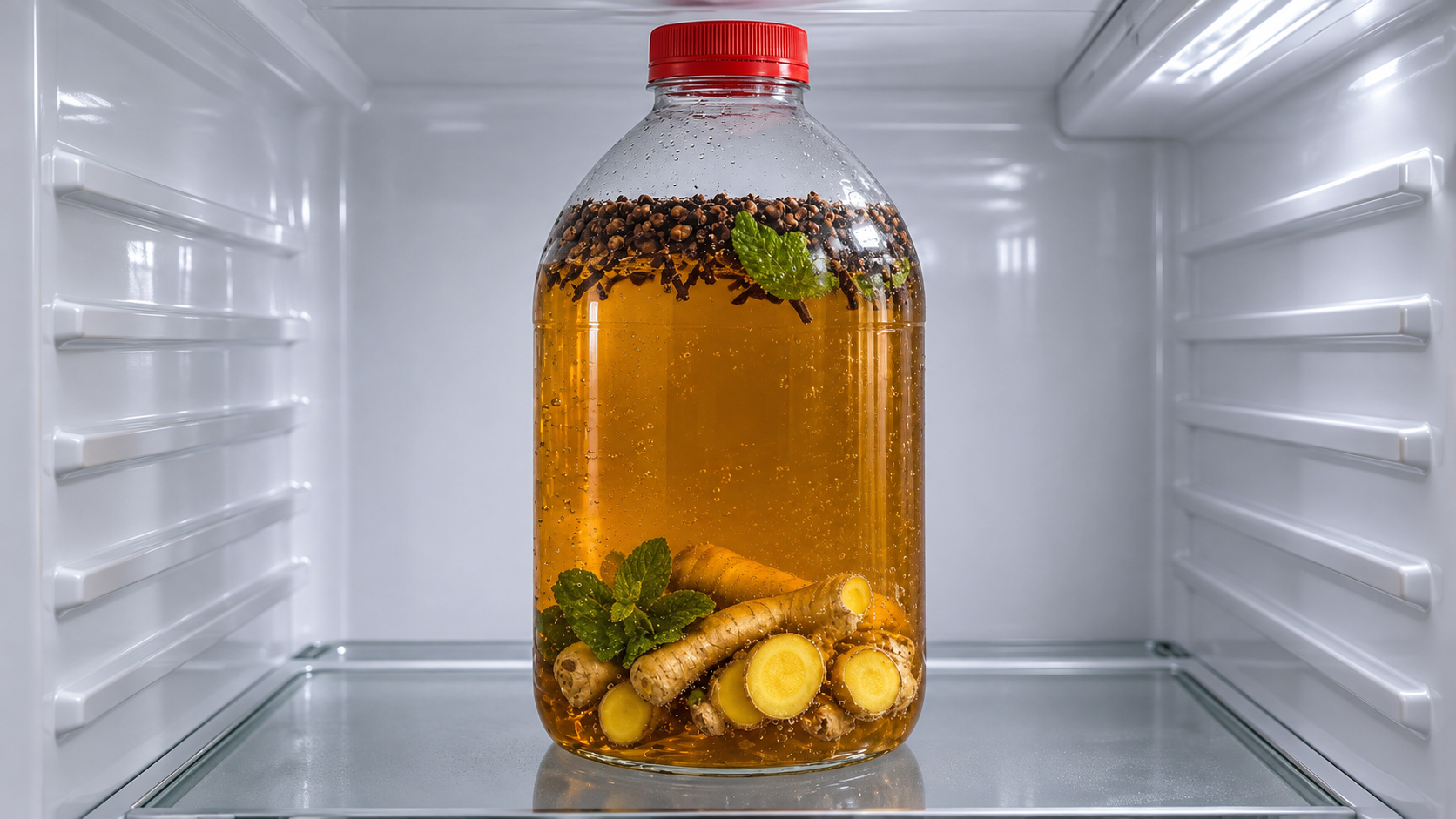
The first thing you notice when ginger and cloves simmer together is the smell. Ginger brings a fresh, peppery warmth, and cloves give the kitchen that sweet spice aroma you get when something is baking. The trick is putting the ginger in first and giving the cloves just a few minutes at the end. That way, you can taste both.
You only need fresh ginger, whole cloves, and water. The photo shows the drink in a bottle with the spices still inside. For this version, brew it in a saucepan and strain it before chilling. That gives you a smoother drink, and the last glass won’t taste twice as strong as the first.
Ginger and Clove Tea Recipe
Makes 2 small mugs or 2 glasses over ice · Ready in about 15 minutes
Ingredients
- 2½ cups water
- One 1-inch piece of fresh ginger, about 8 thin slices
- 3 whole cloves
- 1 to 2 teaspoons honey, optional
- 1 teaspoon fresh lemon juice, optional
- Ice, for serving cold
How to Make It
- Slice the ginger. Rinse the ginger under running water, then cut it into thin coins. You can peel it if you prefer. Thin slices are easier to measure and strain than grated ginger.
- Simmer the ginger first. Bring the water to a boil in a small saucepan. Add the ginger, lower the heat, and simmer gently for 7 minutes.
- Add the whole cloves. Drop in the cloves and simmer for 3 more minutes. Turn off the heat and taste a spoonful once it’s cool enough. If you want a stronger clove aroma, cover the pan and let it sit for another 2 minutes.
- Strain and adjust. Pour the tea through a fine-mesh strainer into two mugs or a heat-safe pitcher. Taste it plain before adding honey or lemon. The cloves already give it a sweet aroma, even when the tea is unsweetened.
- Serve warm or chill it. For iced tea, transfer the strained drink to a clean, heat-safe container, refrigerate it promptly, and pour it over ice once chilled.
How to Keep Clove Tea From Tasting Bitter
Cloves can take over a cup quickly. If the first thing you taste is a sharp, lingering clove flavor, use two cloves next time or shorten their simmer to about two minutes. If you want more heat, add ginger. More cloves will give you a stronger spice aroma, while more ginger gives the tea a pepperier finish.
You can still fix a batch that’s too strong. Dilute one mug with a splash of hot water and taste it again. If you’re serving it cold, pour a small amount over plenty of ice and let the ice melt for a minute. Adjust the rest of the pitcher only after you know how much water you like in the glass.
What Can Ginger and Clove Tea Do for You?
This recipe makes a naturally caffeine-free drink with a spicy flavor you can adjust cup by cup. If you’re curious about the health claims often attached to ginger, the distinction is in what researchers actually tested.
Ginger has been studied for some types of nausea, and the National Center for Complementary and Integrative Health notes that most nausea studies used supplements. Those findings don’t tell us how much ginger ends up in a homemade cup or what effect a ginger-and-clove tea would have. Ginger can also cause heartburn or stomach discomfort in some people. If the tea consistently makes you feel uncomfortable, leave it out of your routine.
Whole Cloves or Ground Cloves?
If you’re buying cloves for tea, whole cloves are easier to measure and remove. Ground cloves are convenient for baking, but the powder can settle at the bottom of a cup or pass through a standard strainer.
| What you have | How to use it |
| Whole cloves | Start with 3 for the full recipe and strain them out before serving. |
| Ground cloves | Start with a tiny pinch in the full batch. Stir it in near the end, taste, and let any sediment settle before pouring. |
| A mesh tea infuser | Put the whole cloves in the infuser for their last few minutes in the pan. Lift it out as soon as the flavor suits you. |
| A fine-mesh strainer | Use it to remove both the ginger slices and the cloves in one pour. |
If you only use cloves for occasional batches of tea, a small jar of whole cloves is enough. A tea infuser is handy if you already have one, and a kitchen strainer works just as well here.
Three Ways to Serve It
- Honey and lemon. Add a small spoonful of honey to warm tea, then taste it with a squeeze of lemon. The lemon makes the ginger taste brighter.
- Iced ginger and mint. Put two lightly crushed mint leaves in each glass before adding ice and chilled tea. Add the mint at serving time so you can take it out when the flavor is right.
- Sparkling ginger and clove. Fill a glass halfway with cold, strained tea and top it with plain sparkling water. Add the sparkling water just before serving to keep the fizz.
Can You Make a Pitcher Ahead of Time?
Yes. Double the recipe for a small pitcher, strain out the spices, and refrigerate the tea promptly in a clean, covered container. Add any fresh mint or lemon when you serve it. For the brightest flavor, make it the day you plan to drink it or the evening before.
Frequently Asked Questions
Can I make a single mug?
Use 1¼ cups water, 3 to 4 thin slices of ginger, and 1 whole clove. Follow the same simmering times and taste before adding lemon or honey.
Can I make it without boiling the spices?
Yes. Put 3 thin slices of ginger and 1 whole clove in a mug. Add 1 cup of freshly boiled water, cover, and steep for 8 to 10 minutes before straining. This makes a lighter cup than the saucepan version.
Why did my second glass taste stronger?
The ginger and cloves can keep adding flavor while they sit in the drink. Strain them out as soon as the tea tastes right, especially if you’re chilling a pitcher. If you like a stronger cup, steep it a little longer while it’s still warm, then strain it before storing.
Try the first mug plain and chill the second glass for later. Which would you make again, warm with a little honey or cold over ice with mint?