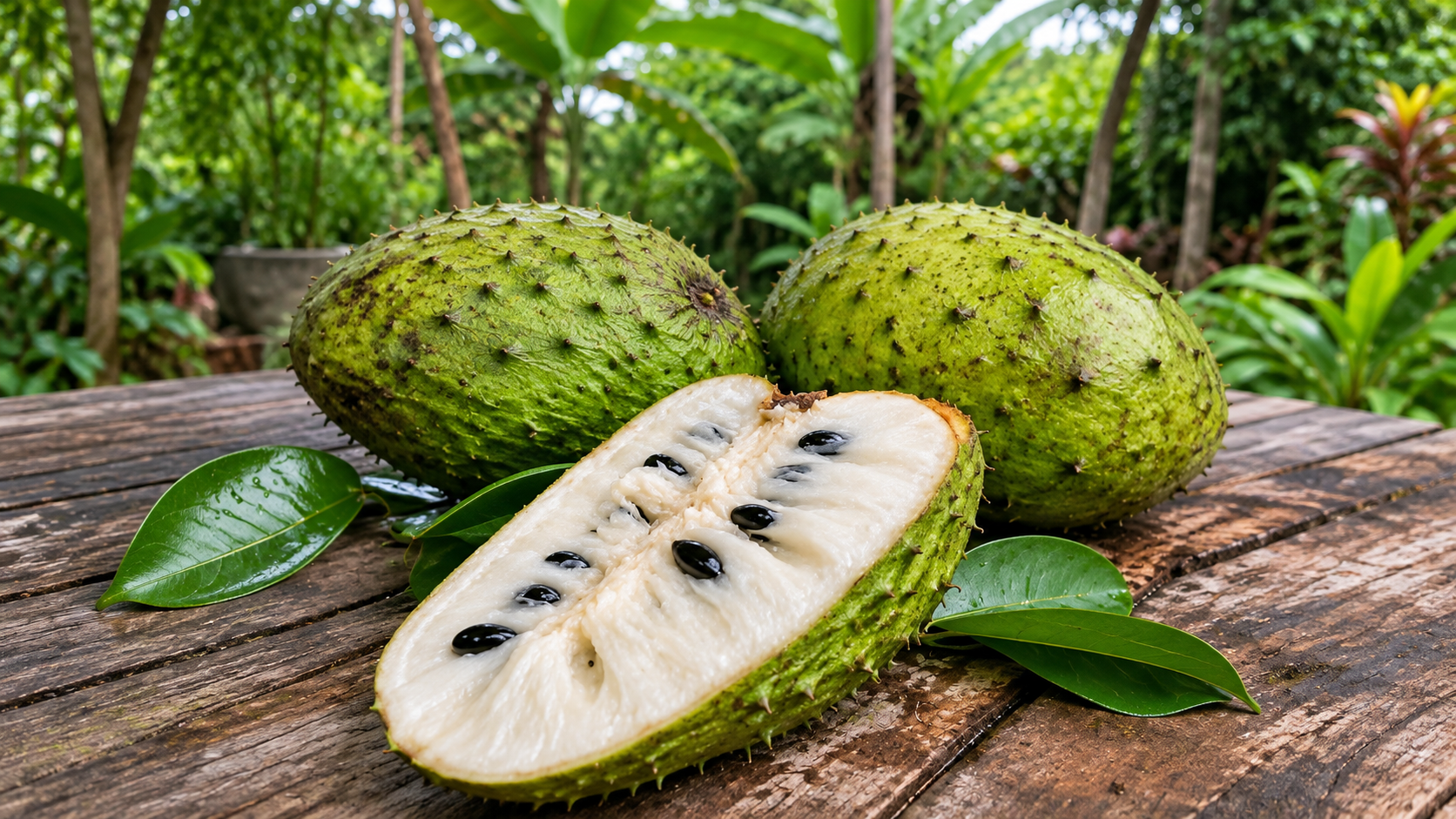
A post says that boiling soursop leaves can eliminate cancer cells, improve circulation, reduce swollen feet, and lower blood sugar. The claim goes much further than the research. Some concentrated soursop extracts have affected cancer cells in laboratory studies, but there’s no reliable evidence that drinking soursop leaf tea treats cancer in people. Research on blood sugar is also mostly limited to lab and animal studies.
The fruit in the photo is a different story. Slice through that spiky green rind and you’ll find creamy white pulp that tastes a little like pineapple and strawberry, with the soft texture of a ripe banana. It makes a sweet-tart juice with just cold water and a blender. First, though, there’s one important prep step. Every shiny black seed needs to come out.
What Is Soursop?
Soursop, also called graviola or guanábana, is the fruit of the tropical tree Annona muricata. The white pulp is the part people scoop out for juice, smoothies, and ice cream. The leaves are the part traditionally brewed into tea.
If you’re trying the fruit for the first time, taste a chilled spoonful before adding anything. Some soursop is fairly sweet, while some has a tart finish that comes through even after blending. That first taste tells you whether your juice needs more water, a little sugar, or just ice.
What Does the Research Say About Soursop Leaf Tea?
Can It Eliminate Cancer Cells?
Researchers have tested soursop extracts on some types of cancer cells in the lab. A result in a dish tells scientists what an extract did under controlled conditions. It doesn’t establish that boiled leaves can safely treat cancer in a person. Cancer Research UK and Memorial Sloan Kettering both say the clinical evidence is lacking. Keep following your cancer treatment plan and check with your care team before adding any graviola tea, extract, or supplement.
Can It Lower Blood Sugar or Help Swollen Feet?
Early research on blood sugar has largely involved animals or laboratory experiments. There’s no reliable clinical evidence that the leaf tea treats diabetes, poor circulation, or swollen feet. Memorial Sloan Kettering also flags possible interactions with blood sugar and blood pressure medicines. If you take either type of medicine, ask your healthcare professional before using graviola leaf products.
Is Soursop Leaf Tea Safe to Drink Regularly?
A safe daily amount of homemade leaf tea hasn’t been established. Cancer Research UK notes that compounds in graviola have raised concerns about possible effects on nerves and movement, especially with heavy or frequent exposure. If you’re curious about the flavor of soursop, the ripe fruit pulp is the part traditionally used in food and drinks.
Where to Buy Soursop
Look for fresh soursop in the tropical produce section of Caribbean, Latin American, and Southeast Asian grocery stores. Specialty produce markets are another place to check. If you don’t see it on display, ask for guanábana, graviola, or guyabano. Fresh fruit can be hard to find depending on where you live, so call ahead if you’re making a special trip.
For the juice recipe, check the international freezer aisle for unsweetened, seedless soursop pulp. It may be labeled frozen guanábana pulp. If you can’t find it locally, look for an online specialty grocer that delivers frozen fruit to your area.
| What to buy | Best for | What to check |
| Fresh soursop | Tasting the fruit by the spoonful or making juice from scratch | Choose fruit that gives slightly under gentle pressure if you’re using it that day. |
| Frozen soursop pulp | Juice, smoothies, and frozen desserts | Look for seedless, unsweetened pulp so you can adjust the sweetness yourself. |
| Bottled soursop nectar | A quick glass over ice | Check the juice percentage and added sugar on the label. |
How to Prepare Fresh Soursop
- Wait for it to soften. If the fruit is still firm, give it more time to ripen before cutting. Check it daily because ripe soursop spoils quickly.
- Wash and cut it open. Rinse the rind under running water, then slice the fruit lengthwise. Scoop the white flesh into a bowl and discard the rind.
- Remove every black seed. Pull apart the pulp with clean fingers and check each piece. The seeds contain toxic compounds, so discard them before eating or blending the pulp.
Simple Soursop Juice Recipe
Makes 2 small glasses · Ready in about 10 minutes with prepared pulp
Ingredients
- 1 cup ripe, seedless soursop pulp, fresh or thawed
- 1 cup cold water, plus more to taste
- 1 teaspoon fresh lime juice, optional
- 1 to 2 teaspoons sugar, optional
- Ice, for serving
Preparation
- Blend the pulp and water. Pour the water into the blender first, add the pulp, and blend for about 30 seconds, until evenly creamy.
- Taste before sweetening. If the flavor is too concentrated, add cold water a tablespoon at a time. If the fruit tastes sweet and you want a brighter finish, stir in the lime. If it’s already tart, skip the lime and sweeten only if you like.
- Choose your texture. Pour it straight from the blender for a thicker drink. For a lighter glass, pass it through a fine-mesh strainer and let the juice drip through before pressing the pulp lightly.
- Serve cold. Pour over ice for a lighter drink, or use chilled glasses if you want to keep it thick. If there’s any juice left over, refrigerate it promptly in a clean, covered container.
Two More Ways to Enjoy Soursop
- Creamy soursop smoothie. Blend ½ cup seedless pulp with ½ cup plain yogurt and a few ice cubes. Taste it before adding sweetener.
- Soursop ice pops. Blend 1 cup seedless pulp with ½ cup water. Sweeten to taste, pour into ice-pop molds, and freeze.
If you’re opening your first soursop, save a spoonful of chilled pulp before you blend the rest. Taste it plain, then try it over ice. Which flavor comes through first for you, pineapple or strawberry?