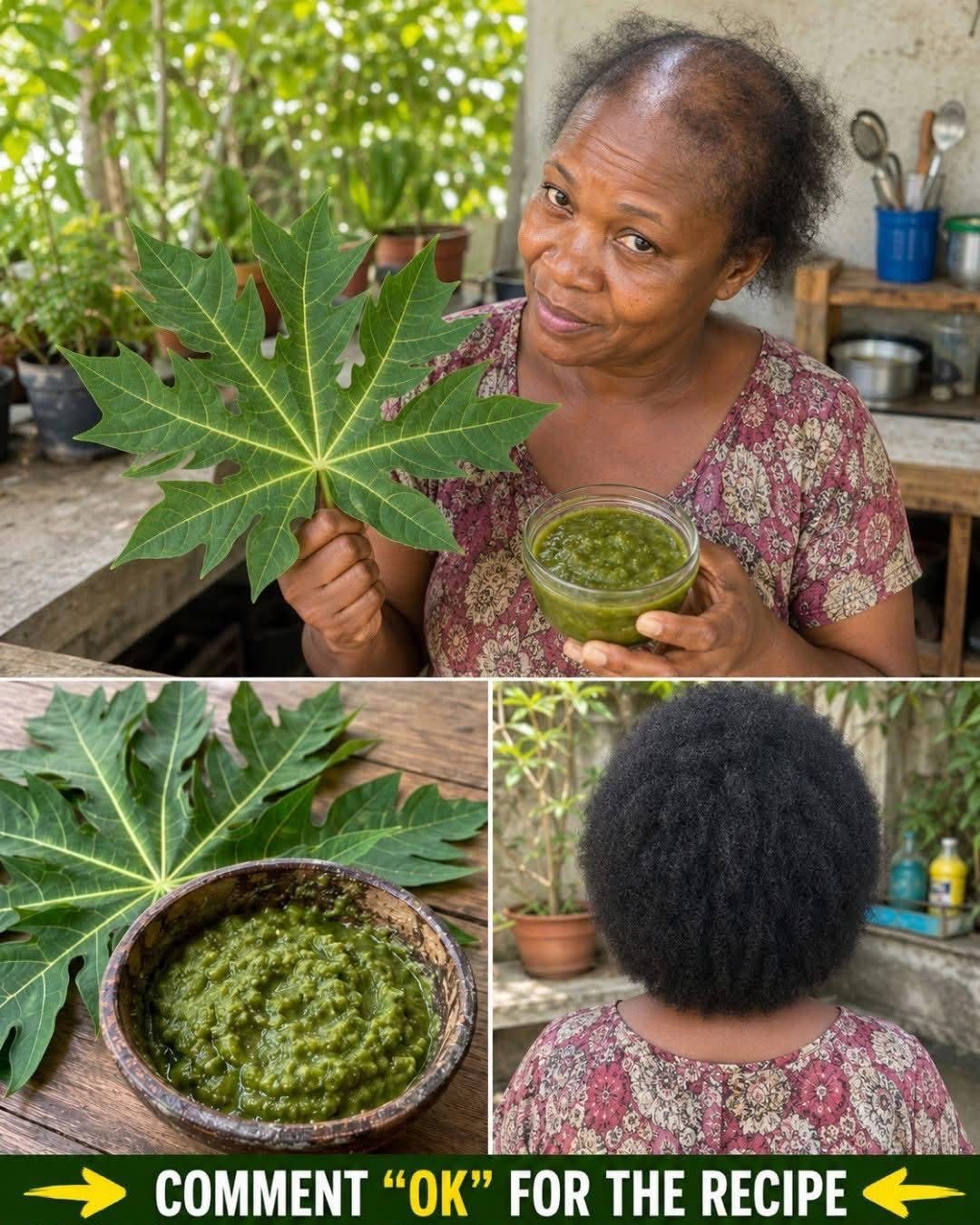
Papaya trees are loved for their sweet fruit, but their large green leaves are often ignored once the fruit has been harvested.
In traditional home-care routines, papaya leaves have also been used in simple scalp preparations. Their fresh green aroma and naturally occurring plant compounds make them an interesting ingredient for people who enjoy botanical hair care.
A homemade papaya leaf scalp rinse may help cleanse away excess oil, refresh the scalp, and leave the hair feeling softer after washing.
However, it should be treated as a gentle cosmetic treatment rather than a guaranteed solution for thinning hair.
Hair loss can develop for many reasons, including genetics, stress, hormonal changes, illness, nutritional deficiencies, thyroid problems, tight hairstyles, certain medications, and scalp conditions. Finding the cause is often the most important step toward choosing an effective treatment.
This simple papaya leaf recipe is easy to prepare at home and takes only a few minutes of active work.
What Are Papaya Leaves?
Papaya leaves come from the tropical papaya tree, botanically known as Carica papaya.
They are large, deeply divided, and usually dark green when mature.
The leaves naturally contain plant compounds such as flavonoids, phenolic compounds, enzymes, and antioxidants.
Papaya also contains papain, an enzyme found especially in the milky latex of the plant.
Papain is one reason papaya ingredients are sometimes included in exfoliating skincare and cleansing products.
The same enzyme that makes papaya interesting can also make fresh leaf preparations irritating for sensitive skin.
That is why dilution, careful preparation, and a patch test are important.
Why People Use Papaya Leaves on the Scalp
Papaya leaf preparations have traditionally been used as cleansing washes in some households.
When applied as a diluted rinse, the liquid may help loosen product buildup, sweat, and surface oil.
A clean scalp can make the roots feel lighter and the hair look fresher.
The rinse may also help dry hair feel smoother when it is combined with a moisturizing ingredient such as aloe vera.
It is important to keep expectations realistic.
A papaya leaf rinse cannot correct hereditary hair loss, restore a damaged hair follicle, or replace medical treatment for a scalp disorder.
Available studies involving papaya and hair are limited and have mainly explored specialized fermented papaya preparations rather than an ordinary homemade leaf rinse.
Possible Cosmetic Benefits
Papaya leaf water can be a pleasant addition to a simple hair-care routine.
Its most realistic benefits are connected to cleansing and scalp freshness.
Helps Refresh an Oily Scalp
Sweat, styling products, and natural oils can collect around the roots.
A light herbal rinse may help the scalp feel cleaner between heavy treatments.
It should not replace shampoo when the hair is visibly dirty or covered with styling residue.
May Help Remove Light Buildup
The rinse can help soften light residue left behind by conditioners, gels, or creams.
People who use many styling products may still need an occasional clarifying shampoo.
Leaves Hair Feeling Light
Heavy oils can make fine or thinning hair appear flatter.
A water-based botanical rinse provides a lighter option for people who dislike oily scalp treatments.
Supports a Relaxing Hair Routine
Hair care is not only about ingredients.
Taking a few quiet minutes to massage the scalp gently can feel relaxing and may encourage better consistency with regular hair care.
Just avoid aggressive rubbing, especially when the hair is already fragile.
Homemade Papaya Leaf Scalp Rinse
This diluted recipe is designed for occasional external use.
Use a healthy papaya leaf that has not been sprayed with pesticides or exposed to roadside pollution.
Ingredients
- 1 small fresh papaya leaf
- 4 cups clean water
- 1 tablespoon plain aloe vera gel, optional
- 1 teaspoon vegetable glycerin, optional for dry hair
How to Prepare the Rinse
Wear gloves while handling the fresh leaf.
Papaya leaves and stems may release a milky latex that can irritate some people.
Wash the leaf thoroughly under running water.
Remove the thick central stem and discard it.
Chop the soft green portions into small pieces.
Place the chopped leaf and four cups of water in a stainless-steel saucepan.
Bring the water to a gentle boil.
Reduce the heat and simmer for approximately 10 minutes.
Turn off the heat and cover the saucepan.
Allow the mixture to steep for another 15 minutes.
Strain the liquid carefully through a fine strainer or clean cheesecloth.
Let it cool completely.
Once cool, stir in the aloe vera gel or vegetable glycerin when using either addition.
Transfer the rinse to a clean bottle.
How to Use It
Before applying the rinse to your whole scalp, perform a patch test.
Place a small amount behind the ear or on the inner arm.
Leave it for several minutes, rinse it away, and monitor the area for redness, itching, swelling, or burning.
Do not use it on the scalp if irritation appears.
To apply the rinse, first wash your hair with a gentle shampoo.
Slowly pour a small amount over the scalp.
Use your fingertips to spread it gently through the roots.
Do not scratch with your fingernails.
Leave it on for three to five minutes during the first application.
Rinse thoroughly with cool or lukewarm water.
Follow with conditioner on the middle and ends of the hair when needed.
Use the treatment no more than once a week at first.
More frequent use is not automatically more effective and may increase the risk of dryness or irritation.
A Gentler Aloe Variation
Aloe vera can make the rinse feel more soothing and less drying.
Combine:
- ½ cup prepared papaya leaf rinse
- 1 tablespoon plain aloe vera gel
- ½ cup clean water
Mix everything in a clean cup.
Apply the mixture to the scalp after shampooing.
Leave it on for three minutes, then rinse thoroughly.
Choose plain aloe vera gel without perfume, alcohol, menthol, or strong coloring.
Even aloe can cause reactions in some people, so the patch test still matters.
Papaya Leaf and Rosemary Variation
People who enjoy herbal scents may add rosemary to the recipe.
Add one small rosemary sprig to the saucepan during the final five minutes of simmering.
Strain the mixture well and cool it before use.
This creates a fresh herbal aroma without needing concentrated essential oils.
Do not add undiluted rosemary essential oil directly to the scalp.
Essential oils are highly concentrated and can cause irritation when used incorrectly.
Storage Tips
Homemade papaya leaf rinse does not contain preservatives.
Store it in a clean, airtight glass bottle in the refrigerator.
Use it within two days.
Prepare small batches rather than keeping a large container for several weeks.
Discard the rinse immediately if it develops an unpleasant odor, bubbling, mold, or an unusual texture.
Never dip dirty fingers into the storage bottle.
Pour out only the amount needed for one application.
Important Safety Precautions
Fresh papaya contains natural latex and enzymes that may trigger irritation or an allergic reaction.
People with a known latex allergy should be especially careful because papaya can cross-react with natural rubber latex allergies.
Avoid papaya leaf treatments if you have previously reacted to papaya fruit, papain products, kiwi, avocado, banana, or latex.
Do not apply the rinse to:
- Open cuts
- Scratched skin
- Active eczema
- Painful sores
- Blisters
- A freshly shaved scalp
- A severely inflamed scalp
Topical herbal products can cause contact dermatitis, particularly when they are applied to already damaged skin.
Stop immediately if you notice burning, intense itching, swelling, hives, or worsening redness.
Wash the scalp thoroughly with clean water.
Seek urgent medical care if a reaction causes facial swelling, breathing difficulty, dizziness, or tightness in the throat.
Everyday Habits for Healthier-Looking Hair
A botanical rinse can make the scalp feel refreshed, but everyday habits usually matter more for protecting fragile hair.
Wash the scalp as often as needed using a gentle shampoo.
Allowing heavy oil and product buildup to remain for long periods can cause itching and make hair care more difficult.
Apply conditioner mainly to the lengths and ends unless the product is specifically designed for scalp use.
Use a wide-tooth comb and begin detangling near the ends.
Gradually work upward instead of pulling from the roots.
Limit repeated use of very hot flat irons, curling tools, and blow dryers.
Excessive heat can weaken the hair shaft and increase breakage.
Avoid hairstyles that feel painful or pull tightly around the hairline.
Repeated tension from tight braids, extensions, ponytails, and similar styles can cause traction alopecia and may eventually lead to permanent loss if the pulling continues.
Sleeping with a satin bonnet or on a smooth pillowcase may help reduce friction and tangling.
Nutrition matters too.
Hair growth depends on adequate protein, iron, zinc, and other nutrients.
Extreme dieting or rapid weight loss can sometimes trigger increased shedding.
Hair Shedding Versus Hair Loss
It is normal to lose some hair every day.
The hairs do not all grow and fall at the same time.
Temporary increased shedding may appear several weeks or months after fever, childbirth, surgery, major stress, or significant weight loss.
In many cases, the fullness gradually returns after the trigger improves.
Hair loss is different.
A widening part, receding hairline, smooth bald patches, thinning crown, or areas that continue becoming less dense may indicate a condition that needs evaluation.
Early treatment often offers better results than waiting until the thinning becomes advanced.
When to See a Dermatologist
Consider arranging a medical evaluation when thinning continues for several months.
A dermatologist can examine the scalp and determine whether the problem is caused by pattern hair loss, alopecia areata, traction, inflammation, infection, scarring, or another condition.
You should also seek help when hair loss is accompanied by:
- Pain or burning
- Heavy scaling
- Pus or crusting
- Sudden bald patches
- Scalp swelling
- Broken hairs in one area
- Loss of eyebrows or eyelashes
- Unexplained tiredness or weight changes
Blood testing may sometimes be needed when a doctor suspects an iron deficiency, thyroid problem, hormonal imbalance, or another medical cause.
Frequently Asked Questions
Can papaya leaves regrow thinning hair?
There is not enough reliable evidence to show that a homemade papaya leaf rinse regrows lost hair.
It may help cleanse and refresh the scalp, but the result depends on the cause of the thinning.
Can I leave papaya leaf rinse on overnight?
No.
Leaving a fresh herbal preparation on the scalp overnight increases contact time and may increase irritation.
Rinse it away after a few minutes.
Can I use it every day?
Daily use is not recommended.
Begin with once a week and stop if the scalp becomes dry, itchy, or uncomfortable.
Can I blend raw papaya leaves into a paste?
A raw paste may contain concentrated plant latex and enzymes.
It is more likely to irritate the scalp than a strained, diluted rinse.
The gently simmered and diluted preparation is the more cautious option.
Is it suitable for children?
Homemade papaya leaf scalp treatments should not be used on young children without advice from a qualified healthcare professional.
Children’s skin can be more sensitive, and the cause of hair loss should be properly evaluated.
Can I add onion juice or lemon?
It is better not to combine several potentially irritating ingredients.
Lemon juice is acidic and may sting an inflamed scalp.
Onion juice can also cause irritation and a lingering odor.
Keeping the recipe simple makes it easier to identify the cause if a reaction develops.
Final Thoughts
Papaya leaves can be transformed into a simple homemade scalp rinse using water, gentle heat, and a little patience.
The preparation may help refresh oily roots, remove light buildup, and create a relaxing addition to wash day.
It should not be treated as a miracle solution for thinning hair.
Hair loss has many possible causes, and the best approach begins with understanding why it is happening.
Use papaya leaf rinse carefully, dilute it properly, perform a patch test, and never apply it to broken or irritated skin.
Combined with gentle washing, low-tension hairstyles, careful detangling, balanced nutrition, and timely professional care, a simple herbal rinse can become one small and enjoyable part of a healthier hair routine.