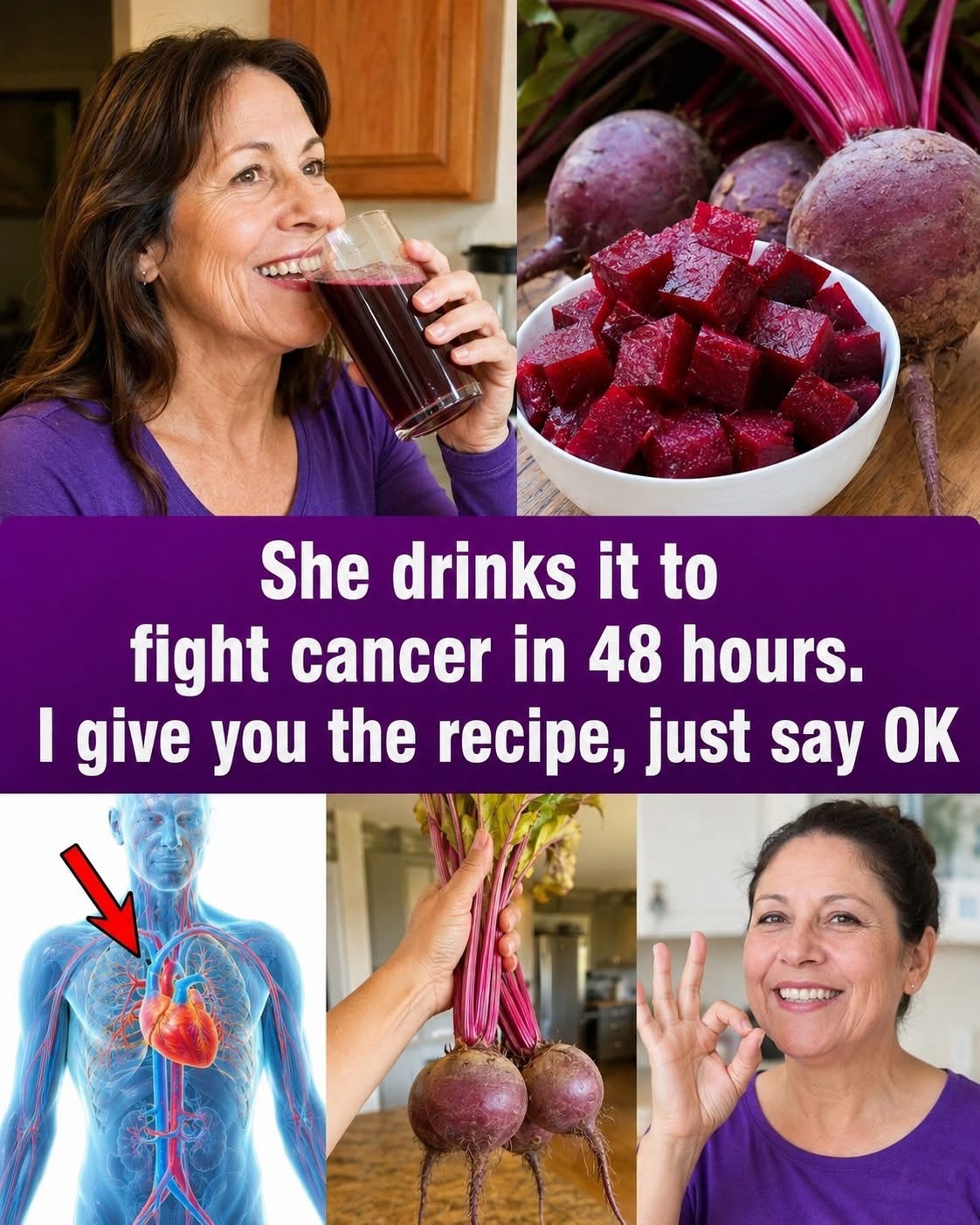
Beets are one of those foods that look almost too colorful to be real.
Deep red, earthy, sweet, messy, and capable of staining your cutting board like it committed a crime.
People online often claim beet juice can fight cancer in 48 hours, clean the blood, fix circulation, lower blood pressure, and make the heart younger.
That sounds powerful.
But let’s keep it honest.
Beets do not cure cancer in 48 hours.
No beet juice, beet salad, beet smoothie, or beet powder should replace cancer treatment, chemotherapy, radiation, surgery, immunotherapy, or medical advice.
The NCCIH warns that unproven products or practices should not be used to replace or delay medical treatment for cancer, and people with cancer should talk to their healthcare provider before adding complementary products to their routine.
Still, beets can be a very healthy food.
They can support a balanced diet, heart-friendly habits, hydration, digestion, and overall wellness.
So the truth is simple:
Beets are not magic medicine.
But they are absolutely worth eating.
Why Beets Are So Popular
Beets are rich in natural plant compounds, fiber, minerals, and antioxidants.
Their deep red-purple color comes from pigments called betalains.
They also contain dietary nitrates, which the body can convert into nitric oxide.
Nitric oxide helps blood vessels relax and widen, which may support better blood flow.
That is why beets are often connected with blood pressure, circulation, exercise performance, and heart health.
Research reviews have found that beetroot juice may reduce blood pressure in some people, mostly through the nitrate-nitrite-nitric oxide pathway.
A 2024 review also found that daily beetroot juice providing 200–800 mg of nitrate may reduce clinical systolic blood pressure in people with hypertension, though the certainty of evidence was low and results should be interpreted carefully.
So yes, beets may help support healthy blood pressure habits.
But they are not a replacement for medication.
They are one food in a bigger lifestyle picture.
Important Health Reminder
If you have high blood pressure, heart disease, kidney disease, diabetes, cancer, or you take medication, do not use beet juice as a treatment without medical guidance.
Beet juice can fit into a healthy eating routine, but it should not be used as a cure.
Especially with cancer.
Cancer care is serious.
And no fruit or vegetable should be promoted as a 48-hour cancer destroyer.
Diet can help support general health and may reduce cancer risk over time when part of a balanced lifestyle, but Cancer Research UK explains that healthy eating mainly reduces cancer risk by helping people maintain a healthy weight.
That is very different from saying beets cure cancer.
How You Should Eat Beets
The best way to eat beets is simple:
Eat them as part of meals.
Drink beet juice in moderate amounts.
Use them with other vegetables.
Do not treat them like medicine.
Beets are delicious roasted, boiled, grated, blended, or added to salads.
They work beautifully with lemon, olive oil, garlic, yogurt, apples, carrots, oranges, walnuts, feta cheese, parsley, and cucumbers.
Basically, beets are social.
They like company.
Simple Beet Juice Recipe
This beet juice is fresh, earthy, slightly sweet, and easy to make.
It is perfect in the morning or afternoon.
Ingredients
1 medium beet.
1 small carrot.
1 apple.
Juice of ½ lemon.
½ cup cold water.
Small piece of ginger, optional.
Ice cubes, optional.
How To Make It
Wash the beet very well.
Peel it if you prefer.
Cut it into small cubes.
Wash and chop the carrot.
Cut the apple and remove the seeds.
Add the beet, carrot, apple, lemon juice, water, and ginger to a blender.
Blend until smooth.
If the juice is too thick, add more water.
Strain if you want a smoother drink.
Keep it unstrained if you want more fiber.
Serve cold.
Drink fresh.
Simple.
Bright.
Healthy.
And yes, your kitchen may look like a beet explosion happened.
That is part of the experience.
Beet Salad Recipe
This is one of the easiest and best ways to eat beets.
Ingredients
2 cooked beets.
1 tablespoon olive oil.
Juice of ½ lemon.
1 tablespoon chopped parsley.
A small pinch of salt.
Black pepper.
Optional: walnuts, cucumber, feta cheese, or apple slices.
How To Make It
Peel and cube the cooked beets.
Place them in a bowl.
Add olive oil, lemon juice, parsley, salt, and pepper.
Mix gently.
Add walnuts or cucumber if desired.
Serve chilled.
This salad is fresh, colorful, and very satisfying.
It works with grilled chicken, fish, eggs, rice, potatoes, or even as a light snack.
Should You Eat Beets Raw or Cooked?
Both are good.
Raw beets have a stronger earthy flavor and more crunch.
Cooked beets are softer, sweeter, and easier for many people to digest.
Roasting gives the best flavor because it brings out natural sweetness.
Boiling is simple and works well for salads.
Juicing is quick, but it removes some fiber if strained.
For everyday health, whole beets are often better than only juice because they keep more fiber.
Fiber helps digestion and makes food more filling.
Juice is nice.
But the whole vegetable deserves attention too.
How Much Beet Juice Is Enough?
You do not need huge amounts.
Start with a small glass, around ½ cup to 1 cup.
Some people drink beet juice before exercise because dietary nitrate may improve oxygen efficiency and performance in certain situations.
But more is not always better.
Too much beet juice can upset the stomach, lower blood pressure too much in some people, or add extra sugar from concentrated juice.
If you take blood pressure medicine, ask your healthcare professional before drinking beet juice daily.
A helpful food can still be too much when combined with medication.
What About Blood Pressure?
Beet juice may help lower blood pressure slightly in some people.
That effect comes mostly from nitrates.
A 2022 systematic review found nitrate from beetroot juice reduced systolic blood pressure, but not diastolic blood pressure, in people with arterial hypertension.
That means beet juice may be useful as part of a heart-friendly diet.
But it should not replace:
Medication.
Exercise.
Lower sodium intake.
Weight management.
Stress control.
Sleep.
Regular medical checkups.
One glass cannot do the job of an entire health plan.
Even a very red glass.
Can Beets Help Circulation?
Beets may support blood vessel function because nitrates can help produce nitric oxide.
That can help vessels relax and improve blood flow temporarily.
This is why athletes sometimes use beetroot juice before workouts.
But if you have chest pain, leg swelling, severe shortness of breath, numbness, or circulation symptoms, do not rely on beet juice.
Those symptoms need medical attention.
Food supports health.
It does not replace emergency care.
Can Beets Help the Liver?
Beets are sometimes promoted as a “liver cleanse.”
That wording is misleading.
Your liver already performs detoxification work every day.
Beets can be part of a liver-friendly diet because they are plant-based, colorful, and nutrient-rich.
But they do not “clean” the liver like soap cleans a plate.
For fatty liver or liver disease, the bigger routine matters more:
Balanced meals.
Less alcohol.
Less added sugar.
Weight management if needed.
Physical activity.
Medical monitoring.
Beets can join the team.
They are not the whole team.
Who Should Be Careful With Beets?
Beets are safe for many people as food.
But some people should be cautious.
If you are prone to kidney stones, especially oxalate stones, ask a healthcare professional about how much beetroot is appropriate.
If you have low blood pressure or take blood pressure medication, daily beet juice may not be ideal without guidance.
If you have diabetes, whole beets are usually easier to manage than large amounts of juice, because juice can deliver sugar faster and has less fiber when strained.
And if your urine or stool turns pink or red after eating beets, do not panic.
This can happen.
It is called beeturia.
It looks dramatic, but it is often harmless.
Still, if you see blood or are unsure, check with a healthcare professional.
Better safe than calmly blaming beets for everything.
Easy Ways To Add Beets To Meals
Add roasted beets to salads.
Blend beet with carrot and apple.
Mix grated raw beet with lemon and olive oil.
Add cooked beet cubes to rice bowls.
Blend beet into hummus.
Serve beets with yogurt and garlic.
Add beet slices to sandwiches.
Roast them with sweet potatoes.
Use beet juice in smoothies.
There are many ways to enjoy them without turning your entire diet into beet therapy.
Final Thoughts
Beets are healthy, colorful, and useful in a balanced diet.
They may support blood pressure and circulation because of their dietary nitrates.
They provide antioxidants, fiber, and natural plant nutrients.
They can be eaten raw, cooked, roasted, juiced, or added to salads.
But they do not fight cancer in 48 hours.
They do not replace medication.
And they do not magically repair the body overnight.
The best way to use beets is simple:
Eat them regularly in normal food amounts.
Pair them with other healthy foods.
Drink beet juice moderately.
And treat miracle claims with caution.
Because real wellness is not built from one viral ingredient.
It is built from many small, honest choices repeated over time.