Parsley is usually the little green herb sitting quietly beside the main meal.
It gets chopped over potatoes, added to soup, or used as decoration on a plate that nobody plans to eat.
But in many traditional home kitchens, parsley is also prepared as a warm herbal tea.
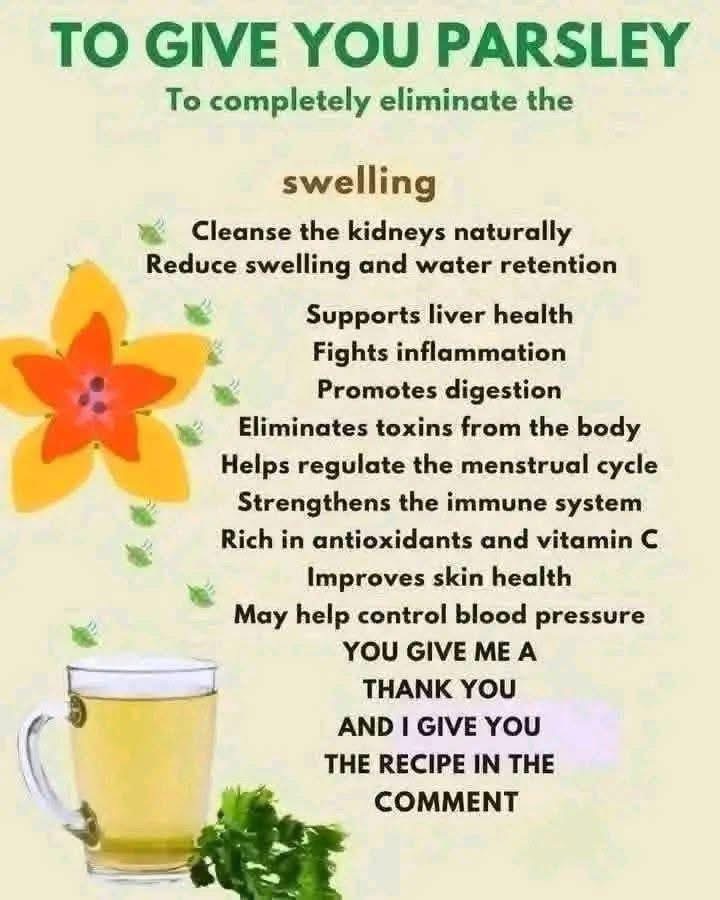
This simple drink is often shared as a natural recipe for swelling, water retention, digestion, and general wellness.
Now, let’s be honest from the beginning.
Parsley tea cannot “completely eliminate swelling,” cleanse the kidneys, or replace medical treatment.
Swelling, also called edema, can happen for many reasons, including standing for a long time, hot weather, medication side effects, circulation problems, heart conditions, or kidney disease. Unexplained swelling should be discussed with a healthcare professional.
Still, parsley tea can be a light, comforting drink to enjoy occasionally as part of a balanced routine.
And honestly, sometimes a warm cup of something green makes us feel like we have our life together for at least ten minutes.
Why People Drink Parsley Tea
Parsley has a long history of use as both a culinary herb and a traditional herbal remedy.
Some people drink parsley tea because they believe it helps the body release extra water.
A laboratory study in rats found that parsley seed extract increased urine flow, but research on parsley tea in humans is still limited. That means parsley should not be treated like a proven medical diuretic.
The most realistic reason to enjoy parsley tea is simple.
It is warm.
It is fresh.
It is easy to prepare.
And it can be a pleasant alternative to sugary drinks.
That is already enough value for one humble bunch of parsley.
Important Note About Swelling
Swelling is not always a small problem.
A little puffiness in the feet after a long hot day may be temporary.
But sudden, painful, severe, or unexplained swelling can be a warning sign that needs medical attention.
Call emergency services if swelling comes with chest pain or shortness of breath. These symptoms can be linked with serious heart or lung problems.
Also speak with a healthcare professional if swelling keeps returning, affects only one leg, becomes red or painful, or happens with foamy urine, major weight gain, or changes in urination. Kidney conditions can sometimes cause fluid buildup in the legs, ankles, feet, hands, or face.
Tea can wait.
Your health should not.
The Ultimate Parsley Tea Recipe
This recipe makes about two cups of light parsley tea.
It is best prepared fresh and enjoyed without too much sweetener.
Ingredients
- 1 small handful of fresh parsley
- 2 cups water
- 1 thin slice of lemon, optional
- 1 small slice of fresh ginger, optional
- ½ teaspoon honey, optional
Use flat-leaf parsley or curly parsley.
Both work well.
Flat-leaf parsley usually has a slightly stronger flavor, while curly parsley makes the cup look like it dressed up for the occasion.
How to Make Parsley Tea
Wash the parsley very carefully under cool running water.
Remove any yellow or damaged leaves.
Roughly chop the parsley, including the tender stems.
Add the water to a small pot.
Bring it to a gentle boil.
Turn off the heat.
Add the chopped parsley to the hot water.
Cover the pot and let the parsley steep for about 5 to 10 minutes.
Strain the tea into a cup.
Add a slice of lemon or ginger if desired.
If you prefer a slightly sweeter taste, add a small amount of honey after the tea has cooled a little.
Drink warm.
Simple.
Fresh.
Homemade.
And thankfully, there is no expensive “detox powder” involved.
What Does Parsley Tea Taste Like?
Parsley tea has a fresh, grassy, slightly earthy flavor.
It is not sweet.
It is not heavy.
And it does not taste like a fancy café drink with whipped cream on top.
Lemon makes it brighter.
Ginger gives it warmth.
Honey softens the green flavor.
If the first cup tastes too strong, use less parsley next time.
Herbal tea should feel comforting.
It should not feel like the garden is arguing with you.
How Often Can You Drink It?
Parsley is commonly used as food, but concentrated herbal amounts have not been studied enough to provide a standard medical dose.
For a gentle routine, one small cup occasionally is more reasonable than drinking large amounts every day.
More is not always better.
Sometimes more is simply more trips to the bathroom.
If you want to use parsley tea regularly, speak with a healthcare professional first, especially if you take medication or have a health condition.
Who Should Be Careful With Parsley Tea?
Parsley used in normal food amounts is generally considered safe, but larger medicinal amounts may not be suitable for everyone. Safety is not well established for concentrated parsley use during pregnancy, and herbal teas can interact with medicines.
Be cautious with parsley tea if you:
- are pregnant or breastfeeding
- have kidney disease
- take water pills or diuretics
- take blood-thinning medication
- take regular prescription medicines
- have a serious heart or liver condition
The National Kidney Foundation advises people with kidney disease to check herbal teas with a doctor or kidney dietitian because some herbs can interfere with medicines.
Natural does not automatically mean safe for every person.
Even parsley needs boundaries.
Better Habits for Mild Puffiness
Parsley tea is only one small part of a bigger routine.
For mild swelling after long periods of standing or sitting, simple habits may help.
Move your legs regularly.
Take short walks.
Avoid sitting in the same position for many hours.
When resting, elevate your legs if your healthcare professional says it is safe for you. MedlinePlus notes that keeping swollen arms or legs above heart level may help fluid drain in some situations.
Also pay attention to salty foods.
Salt can encourage the body to hold on to more fluid.
Packaged snacks, processed meats, instant noodles, canned soups, and restaurant meals can contain more sodium than expected.
And yes, the chips always look innocent.
They are not.
Parsley Tea Is Not a Kidney Cleanse
Many online posts say parsley tea “cleans the kidneys.”
That wording is misleading.
Healthy kidneys already filter the blood, manage fluid balance, and remove waste from the body.
When kidneys are not working properly, swelling can occur because the body has trouble removing extra fluid and salt.
A homemade tea cannot repair kidney disease.
If swelling is connected to kidney problems, proper testing and medical treatment matter much more than any herbal drink.
Can Parsley Tea Help With Weight Loss?
Parsley tea does not burn body fat.
It does not melt belly fat.
It does not create dramatic weight loss overnight.
If someone loses a little scale weight after drinking a diuretic-style drink, that may be water loss, not fat loss.
Real long-term weight management still depends on food choices, activity, sleep, stress, and consistency.
Less exciting than a miracle tea?
Yes.
Much more honest?
Also yes.
Easy Parsley Tea Variations
You can adjust this recipe depending on your taste.
Add lemon for a fresher flavor.
Add mint for a cooler herbal drink.
Add ginger for warmth.
Add cucumber slices after cooling for a refreshing summer version.
Serve it warm during cold weather.
Serve it chilled with ice on hot days.
The best recipe is the one you actually enjoy drinking.
Storage Tips
Parsley tea is best enjoyed fresh.
If you prepare extra, store it in a clean covered jar in the refrigerator.
Drink it within 24 hours.
The flavor may become stronger as it sits.
Shake or stir before serving.
If it smells strange, changes color badly, or looks suspicious, throw it away.
Homemade tea should feel fresh.
Not like a forgotten science project hiding behind the milk.
Final Thoughts
Parsley tea is a simple, affordable, and refreshing herbal drink.
It may be enjoyable for people who want a light homemade beverage and a calmer wellness routine.
But it should not be promoted as a guaranteed cure for swelling.
Swelling can sometimes be a sign of a medical condition, especially when it is unexplained, severe, painful, or combined with breathing problems or chest pain.
Use parsley tea gently.
Drink it occasionally.
Pay attention to your body.
And remember that the most powerful wellness routine is usually not one miracle ingredient.
It is a collection of small, sensible habits repeated with care.