Many people mix baking soda and lemon because the fizz makes the drink look powerful.
It bubbles.
It foams.
It feels like something important is happening in the glass.
And honestly, the kitchen suddenly starts looking like a tiny science laboratory.
But more baking soda is not better.
Adding extra powder does not make the drink healthier, stronger, or more effective.
It only increases the amount of sodium and the risk of unwanted side effects.
The most important thing to understand is that baking soda is not a daily wellness supplement.
When taken by mouth, sodium bicarbonate is an antacid medicine used for temporary relief of heartburn, sour stomach, and acid indigestion. It is not a treatment for high cholesterol, blocked arteries, or heart disease.
High Cholesterol Usually Has No Symptoms
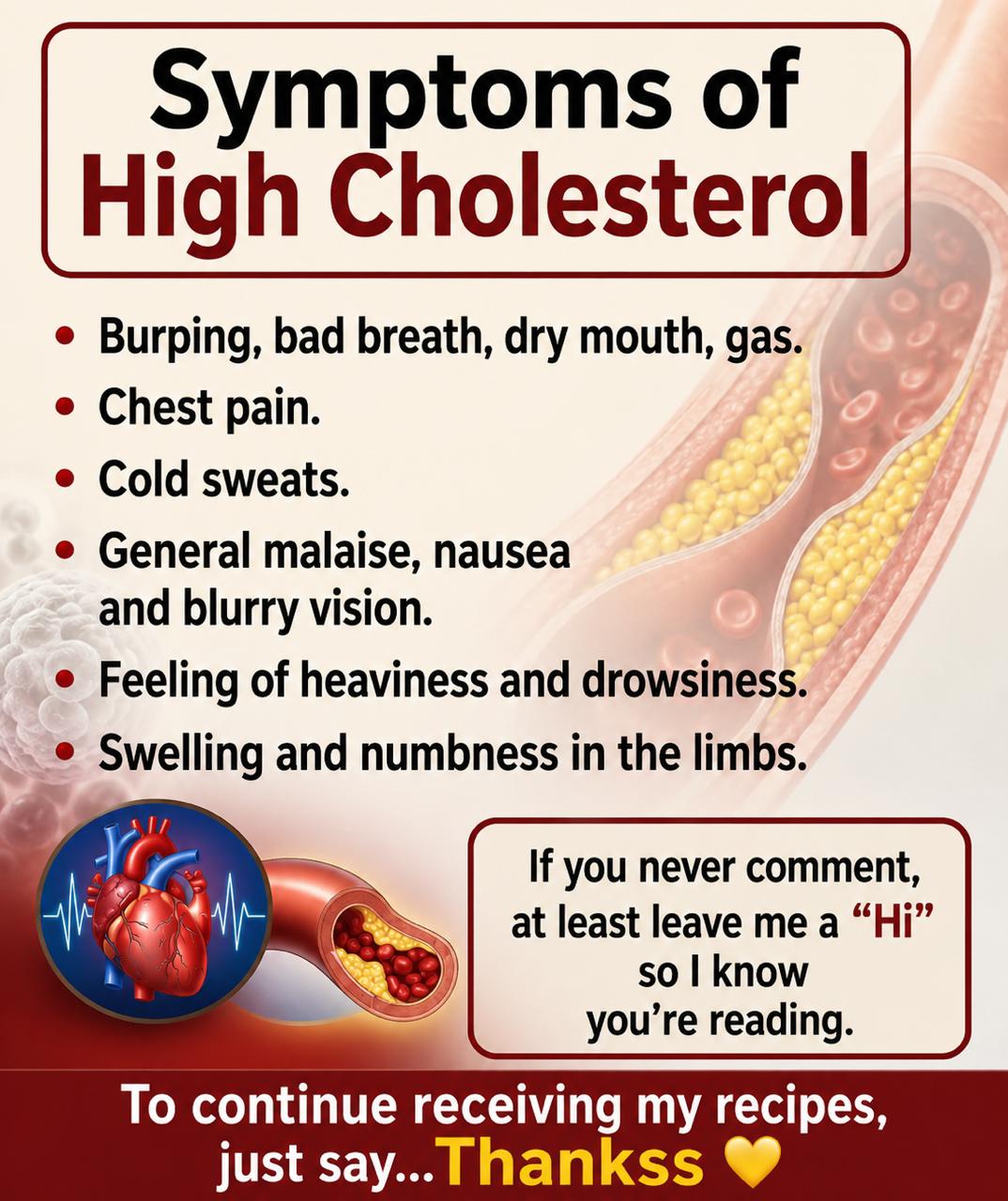
The image lists burping, bad breath, gas, dry mouth, chest pain, cold sweats, nausea, blurry vision, swelling, and numbness as symptoms of high cholesterol.
That is misleading.
High cholesterol usually does not cause noticeable symptoms. A blood test is the only reliable way to know whether cholesterol levels are high. High cholesterol matters because it can increase the risk of heart problems and stroke over time.
Burping, gas, and bad breath are not reliable signs of high cholesterol.
Chest pain and cold sweats should also not be treated with baking soda and lemon.
New or unusual chest pain, tightness, shortness of breath, sweating, nausea, weakness, or dizziness can be warning signs of a serious medical emergency. Seek urgent medical help rather than waiting for a homemade drink to work.
Does Baking Soda and Lemon Lower Cholesterol?
No.
Baking soda and lemon water is not a proven cholesterol-lowering remedy.
High cholesterol is usually managed through healthier eating, regular physical activity, weight management, smoking cessation when relevant, and medication for some people.
The lemon may make water taste fresher.
The baking soda may temporarily neutralize stomach acid.
But the mixture does not clean cholesterol from blood vessels.
If only arteries were that impressed by a fizzy glass.
The Correct Way to Use Baking Soda as an Antacid
For antacid use, the correct preparation is plain baking soda dissolved completely in water.
Lemon is not required.
In fact, adding lemon causes a fizzy reaction and uses up some of the baking soda before you drink it.
That may look exciting, but it makes the antacid dose less predictable.
Use only baking soda or sodium bicarbonate that is clearly labeled for oral antacid use.
Do not use a random cleaning product, scented baking soda, or any powder containing additional ingredients.
Always read the package because maximum doses can vary by product.
Standard Adult Antacid Preparation
A common sodium bicarbonate antacid label gives these directions:
- Measure ½ level teaspoon accurately.
- Dissolve it completely in ½ glass, or 4 fluid ounces, of water.
- Drink only after the powder has fully dissolved.
- Do not take it when the stomach is overly full from food or drink.
- Follow the product label’s maximum daily dose and age restrictions.
Some labeled products allow a dose every two hours, but this does not mean everyone should take it that often.
One ½-teaspoon dose can contain hundreds of milligrams of sodium, and different brands may contain different amounts. The package label should always be treated as the final instruction.
Should Lemon Be Added?
For a refreshing daily beverage, lemon water is fine for many people.
For an antacid dose, keep the baking soda mixture plain.
You can drink lemon water separately at another time if you enjoy the taste.
Mixing the two does not create a detox drink, a cholesterol remedy, or a stronger antacid.
It mostly creates bubbles.
Very entertaining bubbles, but still bubbles.
How to Make Simple Lemon Water
For a gentler everyday drink, skip the baking soda.
Add fresh lemon juice to a glass of water and drink it according to your taste.
This gives you a refreshing citrus drink without the extra sodium from sodium bicarbonate.
Lemon water is not a miracle cure either, but it is a much simpler choice for regular hydration.
When to Take Baking Soda
When sodium bicarbonate is used as an antacid, MedlinePlus advises taking it one to two hours after meals with a full glass of water.
It should not be taken on an overly full stomach.
Powdered doses should be measured carefully and dissolved in at least 4 ounces of water.
Keep sodium bicarbonate at least two hours apart from other medicines unless a doctor or pharmacist gives different instructions, because antacids can affect how some medicines work.
Who Should Avoid It or Ask a Doctor First?
Baking soda adds sodium to the body.
People with high blood pressure, heart failure, kidney disease, swelling, or a sodium-restricted diet should ask a healthcare professional before using it. Pregnant or breastfeeding people should also get medical advice first.
Children should not be given homemade baking soda antacid drinks unless a doctor specifically recommends them.
Age restrictions vary by product, which is another reason the package label matters.
Possible Side Effects
Even a common kitchen ingredient can cause side effects when used like medicine.
Sodium bicarbonate may cause increased thirst, stomach cramps, and gas.
Serious warning signs can include severe headache, nausea, weakness, slow breathing, swelling of the feet or lower legs, black stools, or blood in the urine. Stop using it and seek medical advice if serious symptoms occur.
Too much baking soda can be dangerous.
Never guess the amount.
Never use a heaping spoon.
Never take the dry powder directly.
And never assume that a larger dose will work faster.
Your stomach is not a baking tray.
How Long Can It Be Used?
Sodium bicarbonate should not be used for longer than two weeks unless a doctor tells you to continue.
If heartburn or indigestion keeps returning, it may be a sign that the real cause needs medical attention.
Frequent heartburn can have several causes, including acid reflux and other digestive conditions.
A fizzy drink may give temporary relief, but it should not become a daily way of avoiding a proper check-up.
A Safer Daily Routine for Cholesterol
If the real concern is high cholesterol, focus on habits that actually support heart health.
Eat more vegetables, fruits, whole grains, beans, and other high-fiber foods.
Reduce foods high in saturated fat.
Move your body regularly.
Avoid smoking.
Get a cholesterol blood test when recommended.
And take prescribed medication exactly as directed.
High cholesterol often stays silent, which is why testing matters much more than trying to read symptoms from the body.
Final Thoughts
Baking soda and lemon water is often presented as a powerful homemade remedy, but it should be approached with common sense.
It does not lower cholesterol.
It does not clean arteries.
And it should not be used for chest pain, cold sweats, or other possible emergency symptoms.
For temporary antacid use, use plain sodium bicarbonate labeled for oral use, measure the dose accurately, dissolve it completely in water, and follow the package directions.
For a refreshing everyday drink, choose simple lemon water without baking soda.
Sometimes the safest recipe is not the one that fizzes the most.
It is the one that knows when to stay simple.