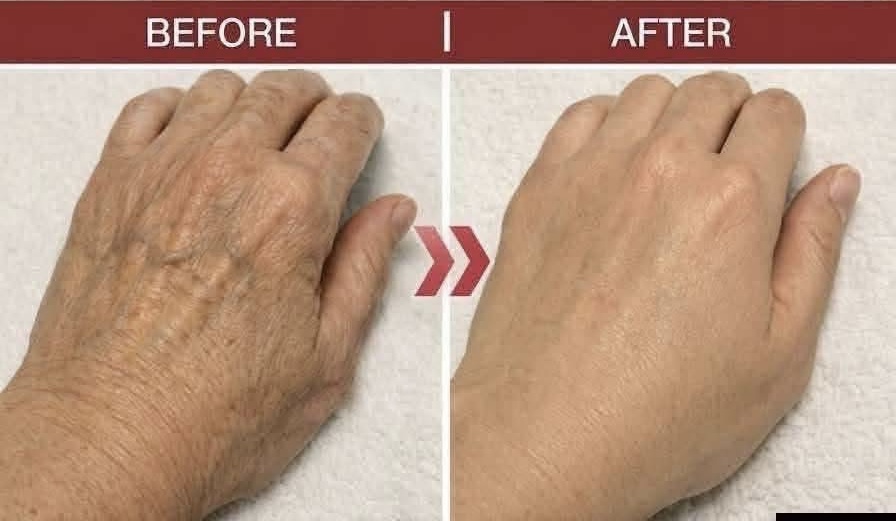
If the backs of your hands look more lined after washing dishes, try one small change. Pat them with a towel, then put on hand cream while the skin is still slightly damp. It takes less than a minute, and it can make rough skin feel softer and fine lines look less noticeable. Brown spots are a different concern, and the steps that help with dryness serve a different purpose from the ones that protect against sun damage.
The photo shows toothpaste being squeezed into a bowl of white crystals. Before you reach for either one, it’s worth knowing what a scrub can do to dry skin and what actually helps with the two things you can see in the picture.
Can Toothpaste and Salt Improve Hand Wrinkles or Age Spots?
There’s no good evidence that a toothpaste-and-salt scrub fades age spots or improves wrinkles on the hands. Toothpaste can irritate skin, and coarse scrubbing can leave it drier and redder. The American Academy of Dermatology also notes that aggressive exfoliation can lead to more dark marks in people prone to pigmentation.
A smoother-looking hand in a photo can be convincing. But skin that looks temporarily smoother and skin with less pigmentation are two different outcomes. For dry, finely lined skin, start with moisture. For age spots on the backs of your hands or forearms, start with sun protection and have any spot you’re unsure about checked before trying to fade it.
A Simple At-Home Routine for Hands and Arms
What You’ll Need
- A fragrance-free hand cream or body cream
- A broad-spectrum, water-resistant sunscreen with SPF 30 or higher
- Plain petroleum jelly, optional for especially dry patches
Morning
- Moisturize after washing. Pat your hands with a clean towel and leave them slightly damp. Smooth cream over the backs of your hands, across the knuckles, and around the nails. After a shower, you can use the same approach on dry forearms.
- Apply sunscreen before going outside. Cover the backs of your hands, wrists, and any forearm skin your sleeves leave exposed. Pay attention to the strip between your cuff and your hand. Reapply every two hours while outdoors, and follow the label’s directions for swimming or sweating. If you wash sunscreen off your hands and are heading back outside, put it on again.
Evening
- Use cream after your last handwash. Leave the tube by the sink or on the nightstand so the step is easy to remember. Smooth it over the areas that feel tight or rough.
- Use a thicker layer where you need it. If the knuckles or cuticles still feel dry, dab a little plain petroleum jelly over those areas. You can leave the palms alone if you dislike the greasy feeling. Dermatologists often suggest petrolatum-containing creams or ointments for dry, chapped hands.
Hand Cream vs Lotion vs Ointment
If you’re shopping for hand care, start with texture. The cream that feels wonderful at bedtime may be the one you avoid during the day because it leaves fingerprints on your phone. A lighter product you’ll use after washing and a thicker one at night can both have a place. Dermatologists generally recommend a cream or ointment for especially dry skin.
| Product | When it’s useful | What to look for |
| Hand cream | After handwashing or when knuckles feel tight | A fragrance-free cream in a tube you can keep by the sink or carry in your bag |
| Body lotion | Covering both forearms quickly when they’re only mildly dry | A fragrance-free formula you’re comfortable applying regularly |
| Ointment | Bedtime or small, stubborn dry patches | Plain petrolatum if you want a simple option |
| Sunscreen | Protecting your hands and forearms outdoors | Broad-spectrum coverage, SPF 30 or higher, and water resistance |
If fragrance bothers your skin, look for fragrance-free on the label. A product labeled unscented can still contain ingredients that mask its smell.
What Helps With Age Spots on Hands and Arms?
Age spots often appear where skin has had years of sun exposure, including the backs of the hands. Regular sun protection helps prevent new spots and helps keep treated spots from returning. If an existing spot bothers you, a dermatologist can confirm what it is and discuss options such as a lightening cream, cryotherapy, or laser treatment. Creams generally take longer to show results than procedures.
A spot that’s new, changing in size or color, itchy, bleeding, or noticeably different from the others deserves a skin exam. Get it checked before applying a fading product or scrubbing it.
Frequently Asked Questions
Can hand cream make wrinkles less visible?
Moisturizer can make fine lines less noticeable, especially when dryness is making them stand out. If the skin still looks crepey after you’ve used moisturizer and sunscreen consistently, a dermatologist can discuss options such as a retinol lotion and whether it suits your skin.
Can I use the same cream on my hands and forearms?
Yes. A fragrance-free cream can work for both. If your knuckles are much drier than your arms, use a little extra there or dab on a thicker ointment at bedtime.
Do I need to exfoliate first?
You can apply moisturizer directly to slightly damp skin. If your hands are already dry, cracked, or easily irritated, rubbing them with coarse crystals can make them feel worse.
The easiest place to start is wherever you wash your hands most often. Put a tube of cream next to the soap and use it before your hands dry completely. That small change is easier to keep up than a scrub you have to mix every time.