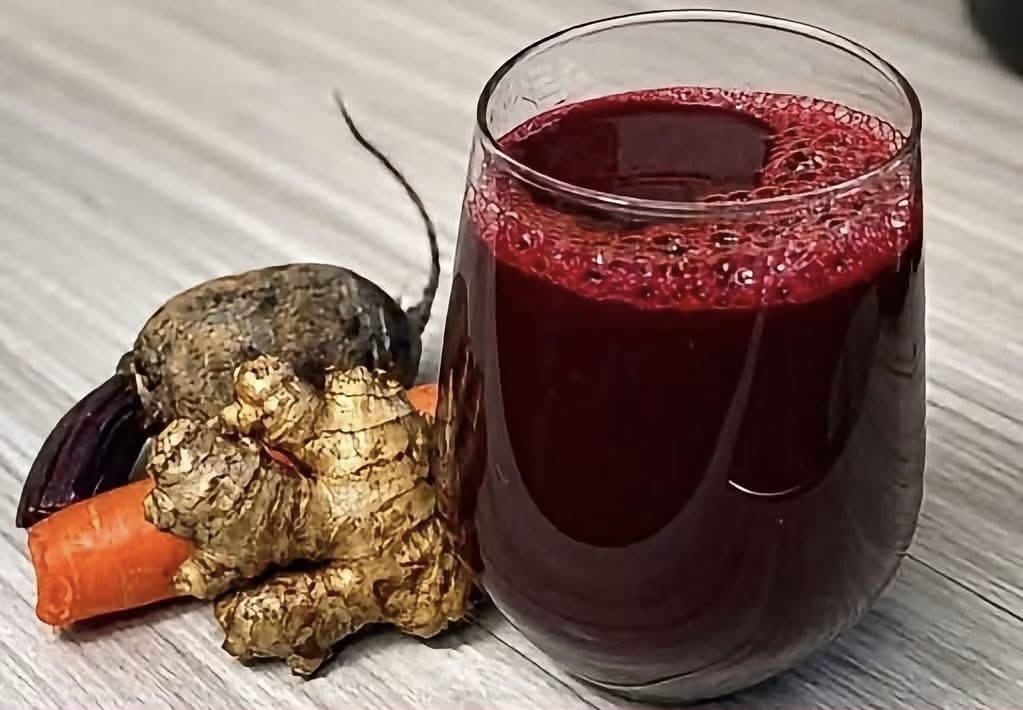
The first time you make beetroot juice at home, taste it before you add all the ginger. A small slice gives it a warm finish. The whole piece can make the drink taste like a ginger shot, especially if your beet is on the small side. Start with half and let the carrot’s sweetness come through before you decide whether to add more.
This recipe uses the three ingredients pictured, plus cold water. You can make it in a regular blender, strain it for a smooth pour, or keep the pulp for a thicker drink. If you’re making it because you saw the 30-day claim, there’s a section below on what the research actually measured.
Beetroot Carrot and Ginger Juice Recipe
Makes 2 small glasses · Ready in about 10 minutes
Ingredients
- 1 small raw red beetroot, about ½ cup chopped
- 1 medium carrot, about ½ cup chopped
- One ½-inch piece of fresh ginger, peeled
- ¾ cup cold water, plus more as needed
- Ice, optional
How to Make It
- Wash and trim the vegetables. Rinse the beetroot, carrot, and ginger under running water before cutting. Trim the ends of the beetroot and carrot. Peel the beetroot if the skin is thick or rough.
- Cut everything small. Chop the beetroot and carrot into roughly ½-inch pieces. Slice the ginger thinly so you can add it a little at a time.
- Blend the beetroot and carrot. Add the cold water to the blender first, followed by the chopped vegetables. Blend on high for about 45 to 60 seconds. If the mixture stops moving, turn off the blender and add a tablespoon or two of water before starting again.
- Add the ginger gradually. Add half the ginger and blend briefly. Taste a spoonful, then decide whether to add the rest.
- Strain or pour straight from the blender. For a smoother juice, pour it through a fine-mesh strainer set over a pitcher. Let it drain briefly, then press the pulp gently with the back of a spoon. For a thicker drink, skip the strainer and give the pitcher a stir before serving.
- Serve cold. Divide between two glasses. If the flavor is strong enough for you already, serve it over ice. If you want it milder right away, add a small splash of cold water to each glass.
How to Make Beetroot Juice Taste Less Earthy
If the first sip tastes too earthy, blend in half another carrot. It brings a little more sweetness without taking the drink away from its original flavor. If the issue is the ginger, dilute the juice a tablespoon at a time. Start with a small glass so you can adjust one serving before changing the whole batch.
Straining also changes the way the drink tastes. A cold, smooth glass feels lighter, while the thicker version has more of that raw vegetable texture. If you’re making it for two people, try straining just one serving. It takes less than a minute, and you’ll find out which version you want to make next time.
If you feel like changing the original recipe, try an optional teaspoon of fresh lemon juice in one glass. Taste it before adding lemon to the whole pitcher. A little acidity can bring out the carrot and ginger, but the original three ingredients make a complete drink on their own.
Blender vs Juicer for Beetroot and Carrot Juice
If you already have a blender, start there. For a single batch, a sharp knife and a fine-mesh strainer are enough to get a smooth glass. If you make raw vegetable juice often, the best appliance depends on whether you want a thicker drink, a clear pour, or an easier cleanup.
| Equipment | Best for | What to check before buying |
| Countertop blender | Making juice with water, smoothies, and soups in the same appliance | Look for a jar that’s easy to rinse and has enough room for the batches you usually make. |
| Personal blender | Making one small serving at a time | Check the cup’s fill line and whether the manual recommends blending hard raw vegetables. |
| Centrifugal juicer | Extracting juice quickly from firm produce such as beets and carrots | Check the feed chute size and how easy it is to remove and brush the filter basket. |
| Slow juicer | Making juice regularly with a machine that separates juice from pulp | Compare the space it takes up, the amount of chopping required, and the parts you’ll wash after each use. |
For this recipe, a fine-mesh strainer is the first thing I’d check for in the kitchen. If you already have one, try blending and straining before buying a dedicated juicer. If you’re comparing machines, think about how much time you’ll spend chopping and washing parts. That can matter more on a weekday morning than how quickly the machine fills the glass.
Using a juicer? Run the beetroot, carrot, and a thin slice of ginger through it. Taste before adding the recipe’s water. You may want just a splash to take the edge off the ginger. The yield will vary with the size of the vegetables and how much liquid the machine extracts.
What Does the Research Say About Beetroot Juice?
Can It Help With Blood Pressure?
A 2024 review of 11 trials in adults with high blood pressure found that nitrate-rich beetroot juice lowered the top number of clinic blood pressure readings by about 5 mmHg on average. The researchers rated the evidence as low certainty. They found no clear effect on the bottom number or on blood pressure measured over 24 hours. The nitrate content of a homemade glass can vary, so that average can’t tell you what this recipe would do for your blood pressure.
Does It Lower Cholesterol?
A review of randomized trials found no significant improvement in total cholesterol, LDL cholesterol, HDL cholesterol, or triglycerides from beetroot consumption. The blood pressure findings and the cholesterol findings answer separate questions.
Will It Give You More Energy?
Some studies have found that beetroot juice helped recreational exercisers with endurance activities such as running or cycling. Other studies found no benefit. These trials measured exercise performance, so they don’t establish that the drink will help with everyday fatigue.
What About Ginger and Joint Comfort?
Ginger supplements have been studied for knee osteoarthritis. Some results were promising, but the National Center for Complementary and Integrative Health says much of the research was poor quality. Research on those supplements doesn’t show that a slice of fresh ginger in this juice will ease joint pain.
Do You Need to Drink It for 30 Days?
There’s no established three-day or 30-day schedule for this homemade blend. In one four-week trial involving older adults with treated high blood pressure, nitrate-rich beetroot juice did not improve blood pressure or blood vessel function. If you like the drink, make a glass when you have the ingredients and feel like having it.
How to Make It Ahead
For quicker prep, chop the beetroot and carrot, refrigerate them in a covered container, and blend them when you’re ready to serve. Fresh homemade juice is best made in the amount you plan to drink. If you have some left over, refrigerate it promptly in a clean, covered container. Shake or stir it before pouring, especially if you kept the pulp.
Frequently Asked Questions
Can I use cooked beetroot?
Yes. Use about ½ cup of plain, chilled cooked beetroot. It’s easier to blend, especially in a small blender. Pickled beetroot will give the drink a noticeable vinegar flavor.
Can I make just one glass?
Yes. Use ¼ cup chopped beetroot, ¼ cup chopped carrot, a thin slice of ginger, and 6 tablespoons of cold water. A personal blender cup works well for this amount. In a wide blender jar, add a little more water if the blades can’t catch the vegetables.
Why did my urine turn pink after drinking beetroot juice?
Beet pigments can temporarily turn urine pink or red. If you’re unsure whether the color is from beetroot or it persists after you stop eating it, ask a healthcare professional.
What if I’ve had calcium oxalate kidney stones?
Beets are high in oxalate. If you’ve had calcium oxalate stones and want to drink beet juice regularly, ask your clinician or kidney dietitian how it fits into your eating plan.
If you make a batch, try the first sip before you strain it. Would you keep it thick and gingery, or pour it smooth over ice?