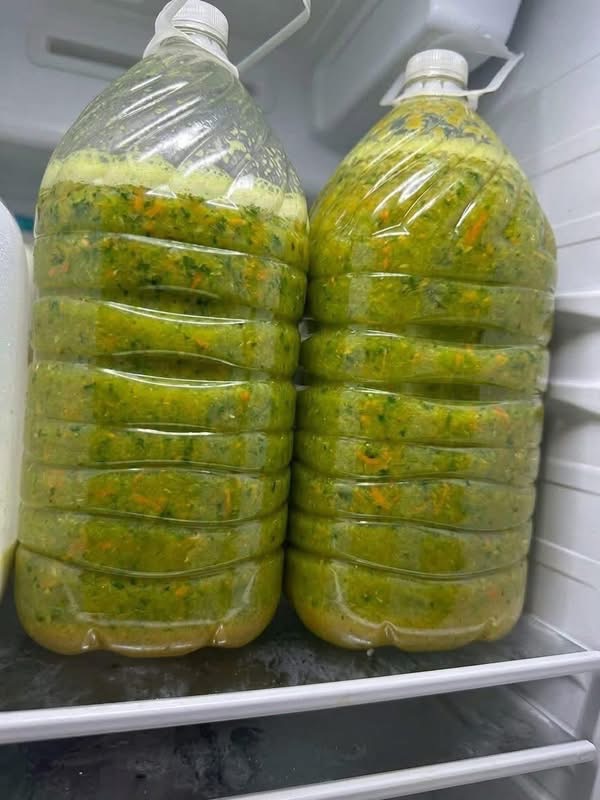
Fresh oranges, leafy greens, cucumber, carrots, ginger, apple, and lemon come together in this colorful homemade drink that is somewhere between a juice and a light smoothie.
It has the bright sweetness of citrus, the freshness of cucumber, a little natural earthiness from the greens, and just enough ginger to give each sip some personality.
This kind of drink can be a refreshing way to increase fruit and vegetable intake and may help make hydration more enjoyable. Water and other unsweetened beverages are useful for preventing dehydration, and replacing heavily sweetened drinks with lower-sugar choices can reduce unnecessary calories.
It does not medically “detox” the body, guarantee an energy boost, or eliminate arthritis and morning stiffness. But it can certainly become one colorful part of a balanced morning routine.
What Is Orange Green Juice?
Orange green juice is a blended mixture of citrus fruit, green vegetables, carrots, and fresh ginger.
The orange ingredients provide sweetness and brightness, while the green ingredients add freshness and a little more body.
Unlike juice made with a traditional juicing machine, this version can be made in an ordinary blender.
Leaving some of the pulp in the drink keeps more of the natural fiber. Straining it creates a smoother texture like the bottled drink shown in the image.
Both versions are perfectly fine.
Why You May Enjoy This Drink
There is something satisfying about preparing a large pitcher of brightly colored fruit and vegetables.
This drink may help:
- Encourage more fluid intake
- Add fruit and vegetables to the day
- Replace some soda or heavily sweetened juice
- Provide vitamin C from oranges and lemon
- Add carotenoids from carrots
- Provide leafy greens in an easy form
- Offer a fresh alternative to packaged drinks
It is also very customizable.
If you prefer it sweeter, add another orange or apple.
If you want something greener, increase the spinach.
If ginger regularly makes your stomach complain, simply leave it out.
Does It Really Help Joint Pain?
Ginger is frequently promoted for arthritis and muscle discomfort.
Researchers have studied ginger supplements for osteoarthritis, rheumatoid arthritis, and other musculoskeletal pain. However, the available evidence is still unclear, and ginger cannot be relied on as a treatment for joint disease.
That means this drink should not be described as a cure for joint pain.
For people with osteoarthritis, appropriate physical activity has stronger evidence behind it. Regular low-impact exercise can help reduce pain and stiffness while improving strength, flexibility, and endurance.
So enjoy the juice after your morning walk if you like.
Just don’t make the blender responsible for doing the walking too.
What About Morning Stiffness?
Occasional stiffness can happen after physical activity, prolonged sitting, or simply waking up after remaining in one position overnight.
Persistent morning stiffness is different.
When joints repeatedly feel painful, swollen, warm, or stiff for long periods after waking, the cause may deserve medical evaluation.
A drink can support hydration and nutrition, but it cannot diagnose whether stiffness comes from osteoarthritis, rheumatoid arthritis, an injury, or another condition.
Seek professional advice if symptoms regularly interfere with movement or daily activities.
Two-Liter Orange Green Juice Recipe
This recipe makes approximately two liters depending on the size and juiciness of your produce.
Preparation time: 15 minutes
Yield: Approximately 2 liters
Serving size: About 1 cup
Ingredients
- 3 medium oranges
- 3 medium carrots
- 1 large cucumber
- 2 packed cups fresh spinach
- 1 medium green or red apple
- 1-inch piece fresh ginger
- 1 medium lemon
- 4 cups cold drinking water
- ½ cup fresh parsley, optional
- 1 to 2 teaspoons honey, optional
- Ice cubes for serving
How to Prepare It
Wash your hands, blender, knife, cutting board, and pitcher before beginning.
Rinse all fresh produce carefully under running water.
Fresh homemade juice is not pasteurized, and bacteria present on fruits and vegetables can enter the drink during preparation, so good washing and clean equipment matter.
Peel the oranges and remove any visible seeds.
Wash the carrots well. Peel them if the outer surface is damaged or very rough.
Cut the carrots into small pieces.
Chop the cucumber.
Core the apple and cut it into chunks.
Wash the spinach thoroughly and discard damaged leaves.
Peel or scrub the ginger and slice it thinly.
Squeeze the juice from the lemon and remove the seeds.
Place half of the oranges, carrots, cucumber, apple, spinach, ginger, and two cups of water in a strong blender.
Blend until very smooth.
Pour the mixture into a large pitcher.
Blend the remaining ingredients with the remaining two cups of water.
Combine both batches.
Add the lemon juice and stir thoroughly.
Taste before adding honey.
The oranges and apple will often provide enough sweetness without any additional sugar.
Should You Strain It?
You don’t have to.
Leaving the pulp makes the drink thicker and retains more of the fiber from the fruits and vegetables.
For a smoother bottled appearance, strain it through a fine-mesh strainer.
Press the pulp gently using the back of a spoon.
A nice compromise is to strain only half the batch and mix it back with the unstrained half.
You get a smoother drink without throwing away nearly all that useful pulp.
A Sweeter Orange Version
If the green flavor feels too strong, use:
- 4 oranges
- 2 carrots
- 1 cucumber
- 1 cup spinach
- 1 apple
- ½ inch ginger
- 1 lemon
- 4 cups water
The result will taste fruitier and have a softer green flavor.
This can be a good starter version for anyone whose previous relationship with spinach was limited to moving it around the dinner plate.
A Greener Version
For something less sweet, use:
- 2 oranges
- 1 cucumber
- 3 cups spinach
- ½ cup parsley
- 2 carrots
- ½ apple
- 1 tablespoon lemon juice
- 4½ cups water
This variation contains less fruit and tastes more refreshing and vegetable-forward.
You can also add several fresh mint leaves.
Ginger-Free Version
Some people experience heartburn or stomach discomfort from ginger.
NCCIH notes that oral ginger may cause abdominal discomfort, heartburn, diarrhea, and irritation of the mouth or throat in some people.
Simply omit it.
Replace the ginger with fresh mint, a small piece of cucumber, or a little extra lemon juice.
The drink will still have plenty of flavor.
When Is the Best Time to Drink It?
There is no special hour when the body suddenly absorbs this juice more effectively.
It can be enjoyed:
- With breakfast
- As part of lunch
- After a walk
- Alongside an afternoon snack
- Over ice during warm weather
You do not need to drink it on an empty stomach.
In fact, people with reflux or sensitive digestion may tolerate citrus and ginger better alongside food.
A serving of about one cup is plenty for most people.
The full two-liter batch is meant to be divided, not treated as a one-person morning challenge.
Can It Replace Breakfast?
Not ideally.
Although the drink contains fruit and vegetables, it may not provide enough protein, fat, or total energy to make a complete breakfast.
Pair one glass with something more substantial, such as:
- Eggs with whole-grain toast
- Plain yogurt and oats
- Oatmeal with nuts
- Cottage cheese and fruit
- Avocado toast with an egg
- A bean or chickpea breakfast bowl
The juice works best as an addition to a proper meal.
Can It Give You More Energy?
If someone is mildly dehydrated, drinking fluids can certainly help them feel better.
Dehydration may contribute to tiredness and difficulty concentrating, which is one reason maintaining adequate fluid intake is important.
Fruit also provides carbohydrates that the body can use for energy.
But ongoing fatigue should not automatically be blamed on a lack of juice.
Persistent tiredness may be related to inadequate sleep, stress, anemia, thyroid problems, medication, blood sugar changes, infection, or many other factors.
If fatigue is new, severe, or lasts several weeks, it deserves proper evaluation.
Storage Is Especially Important
The image shows large bottles that appear to be prepared for the week.
For homemade raw fruit and vegetable juice, a whole week in the refrigerator is too long.
Fresh-squeezed and raw homemade juice can contain bacteria from produce because it has not undergone pasteurization or another commercial treatment designed to destroy harmful microorganisms.
Prepare a smaller refrigerated batch whenever possible.
Pour the juice into clean food-safe bottles or glass jars with tight-fitting lids.
Refrigerate immediately.
For best quality and safety, aim to drink the fresh batch within 24 to 48 hours.
Freezing the Extra Juice
If you want to prepare approximately two liters at once, freezing part of it is a much better strategy than keeping everything in the refrigerator for seven days.
Pour the extra juice into freezer-safe containers.
Leave some empty space at the top because liquids expand during freezing.
You can also pour the juice into ice-cube trays.
Freeze for up to one month for the best flavor.
Thaw the amount you need overnight in the refrigerator.
Shake or stir thoroughly before drinking.
Some separation after thawing is normal.
Signs the Juice Should Be Discarded
Do not drink homemade juice if you notice:
- Mold
- Unexpected fizzing
- Pressure building in the bottle
- A fermented or alcoholic smell
- A slimy texture
- An unusually sour flavor
Normal vegetable pulp settling at the bottom is harmless.
A bottle suddenly behaving like champagne when nobody invited fermentation is a different story.
A Note for People With Medical Conditions
Large amounts of homemade vegetable juice may not suit everyone.
People with advanced kidney disease may have individualized potassium or fluid restrictions.
Anyone taking warfarin or another medication whose management depends on consistent vitamin K intake should discuss major changes in leafy-green consumption with their healthcare professional.
People using diabetes medication should also consider the carbohydrates in fruit-heavy juices.
The safest approach is not to fear vegetables but to match portions to your individual medical plan.
Frequently Asked Questions
Can I drink this every day?
A moderate serving can fit into many balanced diets.
Plain water should still remain an important everyday beverage.
Does it detox the liver?
It does not perform a special liver cleanse.
Your liver and kidneys already perform essential processing and waste-removal functions.
Will it cure arthritis?
No.
A nutritious diet may support general wellness, but this juice cannot cure osteoarthritis or rheumatoid arthritis.
Can I use kale instead of spinach?
Yes.
Use about one to two cups of chopped kale and remove the thick stems before blending.
Can I use frozen spinach?
Yes, but fresh spinach generally gives the drink a brighter flavor.
Use frozen spinach that has been safely stored and thawed according to package directions.
Can I make it without oranges?
Yes.
Replace them with pineapple, apple, pear, or additional cucumber and lemon depending on how sweet you want the drink.
Do I need a juicer?
No.
A strong blender works perfectly well, especially when you don’t mind keeping some of the pulp.
Final Thoughts
Orange green juice is an easy way to turn a handful of ordinary fruits and vegetables into something colorful and refreshing.
Oranges provide sweetness, cucumber keeps the drink light, carrots add color, spinach contributes greens, and fresh ginger gives it a little kick.
Enjoy it alongside a proper meal, keep the serving reasonable, and don’t expect it to magically erase joint pain or transform energy levels overnight.
Most importantly, make smaller refrigerated batches and freeze the extra rather than storing two giant bottles for an entire week.
A good homemade drink should leave you feeling refreshed—not wondering whether the bottle has started developing its own personality in the back of the refrigerator.