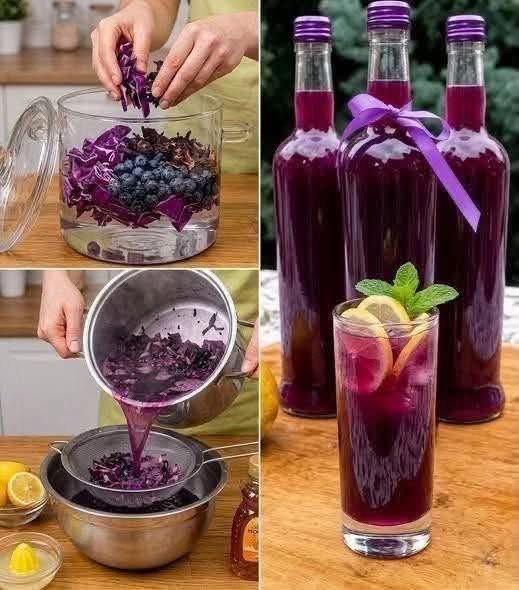
Purple cabbage, blueberries, dried hibiscus, and fresh lemon create a beautifully colored homemade drink with a gently tart, fruity flavor.
The deep purple shade comes naturally from the ingredients, so there is no need for artificial coloring or expensive wellness powders.
This drink can support hydration and add colorful plant foods to your routine. It may also be a refreshing alternative to soda and other heavily sweetened beverages.
However, it is not “natural morphine.” It cannot eliminate rheumatic disease, repair damaged joints, or replace appropriate treatment for persistent muscle or joint pain.
What Is This Purple Drink?
The drink shown appears to be prepared by simmering purple cabbage, blueberries, and dried hibiscus in water.
After simmering, the mixture is strained and flavored with lemon juice. Honey may be added when a slightly sweeter drink is preferred.
The result is a concentrated purple infusion that can be served warm or chilled over ice.
Purple cabbage may sound like an unusual beverage ingredient, but its flavor becomes mild when it is combined with berries, hibiscus, lemon, and enough water.
The cabbage mostly contributes color and plant compounds rather than a strong vegetable taste.
Why the Color Is So Vibrant
Purple cabbage, blueberries, and hibiscus contain natural pigments called anthocyanins.
These pigments give many red, blue, and purple fruits and vegetables their recognizable colors.
Anthocyanin-rich foods are often included in plant-forward eating patterns because they provide natural antioxidant compounds. Berries are nutritious foods, but their presence in a drink does not turn it into a powerful pain medication.
The color may also change when lemon juice is added.
The natural acidity of lemon can transform the drink from a darker blue-purple shade into a brighter reddish purple.
It is a charming little kitchen experiment, except this one ends with a cold glass rather than a science report.
What This Drink May Realistically Offer
A moderate serving can be part of a balanced lifestyle.
It may:
- Encourage better fluid intake
- Provide a small amount of vitamin C
- Add natural plant compounds to the diet
- Replace some sugar-sweetened drinks
- Offer a refreshing warm-weather beverage
- Provide a flavorful caffeine-free option
- Make colorful produce more enjoyable
The greatest advantage may simply be that the drink makes hydration less boring.
When people enjoy the flavor of a beverage, they may be more likely to choose it instead of soda, sweetened tea, or packaged juice.
Can It Eliminate Muscle and Joint Pain?
This drink cannot eliminate all muscle, joint, or rheumatic pain.
Pain has many possible causes.
It may result from overuse, injury, osteoarthritis, rheumatoid arthritis, gout, nerve problems, infection, poor posture, medication effects, or another medical condition.
Rheumatoid arthritis, for example, is a chronic autoimmune disease that can cause joint inflammation, pain, and swelling. It requires proper diagnosis and often needs long-term treatment to protect the joints and other parts of the body.
Some foods may complement a generally healthy eating pattern, but no homemade purple beverage acts like morphine.
Morphine is a strong prescription opioid medication with specific effects, risks, and medical uses. A fruit-and-vegetable infusion does not produce the same action.
Research suggests that certain complementary approaches may help some people manage particular types of chronic pain, but their usefulness varies. They are generally considered additions to conventional care rather than replacements for it.
Purple Cabbage Berry Drink Recipe
This recipe makes approximately six cups.
It can be served as a concentrated infusion or diluted with extra water for a lighter flavor.
Preparation time: 10 minutes
Cooking time: 15 minutes
Cooling time: 30 minutes
Yield: Approximately 6 cups
Ingredients
- 2 cups finely chopped purple cabbage
- 1 cup fresh or frozen blueberries
- ¼ cup dried food-grade hibiscus petals
- 6 cups drinking water
- 2 tablespoons fresh lemon juice
- 1 to 2 tablespoons honey, optional
- 6 fresh mint leaves, optional
- Lemon slices for serving
- Ice cubes for serving cold
How to Prepare It
Wash the purple cabbage thoroughly under clean running water.
Remove any damaged, wilted, or moldy outer leaves.
Chop the cabbage into small pieces.
Smaller pieces release their color more easily and make the final mixture easier to strain.
Rinse the blueberries when using fresh fruit.
Frozen blueberries can be added directly to the saucepan without thawing.
Pour the water into a large saucepan.
Add the chopped cabbage, blueberries, and dried hibiscus petals.
Bring the mixture to a gentle boil over medium heat.
Reduce the heat and allow it to simmer for 10 minutes.
Gently crush several blueberries against the side of the saucepan with a wooden spoon.
This helps release their flavor and color.
Turn off the heat.
Cover the saucepan and leave the ingredients to steep for another five minutes.
Place a fine-mesh strainer over a large heat-safe bowl or pitcher.
Carefully pour the mixture through the strainer.
Press the ingredients lightly with the back of a spoon, but do not force all the cooked pulp through.
Allow the strained liquid to cool for approximately 15 minutes.
Add the fresh lemon juice.
Stir in the honey while the drink is still slightly warm, if sweetness is desired.
Taste the drink before serving.
Add more water when the flavor is too concentrated.
How to Serve It Cold
Let the strained beverage cool completely.
Pour it into a clean pitcher or wide-necked glass bottle.
Cover it and place it in the refrigerator for at least two hours.
Fill a glass with ice.
Pour the chilled drink over the ice and garnish it with a fresh lemon slice and mint leaves.
For a lighter version, combine equal quantities of the purple drink and unsweetened sparkling water.
Add sparkling water immediately before serving so it does not lose its bubbles.
How to Serve It Warm
This drink can also be enjoyed like an herbal tea.
Pour one cup into a small saucepan and warm it gently.
Do not repeatedly boil the entire stored batch.
Add a little honey and lemon immediately before serving.
Sip it warm rather than extremely hot.
A warm cup may feel pleasant after activity or during cold weather, but that comforting sensation should not be confused with treating the cause of chronic pain.
A Gentler Family Version
Hibiscus and lemon can produce a sharp, tart flavor.
For a milder version, use:
- 1 cup chopped purple cabbage
- ½ cup blueberries
- 2 tablespoons dried hibiscus
- 7 cups water
- 1 tablespoon honey, optional
Follow the same preparation method.
This version is lighter in color and less acidic.
You may also omit the hibiscus entirely.
The drink will still turn purple, although its flavor will be softer and slightly more vegetable-like.
Easy Variations
Purple Apple Drink
Add one chopped sweet apple to the saucepan.
The apple provides natural sweetness and may reduce the need for honey.
Ginger Berry Version
Add three or four thin slices of fresh ginger.
This gives the drink a warming, spicy finish.
Use less ginger if you experience reflux or stomach sensitivity.
Cinnamon Version
Add one small cinnamon stick during simmering.
Remove it when straining the drink.
Avoid using too much ground cinnamon because it may settle at the bottom and create a gritty texture.
Nobody wants the final sip to feel like purple potting soil.
Mixed Berry Version
Replace half of the blueberries with blackberries or raspberries.
Frozen mixed berries are also convenient.
Honey-Free Version
Leave out the honey.
Serve the drink cold with fresh orange slices or mint to create a naturally sweeter impression.
Purple Ice Cubes
Freeze the drink in an ice-cube tray.
Add the cubes to plain water, sparkling water, or homemade iced tea.
Common Preparation Mistakes
Do not use decorative hibiscus flowers from a florist or garden center.
Only use dried hibiscus labeled for food or tea preparation. Decorative flowers may have been treated with products that are not intended for consumption.
Avoid boiling the ingredients for too long.
Extended cooking can make the cabbage and hibiscus flavor harsh.
Do not add large amounts of honey before tasting.
The blueberries and any added apple may already provide enough sweetness.
Strain the beverage before storage.
Leaving cabbage and hibiscus soaking in the bottle for several days can make the flavor increasingly bitter.
Finally, do not prepare more than your household can safely use within a few days.
A refrigerator full of decorative bottles looks impressive until one begins fermenting unexpectedly.
Storage Instructions
Transfer the cooled drink to a clean glass pitcher or food-safe bottle with a secure lid.
Refrigerate it promptly.
Use the drink within two to three days for the freshest taste and safest storage.
Homemade fruit and vegetable beverages are not commercially pasteurized, so careful washing, clean equipment, and refrigeration are important. Untreated juices can carry harmful microorganisms, particularly when preparation or storage is poor.
Use bottles with openings wide enough to clean thoroughly.
Shake the bottle gently before serving because natural particles may settle.
Discard the drink if you notice:
- Mold
- Unexpected bubbling
- Pressure inside the container
- A fermented or alcoholic smell
- A slimy texture
- A strange or unpleasant taste
Natural separation is normal.
Strong pressure, foam, or a sour fermented smell is not.
The drink may be frozen for up to one month.
Pour it into freezer-safe containers or ice-cube trays, leaving room for expansion.
Thaw frozen portions in the refrigerator.
Important Safety Precautions
Purple cabbage may cause gas or bloating in some people.
Begin with a small serving when you have a sensitive digestive system.
Hibiscus and lemon are acidic.
They may worsen heartburn or irritate sensitive teeth when consumed frequently or in concentrated amounts.
Dilute the drink when necessary.
Rinse your mouth with plain water afterward, and avoid slowly sipping an acidic drink throughout the entire day.
People taking medication for blood pressure or blood sugar should discuss regular use of concentrated herbal beverages with a doctor or pharmacist.
Pregnant or breastfeeding individuals should also seek professional guidance before drinking strong hibiscus preparations regularly.
Anyone allergic to cabbage, blueberries, hibiscus, lemon, or another ingredient should avoid the recipe.
Fresh homemade unpasteurized juice may present a greater food-safety concern for pregnant people, young children, older adults, and people with weakened immune systems. Extra attention to produce washing, clean equipment, refrigeration, and short storage is important.
When Joint Pain Needs Attention
An occasional sore muscle after physical activity may improve with rest and gentle movement.
Persistent pain should not automatically be managed with homemade drinks.
Speak with a healthcare professional when pain:
- Lasts for several weeks
- Regularly wakes you from sleep
- Limits walking or normal movement
- Appears with a hot or swollen joint
- Is associated with fever
- Follows a serious injury
- Causes numbness or weakness
- Continues to become worse
- Comes with unexplained weight loss
- Does not improve with basic care
Seek urgent assistance when pain occurs with chest pressure, severe breathing difficulty, sudden weakness, confusion, or another serious symptom.
Frequently Asked Questions
Can I drink this every day?
Many healthy adults can enjoy a moderate serving regularly.
Alternate it with plain water and avoid drinking several concentrated bottles each day.
Does it cure arthritis?
No.
It cannot cure osteoarthritis, rheumatoid arthritis, gout, or another joint condition.
Can I use frozen blueberries?
Yes.
Frozen blueberries work very well and do not need to be thawed before cooking.
Is purple cabbage required?
It provides much of the color shown in the recipe.
You can omit it and make a blueberry-hibiscus drink, but the result will taste more like berry tea.
Is hibiscus necessary?
No.
It contributes tartness and a deeper reddish-purple color, but cabbage and blueberries can be used alone.
Can children drink it?
Older children may try a small, diluted serving when they have no allergies or medical restrictions.
Avoid very strong or highly acidic versions.
Can I store it for one week?
That is not recommended.
Fresh homemade drinks are best refrigerated and used within two to three days.
Can it replace pain medicine?
No.
Never stop or replace prescribed treatment without guidance from the healthcare professional managing your condition.
Final Thoughts
Purple cabbage, blueberries, hibiscus, and lemon create a drink that looks far more complicated than it really is.
The deep purple color is naturally beautiful, while the tart berry flavor makes it a refreshing alternative to heavily sweetened beverages.
Enjoy it over ice, serve it warm, or freeze it into colorful cubes.
It will not behave like morphine or eliminate every form of muscle and joint pain. Its genuine value lies in hydration, colorful plant ingredients, and a homemade recipe that can brighten an ordinary afternoon without making promises no pitcher could possibly keep.