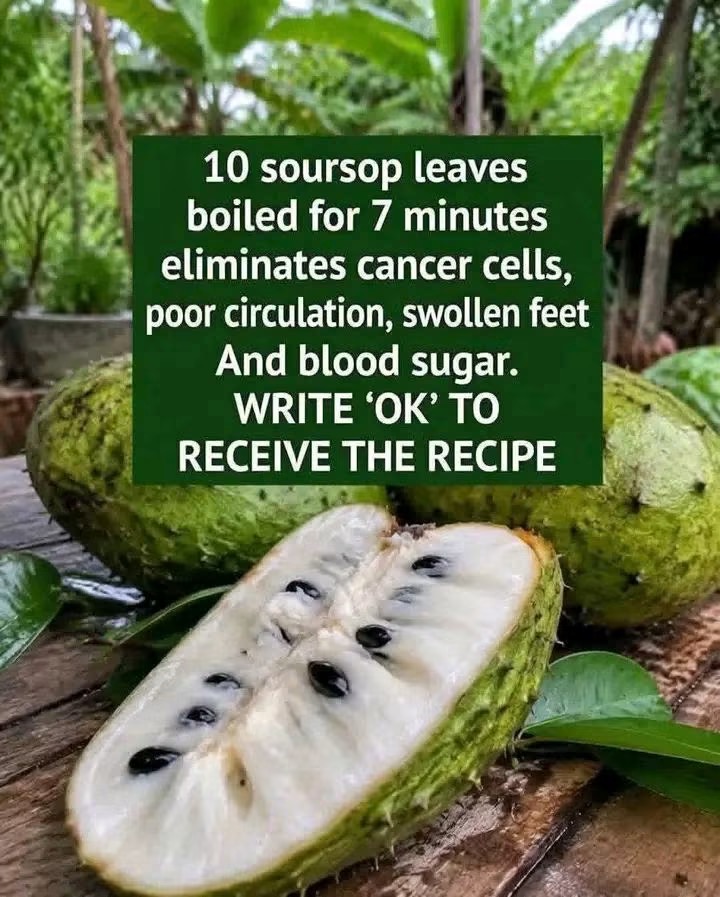
Soursop, also called graviola, guanábana, or corossol, is a tropical fruit known for its green spiky skin and creamy white flesh.
Its flavor is wonderfully unusual. Many people describe it as a mix of strawberry, pineapple, citrus, and banana, with a soft texture that works beautifully in juices, smoothies, frozen desserts, and homemade ice cream.
The ripe fruit can be enjoyed as food after the black seeds and tough skin are removed.
The leaves are also boiled as tea in some traditional practices. However, soursop leaf tea should not be treated as a harmless everyday wellness drink, and it has not been proven to eliminate cancer cells, control diabetes, cure poor circulation, or remove swollen feet.
What Is Soursop?
Soursop comes from the tropical tree Annona muricata.
The tree is cultivated in parts of the Caribbean, Central and South America, Africa, and Southeast Asia.
A ripe soursop has green skin covered with soft-looking spines. Inside, the white flesh is creamy, juicy, and divided into sections containing shiny black seeds.
The flesh is commonly used in:
- Fresh juice
- Smoothies
- Ice cream
- Sorbet
- Yogurt drinks
- Fruit desserts
- Sauces and syrups
Its flavor is naturally sweet and tart, so it usually needs little added sugar when fully ripe.
How to Choose a Ripe Soursop
A ripe soursop should yield slightly when pressed gently with your fingers.
The skin may change from bright green to a softer, more yellowish green as the fruit ripens.
It should smell fragrant and fruity near the stem.
Avoid fruit that has large moldy patches, leaking liquid, an unpleasant fermented odor, or deeply blackened areas extending into the flesh.
A very firm fruit can be left at room temperature for a day or two.
Check it regularly because soursop sometimes moves from “almost ready” to “why is the kitchen smelling tropical?” surprisingly quickly.
Once ripe, place it in the refrigerator and use it soon.
What Parts Are Edible?
The creamy white pulp is the part normally eaten.
The black seeds should be removed and discarded. They are not intended to be blended, crushed, boiled, or eaten.
The thick outer skin should also be discarded.
Soursop leaves are used traditionally in teas and decoctions, but traditional use does not automatically establish safety or effectiveness.
The leaves contain biologically active compounds, including annonaceous acetogenins. Some of these compounds, particularly annonacin, have raised concerns about possible toxicity to nerve cells with frequent or prolonged exposure. Research has also reported associations between heavy consumption of Annonaceae fruit or leaf preparations and atypical parkinsonian disorders, although the exact level of human risk remains uncertain.
For that reason, regular concentrated leaf tea is not the safest way to enjoy this plant.
Using the ripe pulp occasionally as food is a more practical choice than drinking strong leaf decoctions every day.
Can Soursop Eliminate Cancer Cells?
Soursop has been studied in laboratory and animal research because extracts from the plant contain biologically active compounds.
Some concentrated extracts have affected cancer cells in laboratory experiments.
However, laboratory results are not the same as proving that eating soursop or drinking its leaves can treat cancer in humans.
Research has not established graviola as an effective cancer treatment, and there is no reliable evidence that it can replace surgery, chemotherapy, radiation therapy, immunotherapy, hormone therapy, or targeted medication.
Someone undergoing cancer treatment should tell the oncology team about any herbal teas, powders, capsules, or extracts being used.
Natural products can sometimes interact with medication, worsen side effects, or make treatment monitoring more difficult.
The ripe fruit may fit into many diets as ordinary food, but concentrated supplements and leaf preparations deserve much more caution.
Soursop and Blood Sugar
Laboratory and animal studies have explored whether compounds from soursop may influence blood sugar.
That does not prove that homemade leaf tea can safely treat diabetes.
People taking insulin or glucose-lowering medication should not replace or reduce treatment because they started drinking an herbal preparation.
Concentrated soursop products may potentially add to the effects of diabetes medication, increasing the possibility of blood sugar falling too low.
Possible signs of low blood sugar include:
- Shaking
- Sweating
- Sudden hunger
- Weakness
- Dizziness
- Confusion
- Fainting
Anyone managing diabetes should discuss regular soursop leaf or supplement use with a doctor or pharmacist.
A modest serving of the fruit can be counted as part of the day’s carbohydrate intake, just like mango, banana, or another sweet fruit.
Can It Improve Circulation or Swollen Feet?
Swollen feet can have many causes.
These include standing for long periods, excessive dietary sodium, injury, medication effects, vein problems, heart disease, kidney disease, liver disease, blood clots, or infection.
Soursop tea has not been proven to correct these conditions.
Swelling that appears suddenly, affects only one leg, becomes painful, or occurs with chest pain or breathing difficulty requires urgent medical attention.
Persistent swelling in both feet should also be evaluated, especially when it occurs with fatigue, reduced urination, rapid weight gain, or shortness of breath.
A fruit drink may provide fluids and nutrients, but it cannot replace diagnosis and treatment for the cause of swelling.
Creamy Soursop Fruit Drink
This recipe uses the ripe fruit pulp rather than the leaves.
It produces a creamy tropical drink with a naturally sweet-tart flavor.
Preparation time: 15 minutes
Chilling time: 30 minutes
Servings: 4
Ingredients
- 2 cups ripe soursop pulp, with every seed removed
- 3 cups cold water
- 1 cup pasteurized milk or unsweetened coconut milk
- 1 to 2 tablespoons fresh lime juice
- 1 tablespoon honey, optional
- ½ teaspoon vanilla extract, optional
- A small pinch of cinnamon or nutmeg, optional
- Ice cubes for serving
How to Prepare It
Wash the outside of the soursop before cutting it.
Cut the fruit lengthwise using a clean knife.
Scoop the soft white pulp into a bowl.
Carefully separate and discard every black seed.
Check the pulp more than once. The seeds can hide between the soft sections, and nobody wants their peaceful smoothie preparation to turn into a seed-hunting expedition halfway through blending.
Discard the skin and fibrous central core.
Measure two cups of cleaned pulp.
Place the pulp in a blender with the cold water, milk, lime juice, and optional vanilla.
Blend until smooth.
Taste the drink before adding honey.
A very ripe soursop may already be sweet enough.
Add honey only when needed, then blend again briefly.
For a smoother texture, pour the drink through a medium-mesh strainer.
Serve immediately over ice, or cover and refrigerate it for about 30 minutes.
Stir before pouring because natural separation may occur.
Dairy-Free Version
Replace the milk with unsweetened coconut milk, oat milk, or additional water.
Coconut milk creates a rich tropical flavor.
For a lighter result, use half coconut milk and half water.
Choose an unsweetened product to avoid making the drink unnecessarily sugary.
Soursop and Pineapple Smoothie
For a brighter and more refreshing version, blend:
- 1½ cups cleaned soursop pulp
- 1 cup fresh or frozen pineapple
- 1 small banana
- 2 cups cold water
- 1 tablespoon lime juice
- 1 cup ice
Blend everything until creamy.
This version is naturally sweet and usually does not require honey.
Frozen Soursop Dessert
The pulp can also be transformed into a simple frozen treat.
Blend two cups of cleaned soursop pulp with one cup of plain yogurt, two tablespoons of lime juice, and a little honey.
Pour the mixture into ice-pop molds.
Freeze for at least six hours.
This is a practical way to use very ripe fruit before it spoils.
What Do People Boil?
Traditional soursop tea is generally made by simmering fresh or dried leaves in water.
Some versions use five leaves, while others recommend ten or more.
There is no standardized, scientifically established dose for homemade soursop leaf tea.
The amount of active compounds can vary depending on the tree, leaf age, growing conditions, drying process, and preparation time.
Boiling ten leaves for seven minutes does not turn the drink into a proven cancer or diabetes treatment.
Because long-term exposure to annonacin-containing products has raised neurological safety concerns, routine use of strong soursop leaf decoctions is difficult to recommend.
Those who still choose to drink the tea should first discuss it with a qualified healthcare professional, especially when they have a neurological condition or take medication.
Who Should Avoid Soursop Leaf Products?
Avoid concentrated soursop leaf tea, powders, capsules, and extracts during pregnancy or breastfeeding unless a qualified professional specifically approves them.
Children should not be given medicinal-strength soursop preparations.
People with Parkinson’s disease, movement disorders, tremors, balance problems, or another neurological condition should avoid regular use because of the concerns surrounding annonacin and nerve toxicity.
Extra caution is also appropriate for people taking:
- Diabetes medication
- Blood-pressure medication
- Sedatives
- Multiple herbal supplements
- Cancer treatment
Anyone with significant liver or kidney disease should seek medical advice before using concentrated herbal products.
Important Fruit Safety
Remove all black seeds before blending or serving the fruit.
Do not crush the seeds into juice.
Use clean utensils and wash the skin before cutting.
Fresh soursop pulp should be refrigerated promptly.
People who are pregnant, very young, older, or living with weakened immunity should use pasteurized milk and carefully cleaned equipment when preparing fresh drinks.
Do not drink a batch that has been sitting unrefrigerated for several hours.
Storage
The whole unripe fruit can remain at room temperature until it softens.
Once ripe, refrigerate it and use it within one or two days.
Cleaned pulp should be placed in an airtight container and refrigerated.
Use refrigerated pulp within two days.
For longer storage, freeze the pulp in small portions for up to three months.
Remove all seeds before freezing.
The prepared milk-based drink should remain refrigerated and be consumed within 24 hours.
A water-based soursop drink may keep for up to two days when prepared hygienically and refrigerated promptly.
Discard it if it develops:
- Mold
- Unexpected bubbling
- Pressure inside the bottle
- A fermented or alcoholic odor
- A slimy texture
- A strongly unpleasant taste
Natural separation is normal.
Fermentation is not.
Frequently Asked Questions
Is soursop fruit safe to eat?
The ripe pulp is commonly eaten as food.
Remove and discard the seeds and skin, and enjoy moderate portions rather than consuming large amounts every day.
Can soursop cure cancer?
No.
Laboratory research on plant extracts does not prove that the fruit or leaf tea cures cancer in people.
Can I drink soursop leaf tea every day?
Regular long-term consumption is not recommended because its safety is uncertain and some compounds have raised neurological concerns.
Can I blend the black seeds?
No.
Remove every seed before blending the pulp.
Is soursop naturally sweet?
A ripe fruit is usually sweet and tart.
Taste the drink before adding honey or sugar.
Can people with diabetes eat soursop?
A modest portion may fit into some meal plans, but the fruit contains carbohydrates and natural sugar.
People managing diabetes should consider the portion and follow their professional dietary guidance.
Can I freeze the pulp?
Yes.
Remove the seeds, divide the pulp into freezer-safe portions, and freeze it for up to three months.
Final Thoughts
Soursop is a remarkable tropical fruit with creamy flesh and a flavor that manages to taste like several fruits decided to share the same outfit.
The ripe pulp can become delicious juice, smoothies, ice pops, and desserts.
The leaves may have a long history of traditional use, but they should not be promoted as a cure for cancer, diabetes, swelling, or circulation problems. Concentrated or prolonged use also carries unresolved safety concerns.
Enjoy the fruit for its real qualities: tropical flavor, culinary versatility, and the simple pleasure of turning an unusual green fruit into a beautifully creamy drink.