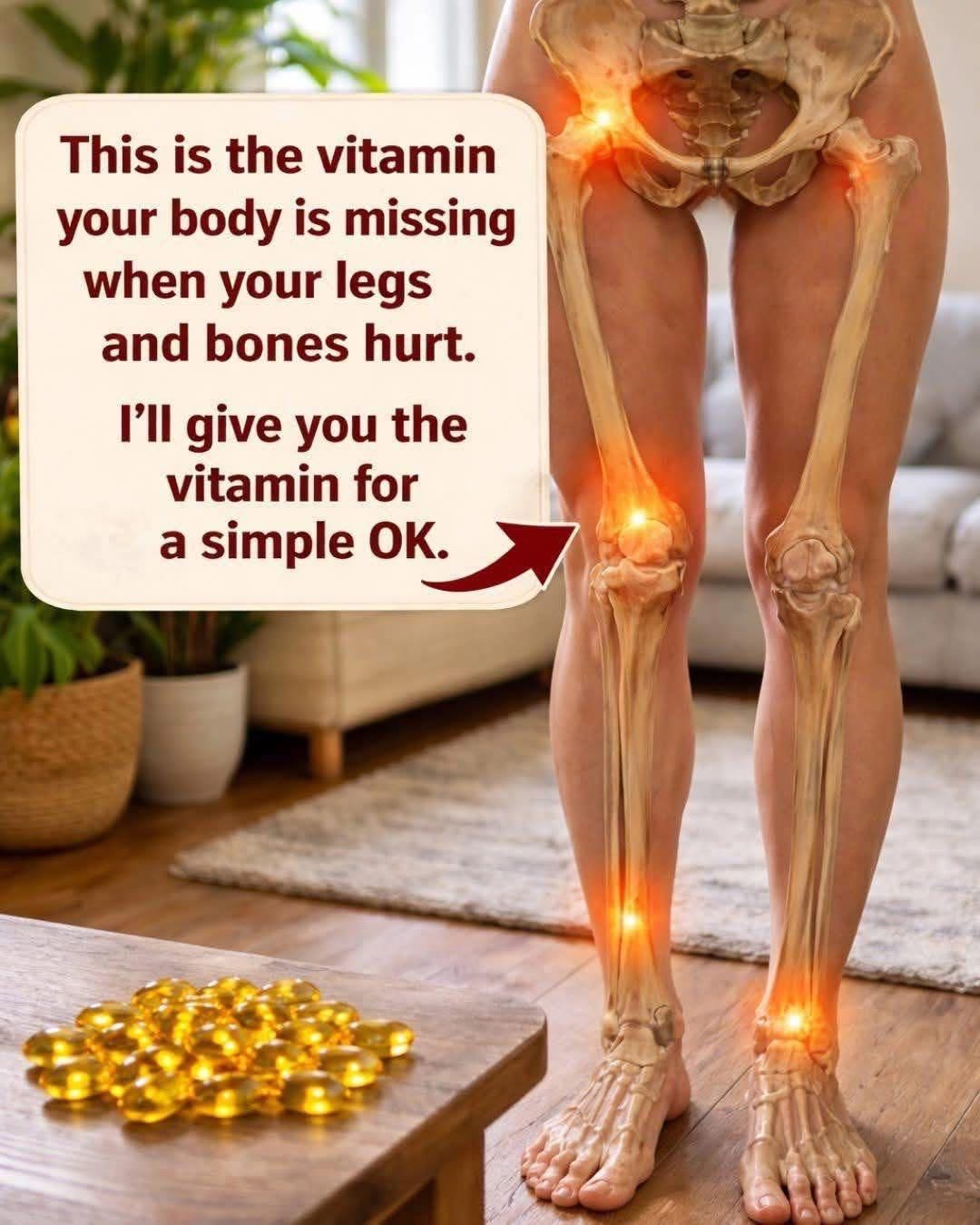
When your legs, bones, knees, or hips start hurting, it is very easy to blame age, weather, long standing hours, or “sleeping wrong.”
And yes, sometimes the body really does act like it has been personally offended by a chair.
But one common vitamin people often talk about when it comes to bone and muscle discomfort is vitamin D.
Vitamin D helps the body regulate calcium and phosphate, nutrients that are needed for healthy bones, teeth, and muscles. A lack of vitamin D can lead to bone pain in adults through a condition called osteomalacia.
This does not mean every leg pain is caused by low vitamin D.
Pain can come from many causes, including arthritis, injury, nerve problems, circulation issues, inflammation, or other health conditions.
But vitamin D is important enough that it deserves attention.
Why Vitamin D Matters
Vitamin D is sometimes called the “sunshine vitamin” because the body can make it when skin is exposed to sunlight.
But many people still do not get enough.
This can happen because of staying indoors, covering the skin, darker skin tone, aging, winter seasons, certain health conditions, or not eating enough vitamin D-rich foods.
Vitamin D deficiency can affect bone mineralization in adults and may contribute to osteomalacia, where bones become softer and painful.
That is why people often connect low vitamin D with bone aches, muscle weakness, and general body discomfort.
Again, it is not the only possible reason.
But it is one reason worth checking.
A Quick Important Reminder
No homemade drink can diagnose or cure vitamin D deficiency.
The only reliable way to know your vitamin D level is through a blood test.
If your bone pain is strong, persistent, or getting worse, speak with a healthcare professional.
This recipe can support a healthy routine, but it should not replace medical advice, prescribed supplements, or treatment.
Grandma recipes are comforting, but blood tests still have the final word.
Simple Vitamin D Support Smoothie
This recipe is made with foods that can support a bone-friendly routine.
It is creamy, easy to make, and perfect for breakfast or an afternoon snack.
The goal is not to create a miracle drink.
The goal is to make a simple nourishing recipe that helps you include more helpful nutrients in your day.
Ingredients
1 cup fortified milk or fortified plant-based milk
½ cup plain yogurt
1 banana
1 tablespoon almond butter or peanut butter
1 teaspoon chia seeds
½ teaspoon cinnamon
1 teaspoon honey, optional
A few ice cubes
Optional: 1 boiled egg on the side
How To Make It
Add the fortified milk to a blender.
Add the yogurt, banana, almond butter, chia seeds, cinnamon, and honey.
Blend until smooth and creamy.
Add ice if you want it colder.
Pour into a glass and drink fresh.
That’s it.
Simple.
Creamy.
Comforting.
And thankfully, no complicated “wellness powder” that costs half your grocery budget.
Why Fortified Milk Helps
Vitamin D is found naturally in only a few foods, so fortified foods can be helpful.
The NIH Office of Dietary Supplements lists sources of vitamin D such as fatty fish, fish liver oils, egg yolks, and fortified foods like milk, plant-based beverages, cereals, and some orange juices.
That is why fortified milk works well in this recipe.
It gives the smoothie a creamy base while helping support vitamin D intake.
If you do not drink dairy, choose a fortified plant-based milk and check the label.
Not all plant-based milks are fortified.
Labels matter more than pretty packaging.
Why Yogurt Is Added
Yogurt gives the smoothie a creamy texture and adds protein.
Protein is important because muscles, bones, and overall strength need proper nutrition.
A smoothie without protein can sometimes leave you hungry again after twenty minutes.
And nobody wants a “healthy breakfast” that makes them search for cookies before 10 AM.
Plain yogurt is best because it keeps the recipe less sugary.
You can use Greek yogurt if you want a thicker texture.
Why Banana Works Well
Banana adds natural sweetness and makes the smoothie smooth.
It also makes the recipe more satisfying.
Some healthy drinks taste like punishment.
This one does not have to.
Banana helps make the smoothie taste like something you actually want to drink again tomorrow.
Consistency is easier when the recipe is enjoyable.
Why Chia Seeds Are Useful
Chia seeds add texture, fiber, and healthy fats.
They also make the smoothie more filling.
A small spoonful is enough.
Do not add too much unless you want the drink to turn into a spoon dessert.
Chia seeds are tiny, but they take their thickening job very seriously.
Add An Egg On The Side
Egg yolks are one of the natural food sources of vitamin D.
That is why a boiled egg on the side can make this breakfast more complete.
You do not have to blend the egg into the smoothie.
Please don’t.
Some ideas should stay outside the blender.
Just enjoy it separately with a little salt and pepper.
Other Foods That Support Vitamin D Intake
You can also include more vitamin D-friendly foods in your weekly meals.
Good options include:
Salmon.
Sardines.
Tuna.
Egg yolks.
Fortified milk.
Fortified plant milk.
Fortified cereals.
Some fortified orange juices.
These foods can support your routine, but if someone is truly deficient, food alone may not be enough.
A doctor may recommend supplements depending on blood test results.
Be Careful With Supplements
Vitamin D is important, but taking too much can be harmful.
Mayo Clinic notes that taking more than 4,000 IU daily can cause side effects and may lead to serious problems such as kidney stones, kidney damage, heart rhythm issues, and confusion.
So do not take high-dose vitamin D randomly.
More is not always better.
Sometimes more is just more trouble.
Ask a healthcare professional what dose is right for you.
How Much Vitamin D Do Adults Need?
Many adults are advised to get around 600 IU of vitamin D per day, and adults older than 70 may need around 800 IU per day, according to Mayo Clinic.
But individual needs can vary.
Your doctor may recommend a different amount if your blood test shows deficiency.
That is why testing matters.
Guessing with vitamins is not a great hobby.
Can Sunlight Help?
Sunlight can help the body make vitamin D.
But sun exposure depends on season, skin tone, location, age, clothing, sunscreen use, and time outdoors.
It is also important to protect your skin from sun damage.
A balanced approach is best.
Short safe exposure may help some people, but supplements or fortified foods may still be needed for others.
When Pain Needs Medical Attention
Do not ignore strong or persistent bone and leg pain.
See a doctor if pain lasts, gets worse, affects walking, comes with swelling, numbness, weakness, fever, unexplained weight loss, or severe fatigue.
Also speak with a doctor if you have frequent fractures, very weak muscles, or pain that wakes you up at night.
Vitamin D deficiency is only one possible cause.
Your body may be asking for something more serious than a smoothie.
Final Thoughts
The vitamin often connected with bone pain and leg discomfort is vitamin D.
It plays an important role in keeping bones and muscles healthy.
A lack of it can contribute to bone pain in adults, but it is not the only possible cause.
This vitamin D support smoothie is a simple, creamy, and nourishing recipe you can add to your routine.
It uses fortified milk, yogurt, banana, chia seeds, and optional egg on the side to create a more balanced breakfast or snack.
It will not magically cure pain overnight.
But it can support better daily habits.
And sometimes real wellness starts with small things.
A better breakfast.
A little sunlight.
A doctor checkup when needed.
And one simple recipe that makes taking care of yourself feel easier.