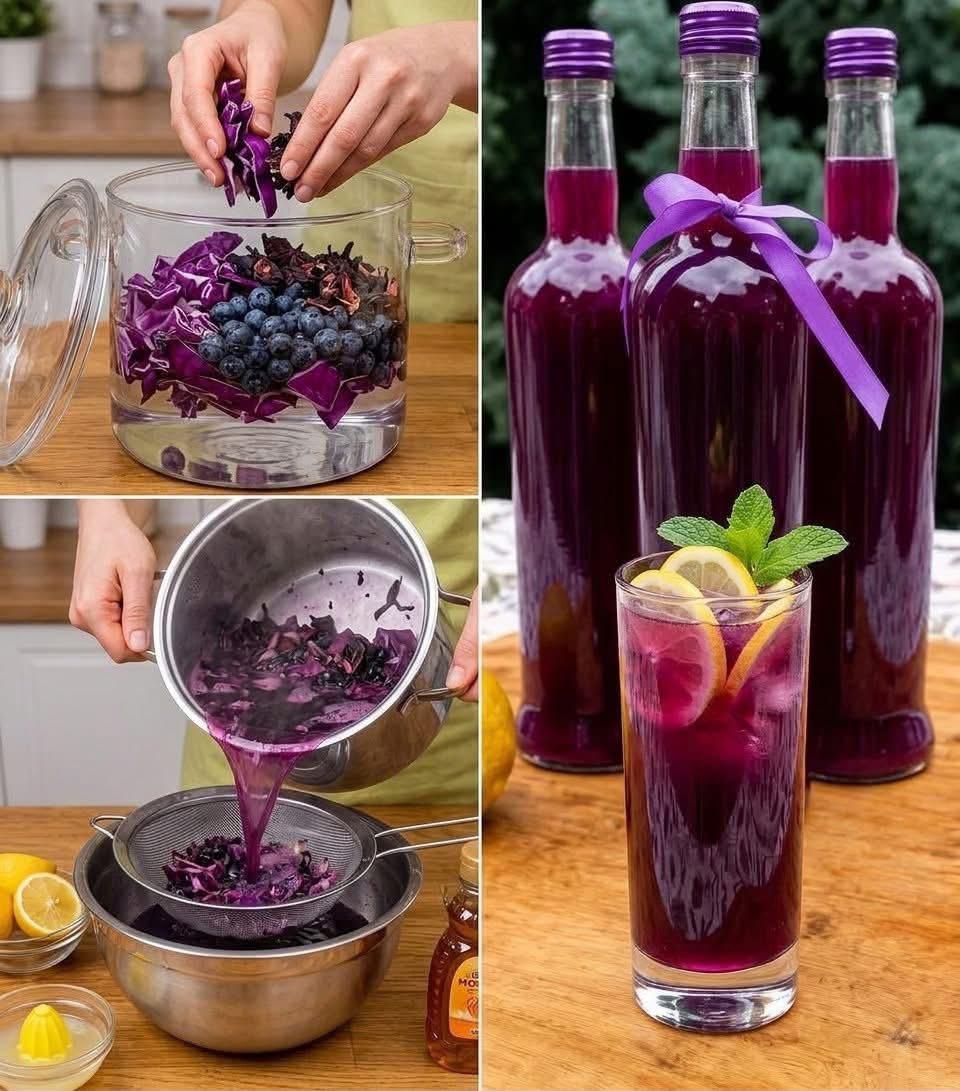
Purple cabbage, blueberries, dried hibiscus, and lemon create a beautifully colored homemade drink with a fresh, gently tart flavor.
Its deep purple shade comes naturally from plant pigments found in red, blue, and purple foods. It looks almost too dramatic for such ordinary ingredients—but thankfully, no food coloring or mysterious powder is required.
This drink may support hydration and add variety to a balanced diet. It cannot act like morphine, remove rheumatic disease, or replace treatment for persistent muscle and joint pain.
What Gives This Drink Its Purple Color?
Purple cabbage, blueberries, and hibiscus contain natural pigments called anthocyanins.
Anthocyanins are water-soluble plant compounds found in many red, purple, and blue fruits and vegetables. They give foods such as berries, grapes, plums, and purple cabbage their rich colors.
The color can change slightly depending on acidity.
Adding lemon juice usually turns the finished drink a brighter reddish-purple. This little kitchen transformation feels like a science experiment, except this one ends with something refreshing to drink.
The color may vary with the quantity of cabbage, the type of blueberries, and the strength of the hibiscus.
What This Drink Can Realistically Offer
This homemade beverage is mainly a flavorful way to consume more water and include colorful plant ingredients in your routine.
It may provide:
- A small amount of vitamin C
- Natural plant pigments
- A refreshing alternative to soda
- Gentle sweetness when honey is added
- Additional variety in a plant-forward diet
- A pleasant hot or cold drink
Blueberries and purple cabbage are nutritious foods, but turning them into a drink does not transform them into medicine.
A varied eating pattern that includes vegetables, fruit, beans, whole grains, suitable proteins, nuts, and seeds is more helpful than depending on a single “miracle” recipe.
Can It Remove Muscle or Joint Pain?
This beverage is not a natural form of morphine.
It cannot numb pain in the same way as prescription medicine, cure rheumatoid arthritis, rebuild damaged joints, or remove the underlying cause of chronic pain.
Certain plant-rich foods contain compounds researchers continue to study. However, the benefits of foods and complementary approaches are usually modest, and evidence varies depending on the type and cause of pain.
A warm cup may feel comforting.
Good hydration and balanced meals can also support general well-being. That is different from treating an injury, autoimmune condition, nerve problem, or severe arthritis.
Use this drink as food—not as a reason to delay proper evaluation.
Purple Cabbage and Blueberry Drink Recipe
This recipe produces a concentrated infusion that can be diluted before serving.
Use only dried hibiscus labeled as food-grade. Decorative hibiscus flowers from florists or garden centers may have been treated with products that are not intended for consumption.
Preparation time: 15 minutes
Cooking time: 15 minutes
Cooling time: 30 minutes
Yield: Approximately 6 cups
Ingredients
- 6 cups water
- 2 cups finely chopped purple cabbage
- 1 cup fresh or frozen blueberries
- ¼ cup dried food-grade hibiscus petals
- 2 tablespoons fresh lemon juice
- 1 to 3 tablespoons honey, optional
- 6 fresh mint leaves, optional
- Lemon slices for serving
- Ice cubes for serving cold
How to Make It
Wash the purple cabbage carefully under running water.
Remove any wilted, damaged, or discolored outer leaves.
Chop the cabbage into small pieces. Smaller pieces release their color more easily and fit neatly inside the saucepan.
Rinse the fresh blueberries. Frozen blueberries can be used directly from the freezer.
Place the water in a large saucepan.
Add the chopped cabbage, blueberries, and dried hibiscus.
Bring the mixture to a gentle boil over medium heat.
Reduce the heat and simmer uncovered for 10 minutes.
Use a wooden spoon to press a few blueberries against the side of the saucepan. This helps release their juice without turning the drink into a thick purée.
Turn off the heat.
Cover the saucepan and let the ingredients steep for five additional minutes.
Place a fine mesh strainer over a large heat-safe bowl or pitcher.
Carefully pour the mixture through the strainer.
Press the solids lightly with the back of a spoon, but do not force everything through. Too much pressure can make the beverage cloudy and slightly bitter.
Allow the liquid to cool for about 15 minutes.
Stir in the fresh lemon juice.
Add honey while the drink is still slightly warm and stir until dissolved.
Taste and adjust the flavor.
Add more water when the infusion tastes too strong, more lemon for brightness, or another small spoonful of honey for sweetness.
How to Serve It Cold
Allow the strained drink to cool completely.
Transfer it to a clean covered pitcher and refrigerate it for at least two hours.
Fill a glass with ice.
Pour in the chilled purple drink and finish with a fresh lemon slice and mint leaves.
For a lighter sparkling version, fill the glass halfway with the prepared drink and top it with unsweetened sparkling water.
Add the sparkling water immediately before serving so the drink remains bubbly.
How to Serve It Warm
Pour one cup of the freshly strained drink into a mug.
Add the lemon juice and honey after it has cooled slightly.
Sip it warm rather than extremely hot.
A warm version can be pleasant during cold weather, particularly when you want something more interesting than plain water or ordinary tea.
It may feel soothing, but it should not be described as a painkiller.
A Milder Version
Hibiscus and lemon can both taste quite tart.
For a gentler family-style drink, use:
- 1 cup purple cabbage
- ½ cup blueberries
- 2 tablespoons dried hibiscus
- 7 cups water
- 2 tablespoons honey
Prepare it using the same method.
The result will be lighter in color and less acidic.
You can also leave out the hibiscus completely. The blueberries and cabbage will still produce a purple infusion, although the flavor will be softer and more vegetable-like.
Easy Variations
Berry-Rich Version
Add one cup of frozen mixed berries along with the blueberries.
Raspberries and blackberries contribute extra flavor and deepen the color.
Apple Purple Drink
Add one chopped sweet apple to the saucepan.
The apple gives the infusion a softer sweetness and reduces the need for honey.
Cinnamon Version
Add one small cinnamon stick while the ingredients simmer.
Remove it during straining.
Avoid using too much ground cinnamon because it may collect at the bottom and create a gritty final sip. Nobody wants the last mouthful to resemble purple potting soil.
Ginger Variation
Add five thin slices of fresh ginger.
This creates a warmer, slightly spicy drink.
People with reflux or sensitive stomachs may prefer a smaller amount.
Sugar-Free Version
Leave out the honey.
Serve the drink cold with orange slices, mint, or sparkling water to make it feel naturally sweeter.
What to Do With the Cooked Ingredients
The strained cabbage, berries, and hibiscus will have lost some flavor and texture.
The cabbage can be added to compost when your local composting method accepts cooked produce.
You may also blend a small amount of the cooked blueberries and cabbage into a smoothie, but the flavor will be unusual and slightly tart.
Do not reuse the mixture for several batches.
The second infusion will taste weak and may encourage unsafe storage practices.
Fresh ingredients produce a better drink.
Storage Instructions
Transfer the cooled beverage to a clean glass pitcher or bottle with a tight-fitting lid.
Keep it refrigerated at all times.
Use it within two to three days for the best flavor and freshness.
Freshly prepared fruit and vegetable drinks require careful handling. Produce should be washed before cutting, and homemade beverages should be kept cold because untreated drinks do not have the same shelf stability as commercially pasteurized products.
Use bottles with openings wide enough to clean properly.
A beautiful narrow bottle is not very useful when pieces of blueberry become permanent residents at the bottom.
Do not leave the drink at room temperature for several hours.
Discard it if you notice:
- Mold
- Unexpected bubbles
- A fermented smell
- A slimy texture
- Pressure inside the bottle
- An unpleasant or unusual flavor
The drink can be frozen in ice-cube trays for up to one month.
Transfer the frozen cubes to an airtight container. Add them to water, iced tea, or smoothies.
Important Safety Precautions
Begin with a small serving if you have never consumed hibiscus tea or a cabbage-based drink.
Purple cabbage may cause gas or bloating in some people, particularly when consumed in large amounts.
Lemon and hibiscus are acidic and may worsen heartburn or irritate sensitive teeth.
Dilute the drink when necessary.
Rinse your mouth with plain water after drinking an acidic beverage, and avoid slowly sipping it throughout the entire day.
People taking medication for blood pressure, diabetes, or another chronic condition should speak with a qualified healthcare professional before consuming concentrated herbal preparations regularly.
Pregnant or breastfeeding individuals should also obtain professional guidance before making strong hibiscus beverages part of their daily routine.
Anyone allergic to berries, cabbage, hibiscus, lemon, or another ingredient should avoid the recipe.
Do not give this drink as a treatment for arthritis or unexplained pain.
When Pain Needs Medical Attention
Muscle soreness after an active day may improve with rest, gentle movement, and appropriate home care.
Persistent or severe pain deserves more attention.
Speak with a healthcare professional when pain:
- Lasts for several weeks
- Frequently disturbs sleep
- Limits movement or daily activities
- Appears with swollen or hot joints
- Causes numbness or weakness
- Begins after a serious fall or injury
- Is accompanied by fever or unexplained fatigue
- Continues to worsen
- Does not improve with appropriate care
Seek urgent assistance for pain accompanied by chest pressure, breathing difficulty, sudden weakness, confusion, or another serious symptom.
A colorful drink can complement daily meals, but it should never delay necessary care.
Frequently Asked Questions
Can I drink it every day?
Many healthy adults can enjoy a moderate serving regularly.
Alternate it with plain water and other unsweetened beverages rather than drinking several large bottles each day.
Does it cure arthritis?
No.
It does not cure osteoarthritis, rheumatoid arthritis, rheumatic disease, or another joint condition.
Can I use frozen blueberries?
Yes.
Frozen blueberries work well and do not need to be thawed before cooking.
Can I use green cabbage?
Green cabbage can be used, but it will not create the same purple color or berry-like appearance.
Is hibiscus required?
No.
The recipe can be prepared with cabbage and blueberries alone. Hibiscus mainly adds tartness and a deeper ruby-purple color.
Can children drink it?
Older children may try a small, diluted serving when they have no allergies or relevant medical restrictions.
Very tart drinks may irritate sensitive stomachs or teeth.
Can I bottle it for several weeks?
No.
This is a fresh homemade drink without a tested preservation process. Keep it refrigerated and use it within two to three days.
Final Thoughts
Purple cabbage, blueberries, hibiscus, and lemon produce one of those rare homemade drinks that looks impressive without being difficult to prepare.
Its rich color comes from the plants themselves, while its tart, fruity flavor makes hydration feel a little less ordinary.
Enjoy it cold over ice or warm in a favorite mug.
It will not behave like morphine or erase chronic pain, but it can add color, flavor, and nourishing plant ingredients to the day—and that is already plenty for one pitcher.