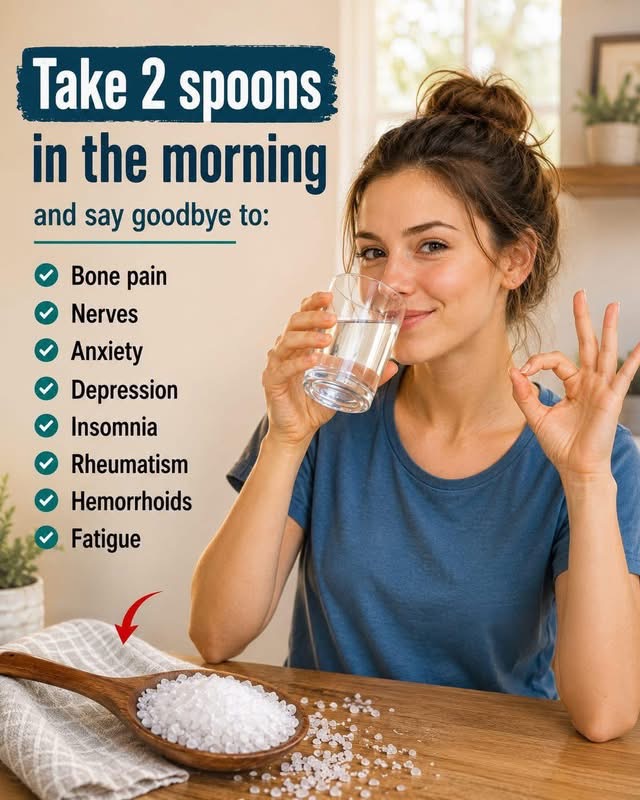
You have probably seen posts like this all over social media.
“Take 2 spoons in the morning and say goodbye to bone pain, nerves, anxiety, depression, insomnia, rheumatism, hemorrhoids, fatigue…”
Sounds dramatic, right?
Almost a little too dramatic.
The ingredient in images like this is often some kind of mineral salt, especially magnesium-related crystals such as Epsom salt or magnesium chloride flakes.
And while magnesium is an important mineral for the body, it is not a magic cure-all.
Still, the idea behind these posts comes from something real: your body truly does need magnesium for muscles, nerves, bones, sleep, and energy.
So let’s talk about what this ingredient may actually do, what it definitely does not do, and how to approach it in a much safer and smarter way.
What Is This White Ingredient?
The white crystals shown in these kinds of images are often mistaken for regular salt or sugar.
But in many “natural remedy” posts, they are usually presented as:
- Epsom salt
- Magnesium chloride flakes
- Mineral salts used in water
- A homemade mineral drink ingredient
Now, here is the important part.
Not all white crystals are the same.
And not all of them are meant to be swallowed by the spoonful.
That is where many people get confused.
The internet loves to act like every white crystal in a wooden spoon is a miracle from heaven.
Your body, however, likes details.
Why Magnesium Gets So Much Attention
Magnesium is involved in many functions in the body.
It helps support:
- Muscle function
- Nerve function
- Energy production
- Bone health
- Normal sleep support
- Relaxation
- General wellbeing
That is why people often connect magnesium with things like tiredness, poor sleep, muscle discomfort, stress, and feeling run down.
And honestly, that part is not completely random.
If someone has low magnesium intake, they may feel more tired or tense than usual.
But that still does not mean one spoonful of mineral crystals will suddenly fix every problem from sadness to diabetes to hemorrhoids.
If that were true, pharmacies would be very quiet places.
Can One Ingredient Really Help With Bone Pain?
Bone pain is a serious symptom.
It can be linked to vitamin deficiencies, arthritis, injuries, inflammation, infections, or other medical conditions.
Magnesium does play a role in bone health.
That much is true.
But bone pain is not something to brush off with a “just take this and smile” approach.
If someone has ongoing bone pain, the real answer may involve:
- Better nutrition
- Enough vitamin D
- Calcium balance
- Exercise
- Medical advice
- Proper diagnosis
So yes, minerals matter.
But no, one ingredient alone is not a full solution.
What About Anxiety, Nerves, and Insomnia?
This is where magnesium gets a lot of love.
Many people say they feel calmer or sleep better when their overall magnesium intake improves.
That is because magnesium is connected to muscle relaxation and normal nerve function.
But again, moderation matters.
Feeling anxious, tired, or unable to sleep may also be connected to:
- Stress
- Too much caffeine
- Lack of sleep routine
- Hormonal changes
- Poor diet
- Mental health struggles
- Medical conditions
A mineral may support overall wellness.
It should not replace proper care.
Your bedtime routine still matters.
Your stress levels still matter.
And sadly, your brain does not always calm down just because you swallowed something trendy from Facebook.
Can It Help With Fatigue?
Fatigue is another big word people throw around online.
Sometimes fatigue really is connected to poor nutrition.
Other times it is caused by lack of sleep, stress, anemia, thyroid issues, dehydration, blood sugar problems, or just life being life.
If you are tired all the time, your body may be asking for something deeper than a homemade mineral trick.
That said, staying hydrated and getting enough minerals through a balanced diet can absolutely support energy levels.
That is the realistic version.
Not magic.
Just better habits.
What About Diabetes?
This is where we need to be extra careful.
No single spoonful of crystals cures diabetes.
No one ingredient should be promoted as a replacement for medical care, monitoring, prescribed medication, or a proper eating plan.
People living with diabetes need real guidance, not internet drama.
Healthy choices can support blood sugar management.
But claims like “this one ingredient helps with diabetes” are often exaggerated and misleading.
The body is not a simple on-and-off switch.
If only it were.
Is It Safe to Take 2 Spoons Every Morning?
Not automatically.
And this is the part many social posts skip.
Some mineral salts are not meant to be taken in large amounts.
Too much can cause:
- Diarrhea
- Stomach cramps
- Nausea
- Electrolyte imbalance
- Digestive upset
- Problems for people with kidney issues
- Dangerous interactions for some people
That means blindly taking “2 spoons every morning” is not good advice.
The dose matters.
The ingredient matters.
Your health condition matters.
Your kidneys definitely care more about accuracy than Facebook posts do.
A Smarter Way to Support Magnesium Naturally
If the goal is to support your body with magnesium, food is often the gentlest place to start.
Some magnesium-rich foods include:
- Pumpkin seeds
- Almonds
- Cashews
- Spinach
- Avocados
- Bananas
- Dark chocolate
- Beans
- Oats
- Yogurt
- Whole grains
Now that is a list your breakfast can actually work with.
Much friendlier than mystery crystals in a spoon.
A Simple Mineral-Friendly Morning Drink
If you want a gentle, homemade drink that feels fresh and supportive, here is a much safer idea.
It will not cure everything under the sun.
But it can be part of a balanced routine.
Ingredients
- 1 glass of water
- Juice of ½ lemon
- A few slices of cucumber
- 1 teaspoon honey, optional
- A pinch of mineral salt only if appropriate and tolerated
- Fresh mint leaves, optional
How to Make It
Add the lemon juice to a glass of water.
Drop in the cucumber slices.
Add mint if you like a fresher taste.
If you want a touch of sweetness, stir in a small amount of honey.
Drink it in the morning while it is cool and refreshing.
Simple.
Light.
No drama.
No miracle promises.
Just a nice way to start the day.
Lifestyle Habits That Matter More Than Viral Remedies
If you want less fatigue, better sleep, and more balanced energy, these habits matter much more than internet miracle posts:
- Drink enough water
- Eat regular balanced meals
- Sleep on a schedule
- Move your body daily
- Reduce stress where possible
- Get sunlight and fresh air
- Avoid too much sugar and ultra-processed foods
- Talk to a doctor when symptoms keep coming back
It is not as flashy as “2 spoons and your life changes forever.”
But it works a lot better in real life.
When You Should Be Careful
Please don’t rely on home remedies alone if you have:
- Ongoing bone pain
- Severe fatigue
- Depression
- Uncontrolled diabetes
- Persistent insomnia
- Numbness or nerve pain
- Rectal bleeding or hemorrhoid pain
- Kidney disease
- High-risk medical conditions
Home wellness tips can be helpful.
They are not a substitute for proper care when symptoms are serious.
That little sentence may not go viral.
But it is the sentence that actually protects people.
The Real Bottom Line
The ingredient in posts like this is often connected to magnesium, and magnesium really is important for the body.
It may support normal muscle function, nerve health, rest, and overall wellness.
But that does not make it a miracle cure.
One single ingredient will not erase bone pain, diabetes, anxiety, depression, insomnia, hemorrhoids, and fatigue all at once.
That is wishful thinking dressed up as health advice.
A better approach is this:
Use natural ingredients as support.
Use food as your foundation.
Use common sense as your filter.
And use medical advice when your body is clearly asking for help.
Because real wellness is usually not about one magical spoon.
It is about many small choices, repeated with care, until your body starts to thank you for them.
And honestly, that kind of health story may be less flashy…
but it is a lot more believable.