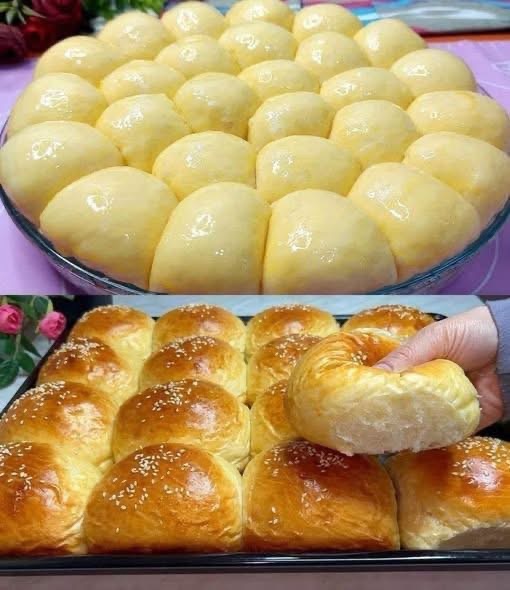
There are some breads that look beautiful on the tray.
Then there are breads that look beautiful, smell incredible, and somehow still disappear before they have even properly cooled.
That is exactly what milk brioche rolls do.
They come out shiny, golden, soft, and pillowy, with that rich homemade look that makes people reach for one “just to check” while the pan is still warm. Then one becomes two, and suddenly everybody is asking when you are making them again.
Honestly, that is the kind of bread worth keeping.
These rolls are tender, fluffy, slightly rich, and perfect for breakfast, dinner, holiday tables, sandwiches, or simply tearing apart and eating with butter while standing in the kitchen pretending you are not already full. They feel a little special, but they are still made from everyday ingredients and a very classic dough.
That is one reason they stay so loved.
Why Milk Brioche Rolls Are So Good
The magic of homemade brioche rolls is in the texture.
They are softer than regular dinner rolls.
Richer than plain bread.
And lighter than people expect from something made with eggs and milk.
That combination gives them their signature feel. The milk keeps the dough tender. The eggs add richness and color. The butter makes the crumb soft and delicate. And once they bake up with that golden glossy top, they become the kind of bread people remember.
This is the sort of recipe that works just as well on a holiday table as it does on an ordinary weeknight when you want dinner to feel a little more comforting.
And bread that can do both is always worth respecting.
What These Rolls Taste Like
These milk brioche rolls are lightly sweet, buttery, soft, and wonderfully fluffy inside.
The crust is thin, shiny, and golden.
The inside pulls apart in feathery soft layers.
And each bite feels rich enough to be satisfying without becoming heavy.
They are lovely with butter.
Wonderful with jam.
Perfect next to soup or stew.
And absolutely dangerous when served warm straight from the oven.
That is not an exaggeration.
Warm brioche has a way of destroying all sensible portion planning.
Why This Recipe Works So Well
A good brioche bread recipe does not need complicated ingredients.
It just needs patience and the right balance.
Flour gives structure.
Milk makes the dough softer.
Eggs and butter bring richness.
Yeast gives the dough lift and that beautiful airy crumb.
And when you give the dough enough time to rise properly, the result is the kind of soft, tender bread that feels almost bakery-quality right out of your own oven.
That is one of the best things about making brioche at home.
It looks impressive, but it is still built from simple ingredients you probably already recognize.
Ingredients
For the dough
- 4 cups all-purpose flour
- 2 eggs, room temperature
- 1 cup whole milk, warmed to about 110°F
- 1/4 cup granulated sugar
- 2 1/4 teaspoons active dry yeast
- 1 teaspoon salt
- 1/4 cup unsalted butter, softened
For brushing the top
- 1 egg yolk
- 1 tablespoon milk
Optional topping
- sesame seeds
- poppy seeds
- a little melted butter after baking
This ingredient list creates soft, rich rolls with a beautiful golden top and tender crumb.
Start With the Yeast
In a large bowl or mixer bowl, combine the warm milk, sugar, and yeast.
Let it sit for about 5 to 10 minutes until it looks foamy on top.
That little foamy layer tells you the yeast is awake and ready to work.
If it does not foam, it is worth starting over rather than hoping for the best. Bread dough can forgive many things, but inactive yeast is not usually one of them.
Once the yeast mixture is ready, add the eggs and whisk lightly.
Mix the Dough
Add the flour and salt, then begin mixing until a dough forms.
Once everything starts coming together, add the softened butter a little at a time.
Keep kneading until the dough becomes smooth, elastic, and slightly tacky but not overly sticky.
This usually takes about 8 to 10 minutes in a stand mixer or a bit longer by hand.
At first, the dough may look shaggy and uneven.
Keep going.
Brioche dough often looks like it is having doubts before it suddenly becomes beautiful.
That transformation is part of the process.
First Rise
Place the dough in a lightly greased bowl and cover it.
Let it rise in a warm place for about 1 to 1 1/2 hours, or until doubled in size.
This rise matters.
It is what gives the rolls their light texture and soft interior.
If the kitchen is cool, the dough may take a little longer. That is fine. Bread likes patience much more than pressure.
Once the dough has risen, punch it down gently.
Not aggressively.
Just enough to release the air and get it ready for shaping.
Shape the Rolls
Divide the dough into equal pieces and shape them into smooth balls.
You can make around 16 to 20 rolls, depending on how large you want them.
Arrange them in a greased baking dish or sheet pan, leaving just a little space between each one so they can rise and bake together into that beautiful pull-apart shape.
This is the stage where the dough already starts looking very promising.
Soft little rounds lined up in a pan almost always mean something good is coming.
Second Rise
Cover the shaped rolls and let them rise again for about 30 to 45 minutes, until puffy.
This second rise is what helps create that fluffy bakery-style texture people love so much in soft brioche rolls.
While they rise, preheat your oven to 350°F (175°C).
In a small bowl, whisk together the egg yolk and milk, then gently brush it over the tops of the rolls.
This gives them that deep glossy golden finish that makes them look so beautiful after baking.
If you want, sprinkle sesame seeds over the top now.
Bake Until Golden
Bake the rolls for about 20 to 25 minutes, or until they are puffed and richly golden on top.
The tops should look shiny and lightly browned, and the kitchen should smell like the kind of place everybody suddenly wants to gather in.
Let the rolls cool for a few minutes in the pan before serving.
If you want an extra soft finish, brush them lightly with melted butter while still warm.
That step is optional.
Very good, but optional.
Best Ways to Serve Milk Brioche Rolls
These soft milk rolls are wonderfully versatile.
They are perfect with:
- butter and jam
- honey
- cheese
- soup
- roast chicken
- holiday meals
- breakfast spreads
- mini sandwiches
They are especially lovely on a breakfast table because they feel richer and softer than ordinary bread without becoming too sweet.
And if you have leftovers, they make excellent sandwich rolls the next day.
That is assuming you have leftovers, which is always a bold assumption with brioche.
Tips for the Best Brioche Rolls
Use room-temperature eggs so the dough mixes more evenly.
Do not overheat the milk. Warm is good. Hot is not.
Knead long enough for the dough to become smooth and elastic.
Let the dough rise fully both times.
And do not rush the baking just because the tops are browning. Fully baked brioche should feel light but set.
If the tops brown too quickly, loosely cover them with foil for the last few minutes.
That keeps the crust beautiful without overdarkening it.
Easy Variations
One of the nicest things about milk brioche dough is how flexible it can be.
You can shape it into small rolls, buns, braided loaves, or even sweet breakfast bread.
You can top it with sesame seeds for a more classic dinner-roll look.
You can brush it with butter and a little honey after baking for a softer sweeter finish.
Or you can keep it plain and let the rich soft bread speak for itself.
Honestly, plain works beautifully here.
This dough does not need much help.
Final Thoughts
These milk brioche rolls are exactly the kind of bread people fall in love with because they are soft, golden, fluffy, and deeply comforting.
They look beautiful in the pan.
They pull apart perfectly.
And they bring that homemade warmth that makes even a simple meal feel more special.
So if you are looking for a bread recipe that feels classic, rich, and absolutely worth the wait, these rolls deserve a place in your kitchen.
Because once a tray of warm brioche rolls hits the table, people remember it.