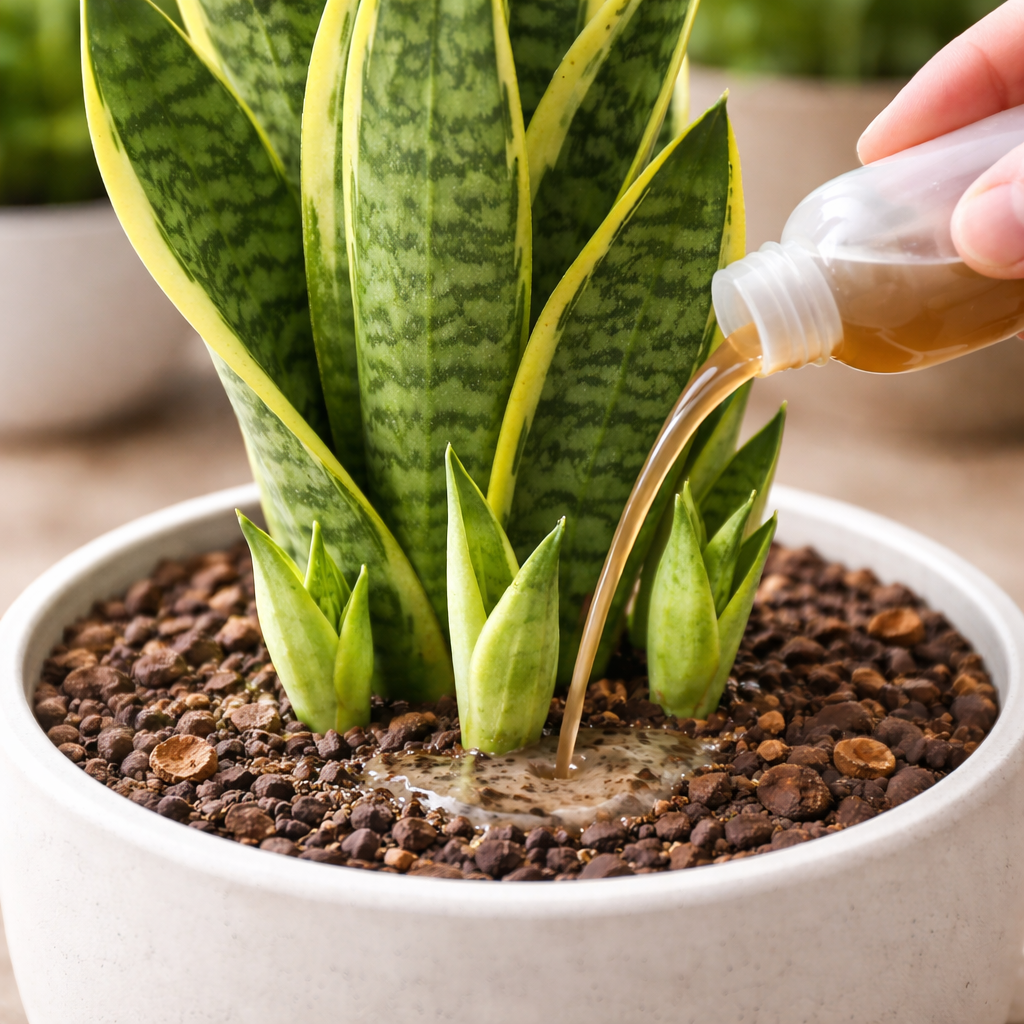
I poured a little of this brown liquid around my snake plant pups… and after that, the whole pot started looking fuller and more active.
At first, I thought I was probably imagining it.
You know how it goes with plants.
You stare at them for days, hoping for a sign, and suddenly one tiny change feels like a full documentary-worthy comeback.
But this time, the difference was real.
The new shoots looked stronger.
Healthier.
Way more promising.
And the whole pot started giving that “okay, maybe I’m not struggling anymore” energy.
The brown liquid in this method was diluted compost tea.
That is what gave it that earthy brown color.
Not coffee.
Not soda.
Not some random mystery liquid from the kitchen that your plant definitely did not ask for.
Just a mild, diluted compost tea used carefully around the base as part of a fuller snake plant care routine.
And that last part matters.
Because the brown liquid helped, yes, but it was not the whole reason the pot improved.
The real magic was in the full setup.
What Was the Brown Liquid?
The brown liquid was compost tea diluted with water.
Compost tea is made by soaking finished compost in water so some of its nutrients and beneficial compounds move into the liquid.
When prepared lightly, it becomes a gentle brown plant tonic that many gardeners use from time to time.
It has that tea-colored look, which is why it stands out so much in plant content.
For this method, it was used in a light, diluted form.
Not thick.
Not sludgy.
Not poured in like soup.
Just a small amount around the snake plant pups as part of a healthier overall care routine.
That is the difference between a helpful step and a messy mistake.
Used lightly, compost tea can support the plant.
Used too heavily or too often, it can create more problems than it solves.
And snake plants are not the kind of plants that enjoy being over-loved.
They tolerate a lot, but they still have limits.
Why Snake Plant Pups Sometimes Stall
Snake plant pups are exciting because they make the whole pot look fuller and healthier.
They are like the plant’s quiet little way of saying, “Fine, I guess I’m doing okay.”
But sometimes those new shoots appear and then just sit there.
They look small.
A little weak.
Not very active.
And they do not seem to push forward the way you hoped.
Usually, that happens because the growing conditions are not quite right.
The biggest issue is often moisture.
Snake plants hate staying too wet for too long.
Even the pups feel that stress.
If the soil is heavy, soggy, or slow to dry, new growth can lose momentum fast.
Low light can also slow them down.
Snake plants survive in lower light, yes.
But pups often develop better when the plant gets brighter indirect light and more stable conditions.
Old compacted soil can be another problem.
If the roots are packed into dense mix with poor airflow, the plant may survive, but it will not always look energetic.
That is when a pot starts feeling stagnant.
Not dead.
Just sleepy.
Why Diluted Compost Tea Helped
The compost tea helped because it gave the pot a gentle boost without being too harsh.
That earthy brown liquid added a mild nutritional support step to the routine.
But again, this only worked because the rest of the care improved too.
That is the part people skip when they chase plant hacks.
A brown liquid alone does not magically turn weak snake plant pups into strong new growth.
The plant also needs proper drainage.
Good light.
Smarter watering.
And enough time to respond.
The diluted compost tea was more like encouragement than a miracle.
A small push.
A little support.
Not a shortcut.
When used lightly, it can fit nicely into a recovery or growth-support routine.
But when people start pouring too much, too often, things get messy fast.
Snake plants do not want constant feeding.
They want balance.
The Full Method That Made the Pot Look Better
The first thing I checked was the soil.
This matters a lot more than people think.
Snake plants do best in fast-draining soil that does not stay damp forever.
If the mix feels dense or holds water too long, even healthy pups can start looking sluggish.
So I made sure the potting mix was airy enough and not staying wet too long after watering.
Next, I checked the pot itself.
Drainage is not optional with snake plants.
A pot with no drainage hole may look nice, but it often turns into a slow trap for the roots.
If water collects at the bottom, the plant stays stressed even when everything looks fine from above.
Then I looked at the light.
Snake plants can survive in dimmer corners, but pups often look stronger and more active in bright, indirect light.
That brighter setting helps the whole pot feel more alive.
After that, I adjusted watering.
This is where so many people go wrong.
A snake plant with pups does not need constant moisture.
If anything, overwatering is one of the easiest ways to slow everything down.
I let the soil dry properly between waterings instead of watering on habit.
Then came the brown liquid.
The diluted compost tea was poured lightly around the base.
Not every day.
Not every week.
Just a careful amount as part of the overall reset.
And then I left the plant alone long enough to respond.
That might be the hardest part of plant care.
Not doing more.
The First Signs It Was Working
The changes were not dramatic overnight.
That is normal.
Real plant improvement usually starts quietly.
First, the pups looked a little more upright.
Then they started looking healthier.
Then the whole pot seemed fuller, stronger, and more active.
That is when I knew something had shifted.
The new shoots no longer looked stuck.
They looked like they were actually moving forward.
And that is the kind of progress that matters most.
Not fake instant results.
Real, steady signs that the plant is happier.
Mistakes People Make With Brown Liquid Plant Tricks
The biggest mistake is using too much.
That happens all the time.
People see one successful method and assume doubling it will double the result.
Plants would like to officially disagree.
Too much compost tea can overload the soil, leave buildup, or keep things too damp.
Another mistake is using poorly made compost tea.
If it smells bad or seems too heavy, it is not something you want to pour into a houseplant pot.
Snake plants like simple, clean routines.
Not suspicious swamp juice.
People also forget that feeding does not fix bad drainage.
If the soil is staying wet or the roots are stressed, the bigger issue is the setup.
And of course, many people try too many things at once.
Repotting, trimming, feeding, rotating, misting, and pouring mystery liquids all in one weekend is not always a rescue plan.
Sometimes it is just chaos with leaves.
When the Plant Needs More Than a Boost
If the pups still look weak after improving the basics, it may be time to repot.
Old compacted soil can hold a snake plant back for a long time.
Fresh, well-draining mix often makes a bigger difference than people expect.
A snug pot with drainage usually works best.
You also want to check for any signs of root trouble.
If the base feels mushy or the soil smells sour, feeding is not the first answer.
Fixing the environment comes first.
That is why I always say the brown liquid helped, but it was not the whole story.
The compost tea supported the routine.
It did not replace it.
Final Thoughts
So yes, the brown liquid in this method was diluted compost tea.
That is what gave it the earthy color.
And yes, it helped the snake plant pups look stronger, healthier, and more promising.
But the real difference came from the full method.
Better soil.
Better drainage.
Better light.
Smarter watering.
And one small, careful boost instead of constant overdoing.
That is what made the whole pot start looking fuller and more active.
Sometimes a plant does not need a dramatic rescue.
It just needs a better setup and one gentle nudge in the right direction.
And honestly, seeing those little pups start acting like they finally believe in themselves again?
That is a very satisfying thing.