Healthy kidneys work quietly in the background every day, filtering the blood, balancing fluids and minerals, and helping the body remove waste.
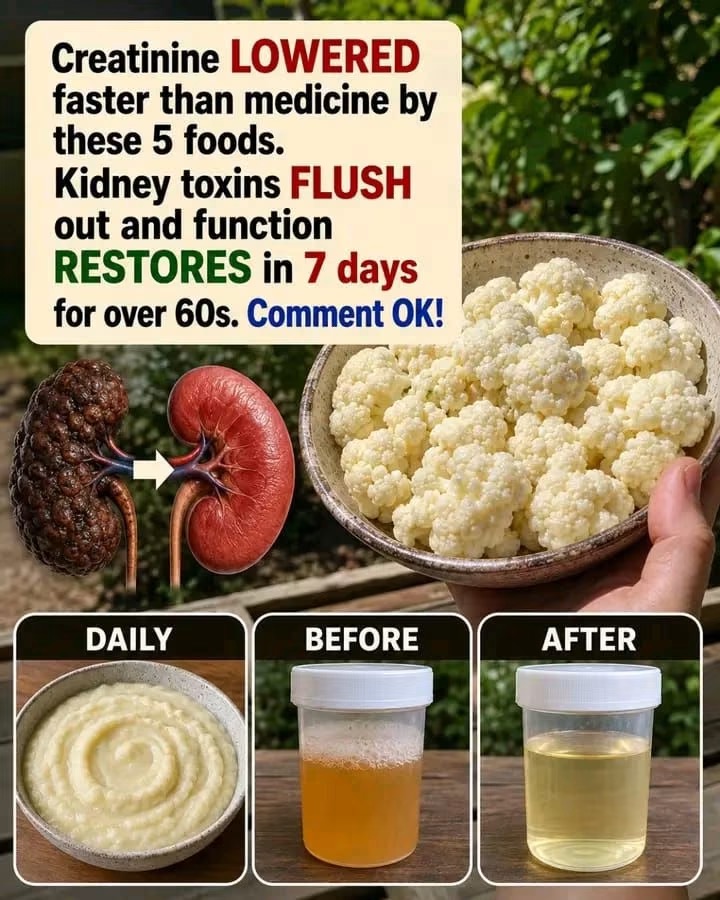
Food cannot restore damaged kidney function in seven days or guarantee a rapid drop in creatinine. Still, everyday food choices can play an important role in supporting overall kidney and heart health, especially when meals are built around fresh ingredients and less sodium.
One vegetable that fits beautifully into many meals is cauliflower. It is versatile, mild, and easy to turn into everything from roasted florets to a creamy mash.
Here are five foods that can be useful in a balanced, kidney-conscious eating pattern, plus a simple cauliflower recipe you can make at home.
What Creatinine Actually Tells Us
Creatinine is a waste product produced naturally by normal muscle activity.
Healthy kidneys filter it from the blood and remove it through urine.
Doctors often measure blood creatinine and use that result, together with factors such as age and sex, to estimate kidney filtration with a number called eGFR.
A high creatinine result can sometimes occur when kidney filtration is reduced, but one number does not tell the whole story.
Creatinine can also be influenced by hydration, muscle mass, intense exercise, certain medicines, and recent intake of large amounts of cooked meat.
This is why kidney function is assessed with appropriate blood and urine tests rather than by judging how clear the urine looks.
Food #1: Cauliflower
Cauliflower deserves a permanent place in the kitchen.
It has a mild flavor that works with garlic, herbs, lemon, olive oil, and dozens of other ingredients.
It can replace some heavier or highly processed side dishes and works particularly well when someone is trying to reduce sodium.
Try cauliflower:
- Roasted
- Steamed
- Mashed
- Added to soups
- Mixed into rice dishes
- Tossed into salads
- Blended into creamy vegetable soup
The key is how you prepare it.
Covering cauliflower with large amounts of processed cheese, salty seasoning packets, or bottled sauces can turn a simple vegetable into a sodium-heavy meal very quickly.
Food #2: Cabbage
Cabbage is another inexpensive vegetable worth keeping around.
Green, red, and Savoy cabbage can all work in simple meals.
Shred cabbage into salads, sauté it lightly with olive oil, add it to soup, or roast wedges until the edges become slightly caramelized.
Instead of heavily salting cabbage, season it with:
- Garlic
- Black pepper
- Paprika
- Parsley
- Lemon juice
- Vinegar
- Fresh herbs
Cabbage also keeps relatively well in the refrigerator, which makes it useful when you don’t want delicate vegetables spoiling after two days.
Food #3: Red Bell Peppers
Red bell peppers add sweetness, crunch, and beautiful color.
They are excellent raw in salads and sandwiches or cooked into soups, omelets, vegetable dishes, and homemade sauces.
Slice them and pair them with cucumber for an easy side dish.
Or roast them with a small amount of olive oil and garlic.
Fresh ingredients like peppers are especially helpful when you’re trying to reduce reliance on salty packaged foods.
A colorful meal also tends to feel much less like a “restricted diet.”
Nobody wants dinner to look like a punishment.
Food #4: Apples and Berries
Fresh fruit can provide a naturally sweet ending to a meal without needing heavily processed desserts.
Apples are portable, easy to find, and useful in everything from oatmeal to salads.
Berries such as strawberries, blueberries, raspberries, and blackberries can be added to yogurt or eaten as a snack.
Try combining:
- ½ apple, sliced
- A handful of berries
- Plain yogurt
- A sprinkle of cinnamon
This makes a simple breakfast or snack.
People who need very specific potassium limits should still follow the food portions recommended by their renal dietitian rather than assuming every fruit is automatically suitable in unlimited amounts.
Food #5: Egg Whites
Protein is essential for maintaining muscles and tissues.
But people with chronic kidney disease may need an individualized amount of protein depending on their stage of disease and whether they receive dialysis.
Egg whites are one useful protein option.
They can be scrambled with vegetables, added to omelets, or used in breakfast sandwiches.
A simple meal might include scrambled egg whites with bell pepper and herbs alongside toast and a serving of fruit.
People receiving dialysis often have different protein needs than those with kidney disease who are not on dialysis.
That difference is important.
A kidney diet is not a one-size-fits-all list.
Creamy Cauliflower Herb Mash
This easy recipe gives you the comforting texture of mashed vegetables without needing a heavy sauce.
Preparation time: 10 minutes
Cooking time: 15 minutes
Servings: 4
Ingredients
- 1 medium head cauliflower
- 1 tablespoon extra-virgin olive oil
- 1 small garlic clove
- 2 tablespoons chopped fresh parsley
- 1 teaspoon fresh lemon juice
- ¼ teaspoon black pepper
- 2–4 tablespoons warm water
- Small pinch of salt, optional
How to Make It
Remove the outer leaves from the cauliflower.
Cut the cauliflower into florets.
Rinse thoroughly under running water.
Bring a pot of water to a boil.
Add the cauliflower and cook for approximately 10–12 minutes, until very tender.
Drain thoroughly.
Let the cauliflower sit in the colander for a minute so excess water can escape.
Place it in a food processor or blender.
Add the olive oil, garlic, parsley, lemon juice, and black pepper.
Blend until creamy.
Add warm water one tablespoon at a time if you want a softer consistency.
Taste before adding salt.
Serve warm.
Make It Even More Flavorful
If plain cauliflower feels a little too simple, try adding one of these:
- Chopped chives
- Fresh parsley
- Roasted garlic
- Paprika
- Thyme
- Rosemary
- Lemon zest
- Black pepper
Herbs and spices can make lower-sodium cooking much more enjoyable.
Your taste buds usually adapt gradually when you reduce salt, especially when you replace it with other flavors rather than simply removing it.
Why Sodium Matters
Too much sodium encourages the body to retain fluid.
For people with kidney disease, that may contribute to swelling and make blood-pressure control more difficult.
A large portion of dietary sodium comes not from the salt shaker but from packaged and restaurant foods.
Common sources include:
- Processed meats
- Instant noodles
- Salty snacks
- Canned soups
- Frozen meals
- Fast food
- Bottled sauces
- Seasoning packets
Cooking more meals at home makes it easier to control how much sodium goes into the food.
When buying packaged foods, compare labels rather than assuming similar products contain similar amounts.
The numbers can be surprisingly different.
Protein: More Is Not Always Better
A common misconception is that everyone with kidney concerns should load up on protein.
That isn’t always appropriate.
Breaking down dietary protein creates waste products that the kidneys help remove.
Some people with chronic kidney disease who are not on dialysis may be advised to eat moderate amounts rather than following a very high-protein diet.
People receiving dialysis often have greater protein needs.
That is why protein powders, huge servings of meat, and high-protein diets shouldn’t automatically be started because they are marketed as healthy.
A renal dietitian can help determine a suitable amount.
Potassium and Phosphorus Are Individual
Kidney disease can affect the body’s ability to keep potassium and phosphorus within appropriate ranges.
However, not every person with kidney disease needs to avoid the same foods.
Blood tests matter.
A person with normal potassium may receive different advice from someone whose potassium is repeatedly high.
The same applies to phosphorus.
This is why internet lists of “10 foods kidney patients must never eat” are often too simplistic.
The better question is: What do my laboratory results and stage of kidney disease require?
Can Food Lower Creatinine Quickly?
There is no specific vegetable that reliably makes high creatinine disappear within a few days.
Creatinine is primarily used as a marker that helps doctors estimate kidney filtration.
If creatinine is elevated because of dehydration, treating the dehydration may change the result.
If it is elevated because kidney function has declined, eating cauliflower or another vegetable cannot suddenly restore lost filtration.
What nutrition can do is support an overall treatment plan.
That may include:
- Appropriate sodium intake
- The right amount of protein
- Blood-pressure management
- Diabetes management
- Appropriate fluid intake
- Avoiding unnecessary supplements
- Taking prescribed medicines correctly
These habits matter far more than a seven-day cleanse.
What About Swollen Feet?
Swollen feet and ankles can occur for many reasons.
Fluid retention from kidney disease is one possibility, but swelling may also be related to heart problems, vein problems, medications, prolonged standing, liver disease, or other conditions.
Don’t simply try to “flush” severe swelling by drinking gallons of water.
Some people with advanced kidney or heart disease are actually instructed to limit fluid.
New or worsening swelling deserves medical attention, particularly when it occurs with:
- Shortness of breath
- Chest discomfort
- Rapid weight gain
- Very little urine
- Severe weakness
- Swelling around the face
- One suddenly swollen or painful leg
Storage
Store leftover cauliflower mash in a clean airtight container.
Refrigerate promptly.
For the best flavor and texture, use it within 3–4 days.
Reheat only the amount you plan to eat.
You can also freeze cauliflower mash.
Place cooled portions in freezer-safe containers and freeze for up to about one month for the best texture.
Thaw overnight in the refrigerator.
Stir well after reheating because a little water separation is normal.
Fresh cauliflower should be refrigerated and kept dry until you’re ready to prepare it.
Frequently Asked Questions
Can cauliflower lower creatinine?
Cauliflower is a nutritious vegetable, but it does not directly cure elevated creatinine.
The reason for an abnormal creatinine result needs to be understood.
Can kidneys repair themselves in seven days?
There is no food that guarantees restoration of damaged kidney function within seven days.
Some temporary kidney problems can improve when their underlying cause is treated, while chronic kidney damage may be long-lasting.
Should kidney patients drink extra water?
Not automatically.
Some people benefit from adequate hydration, while others with advanced kidney disease or significant fluid retention may need fluid limits.
Follow your healthcare team’s recommendation.
Are fruits allowed with kidney disease?
Many are.
The best choices and portions depend partly on blood potassium levels and the person’s individual treatment plan.
Is cauliflower better than potatoes?
Not universally.
Both can fit into different diets.
People who need to limit potassium may sometimes choose cauliflower more often, but individual needs should guide the decision.
Should I stop eating protein?
No.
Protein is essential.
The goal is getting the appropriate amount for your kidney function and treatment status.
How do I know whether my kidneys are improving?
Kidney health is monitored using appropriate tests such as blood creatinine with estimated filtration rate and urine testing, along with blood pressure and other relevant measurements.
Urine color alone cannot tell you whether kidney function has been restored.
Final Thoughts
Cauliflower, cabbage, bell peppers, fruit, and sensible protein choices can all be useful parts of a fresh, balanced diet.
They don’t need to “flush toxins” or restore kidneys in seven days to be valuable.
A creamy cauliflower mash, a colorful vegetable plate, less processed food, and careful sodium intake are simple habits that can fit into a kidney-conscious lifestyle.
When creatinine is elevated or swelling appears, the most important step is finding out why.
Food can support kidney care beautifully—but the strongest plan combines sensible eating with proper testing, appropriate treatment, and advice tailored to the person rather than a one-week miracle promise.