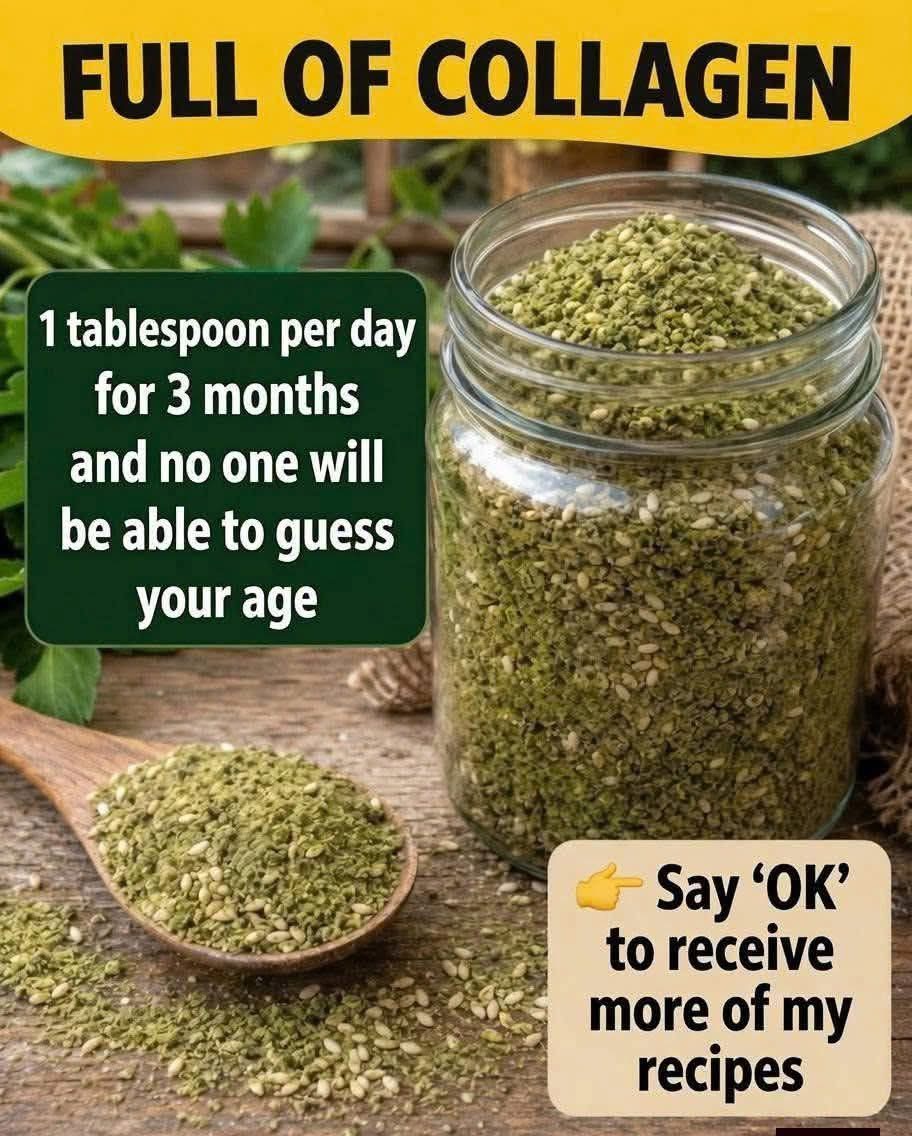
There is something wonderfully simple about keeping a jar of seeds in the kitchen. No complicated supplement schedule, no mysterious powder with twenty ingredients—just familiar foods that can be sprinkled over breakfast.
The viral idea of a “natural collagen” seed mixture has become especially popular for supporting skin, hair, bones, and joints.
There is one important detail, though: seeds do not actually contain collagen. Collagen is an animal protein.
What seeds can provide are protein, healthy fats, minerals, antioxidants, and other nutrients that the body uses as part of normal skin, hair, connective-tissue, and overall health.
So rather than calling this a miracle collagen replacement, think of it as a delicious nutrient-rich seed mix that is incredibly easy to add to everyday meals.
What Is in the Mix?
There are many versions of this recipe.
A balanced homemade version can combine sesame, pumpkin, sunflower, flax, and chia seeds.
Each brings something slightly different to the jar.
Ingredients
- ½ cup sesame seeds
- ½ cup pumpkin seeds
- ½ cup sunflower seeds
- ¼ cup chia seeds
- ¼ cup ground flaxseed
- 1 teaspoon ground cinnamon, optional
This makes enough for several weeks, depending on how frequently you use it.
You do not need expensive or unusual ingredients.
Plain, unsalted seeds work beautifully.
How to Make It
Start by checking the seeds and removing any unwanted pieces.
Place the sesame, pumpkin, and sunflower seeds in a dry skillet.
Toast them over low heat for about 3–5 minutes.
Stir constantly.
You are not trying to deeply brown them. A light toast is enough to bring out their nutty flavor.
Remove the skillet from the heat and let everything cool completely.
Place the cooled seeds in a food processor.
Pulse several times until you have a coarse mixture.
Do not process continuously or the seeds can eventually turn into seed butter.
Transfer the mixture to a clean, completely dry glass jar.
Add the chia seeds, ground flaxseed, and cinnamon.
Stir thoroughly.
That’s it.
Your homemade seed mix is ready.
How Much Should You Use?
A practical serving is approximately 1 tablespoon.
Rather than treating it like medicine that must be taken at exactly the same hour every day, simply incorporate it into meals when convenient.
Try sprinkling it over:
- Greek yogurt
- Oatmeal
- Smoothie bowls
- Salads
- Soup
- Cottage cheese
- Overnight oats
- Fruit bowls
- Homemade bread
You can also blend a tablespoon into a smoothie.
The mild, nutty flavor disappears surprisingly easily into breakfast.
Why Sesame Seeds?
Sesame seeds may be tiny, but nutritionally they have quite a résumé.
They provide unsaturated fats, plant protein, fiber, and minerals.
They are particularly known as a source of minerals such as calcium, magnesium, copper, and manganese, although the exact amounts depend on whether the seeds are hulled or unhulled.
Sesame also contains naturally occurring plant compounds known as lignans.
Adding sesame seeds to meals is therefore an easy way to increase the nutritional variety of your diet.
They aren’t going to erase wrinkles overnight, but they’re a perfectly respectable little seed without needing superpowers.
Pumpkin Seeds for Protein and Minerals
Pumpkin seeds are another useful ingredient.
They provide plant protein along with unsaturated fats and several minerals.
Magnesium is particularly noteworthy.
Magnesium participates in hundreds of processes throughout the body and contributes to normal muscle, nerve, and bone function.
Pumpkin seeds also contain zinc.
Zinc contributes to numerous biological processes, including normal immune function and wound healing.
Again, eating pumpkin seeds isn’t equivalent to taking a treatment for a deficiency.
They’re simply a nutritious food worth including in a varied diet.
Why Add Chia Seeds?
Chia seeds have become popular for good reason.
They’re a convenient source of fiber and contain plant-based omega-3 fatty acids, particularly alpha-linolenic acid (ALA).
They also provide protein and minerals.
One thing you’ll notice immediately is their ability to absorb liquid.
Put chia seeds into yogurt or milk and they’ll gradually develop a gel-like texture.
That’s exactly what makes chia pudding possible.
If you’re not accustomed to eating much fiber, start with a smaller amount of the seed mix and increase gradually while drinking adequate fluids.
Suddenly introducing large amounts of fiber can leave your stomach considerably less enthusiastic about your new healthy habit than you are.
Flaxseed and Healthy Fats
Flaxseed provides fiber, ALA omega-3 fats, and lignans.
Ground flaxseed is usually more practical than whole flaxseed because grinding allows the body to access more of its nutrients.
Whole flaxseeds sometimes travel through the digestive system relatively intact.
That is why this recipe uses ground flaxseed.
Once ground, however, flaxseed is more exposed to air and can become rancid more quickly.
Proper storage becomes important.
Sunflower Seeds
Sunflower seeds add another combination of healthy fats, protein, vitamins, and minerals.
They’re particularly well known for vitamin E.
Vitamin E functions as an antioxidant in the body and helps protect cells from oxidative damage.
That doesn’t mean eating sunflower seeds will reverse skin aging.
Skin aging is influenced by genetics, sunlight exposure, smoking, sleep, nutrition, hormones, and many other factors.
But getting adequate nutrients—including vitamin E—is certainly part of maintaining normal healthy skin.
Does This Mixture Contain Collagen?
No.
This is where many social-media posts become misleading.
Collagen is a structural protein naturally found in animals and humans.
Seeds don’t contain collagen.
However, your body produces its own collagen using amino acids and other nutrients.
Protein supplies amino acids, while vitamin C is particularly important for normal collagen formation.
That’s why overall diet matters more than hunting for one magical “collagen seed.”
A seed mix can contribute protein and minerals, while fruits and vegetables can supply vitamin C and other nutrients.
Together, they make much more nutritional sense.
Add Vitamin C to Your Breakfast
Here’s an easy trick.
If you’re having this seed mixture at breakfast, pair it with a vitamin-C-rich food.
Good choices include:
- Strawberries
- Kiwi
- Oranges
- Grapefruit
- Guava
- Papaya
For example, combine plain yogurt, strawberries, kiwi, and one tablespoon of the seed mix.
You get protein, fiber, healthy fats, minerals, and vitamin C in one simple bowl.
It also tastes considerably better than swallowing a spoonful of dry seeds!
Simple Skin-Support Breakfast Bowl
Ingredients
- ¾ cup plain Greek yogurt
- ½ cup strawberries
- ½ kiwi, sliced
- 1 tablespoon seed mix
- 1 teaspoon honey, optional
Preparation
Spoon the yogurt into a bowl.
Add the strawberries and kiwi.
Sprinkle one tablespoon of your homemade seed mixture over the top.
Drizzle with a little honey if desired.
Serve immediately.
It’s simple enough for a weekday breakfast and filling enough to keep you from staring longingly at the snack cupboard an hour later.
Smoothie Version
The mixture also works beautifully in smoothies.
Ingredients
- 1 banana
- ½ cup berries
- 1 tablespoon seed mix
- ¾ cup milk or an unsweetened alternative
- ½ cup plain yogurt
- Ice cubes
Blend everything until smooth.
If the smoothie becomes too thick because of the chia and flaxseed, simply add a little more liquid.
Drink it shortly after preparation.
Will It Make You Look Younger in Three Months?
No food can promise that.
Eating one tablespoon every day won’t suddenly make someone’s age impossible to guess.
Skin appearance depends on many factors, including sun exposure, genetics, smoking, hydration, hormones, sleep, skincare, and overall nutrition.
Seeds can contribute useful nutrients, but they aren’t an anti-aging treatment.
A better approach is to think long-term.
Regularly eating nutritious foods, getting adequate protein, eating plenty of colorful fruits and vegetables, exercising, sleeping well, avoiding smoking, and protecting your skin from excessive UV exposure can collectively support healthy aging.
Less exciting than a miracle spoonful?
Maybe.
Much more realistic?
Absolutely.
What About Hair?
Hair is largely made from a protein called keratin.
Adequate dietary protein is therefore important for normal hair growth.
Seeds can contribute some protein, zinc, iron, vitamin E, essential fatty acids, and other nutrients.
However, hair loss can have many causes.
Hormonal changes, genetics, thyroid problems, iron deficiency, certain medications, stress, illness, and nutritional deficiencies can all contribute.
If you’re experiencing sudden, severe, or unexplained hair loss, adding extra seeds shouldn’t replace investigating the cause.
And Joint Health?
Seeds provide nutrients that belong in a healthy diet, but they don’t rebuild damaged joints in a few weeks.
Joint health is influenced by body weight, physical activity, previous injuries, age, genetics, inflammatory conditions, and other factors.
Strength training and regular movement can be particularly important for maintaining muscles around the joints.
If joint pain is persistent, swollen, severe, or interfering with daily activities, getting the underlying problem evaluated is more useful than relying on a food mixture.
Storage
Seeds contain oils that can eventually become rancid.
Store your prepared mixture in a tightly sealed glass container.
A cool refrigerator is an excellent choice, especially because this recipe contains ground flaxseed.
Keep moisture out of the jar.
Always use a clean, dry spoon.
For best flavor, make relatively small batches rather than preparing enough to last six months.
If the mixture develops an unpleasant bitter, stale, or paint-like smell, discard it.
Fresh seeds should smell pleasantly nutty.
Important Allergy Note
Sesame allergy can be serious.
Anyone with a known sesame or seed allergy should obviously avoid the relevant ingredient.
You can customize the mixture by leaving out ingredients that don’t suit you.
People who have swallowing difficulties should also be cautious with dry chia seeds because chia absorbs significant amounts of liquid and expands.
Mixing chia into moist foods such as yogurt, oatmeal, or smoothies is generally more pleasant anyway.
Frequently Asked Questions
Is this really natural collagen?
No. Seeds do not contain collagen.
They provide nutrients that can contribute to a balanced diet that supports the body’s normal tissues.
Can I eat one tablespoon every day?
For most healthy adults, a tablespoon of mixed seeds can easily fit into a normal diet.
There’s no requirement to eat it daily, however.
Should I eat it in the morning?
Any time is fine.
There is no special anti-aging window in the morning.
Can I add it to coffee?
Technically yes, but the texture may be unusual because chia and flax absorb liquid.
Smoothies, yogurt, and oatmeal work much better.
Do I have to roast the seeds?
No.
You can use them raw.
Light roasting simply improves flavor.
Can I add nuts?
Absolutely.
Finely chopped almonds, walnuts, or hazelnuts can turn the recipe into an even more substantial breakfast topping.
Just remember that adding nuts changes the nutritional profile and increases calories.
How quickly will I see changes in my skin?
There is no reliable timeline because this mixture isn’t a skin treatment.
Healthy skin reflects your overall diet and lifestyle rather than one specific recipe.
Final Thoughts
This homemade seed mixture doesn’t contain collagen, and one tablespoon won’t turn back the clock.
But that’s no reason to dismiss it.
Sesame, pumpkin, sunflower, chia, and flax seeds offer plant protein, fiber, unsaturated fats, vitamin E, magnesium, zinc, and other useful nutrients.
Add the mixture to yogurt, oatmeal, salads, or smoothies and pair it with colorful fruits and vegetables.
It may not make everyone wonder whether you’ve discovered the fountain of youth—but it does make breakfast tastier, crunchier, and considerably more nutritious.
Sometimes the simplest recipes are the ones worth keeping.