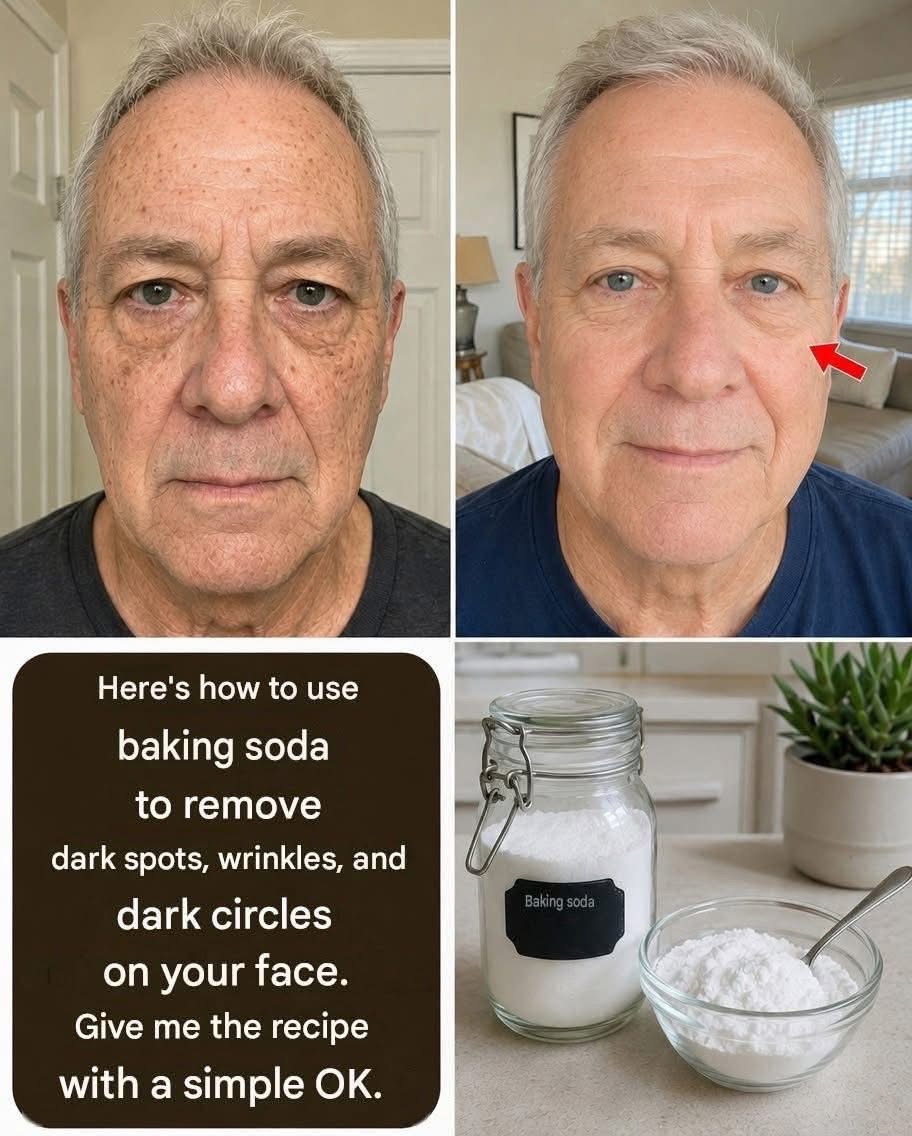
Baking soda is inexpensive, easy to find, and useful for everything from baking cakes to freshening a refrigerator. Because it absorbs oil and has a slightly gritty texture, it is also frequently used in homemade facial treatments.
However, facial skin is more delicate than a kitchen counter—and considerably less forgiving.
Baking soda may temporarily remove oil or make the skin feel smoother, but it cannot permanently erase dark spots, wrinkles, enlarged pores, or under-eye circles. Used too often, it may leave the face dry, irritated, and even more uneven-looking.
Here is what baking soda can realistically do, the risks to understand, and four gentler homemade recipes for caring for your skin.
What Is Baking Soda?
Baking soda is the common name for sodium bicarbonate, an alkaline powder traditionally used in cooking, household cleaning, and certain medical products.
The surface of healthy skin is naturally mildly acidic. This acidic environment supports the skin barrier, helps retain moisture, and contributes to the skin’s natural defenses. Research has found that repeated exposure to alkaline products may weaken barrier function and make skin more vulnerable to irritation.
This difference in pH is the main reason baking soda is not ideal for regular facial use.
Your face may feel unusually clean after applying it, but that “squeaky” feeling can mean that natural protective oils have been stripped away.
Possible Benefits of Baking Soda
Baking soda has a few properties that explain why it became popular in homemade beauty treatments.
Its fine particles can physically remove loose dead skin cells when rubbed across the skin.
It can also absorb some surface oil, which may briefly make oily areas appear less shiny.
Because it is inexpensive, fragrance-free, and usually already sitting in the cupboard, it may seem like an easy alternative to commercial exfoliating products.
These benefits are temporary, however.
Baking soda does not provide the moisturizers, barrier-supporting ingredients, carefully controlled acids, or active compounds commonly found in properly formulated skincare products.
Can It Remove Dark Spots?
Baking soda does not control melanin production, and there is no strong evidence that it can safely fade hyperpigmentation.
In fact, irritation can sometimes make dark patches more noticeable. This is particularly important for people whose skin develops post-inflammatory hyperpigmentation after pimples, burns, rashes, or harsh skincare treatments.
The American Academy of Dermatology notes that irritating products can cause or worsen dark spots. Daily sun protection is one of the most important steps for preventing existing discoloration from becoming darker.
Better-supported ingredients for uneven skin tone include vitamin C, azelaic acid, niacinamide, and certain retinoids.
These ingredients still require patience. Most genuine changes in pigmentation take weeks or months—not one evening in the kitchen.
Can Baking Soda Reduce Wrinkles?
Baking soda cannot rebuild lost collagen or permanently remove wrinkles.
Its exfoliating texture may temporarily make rough skin feel smoother, but this should not be confused with reversing skin aging.
Wrinkles develop through a combination of natural aging, repeated facial movements, genetics, collagen loss, and environmental exposure. Unprotected ultraviolet exposure can accelerate wrinkles, age spots, and changes in skin texture.
A gentle moisturizer may temporarily soften the appearance of fine lines by improving hydration.
For longer-term care, sunscreen, retinoids, and dermatologist-recommended treatments are more reliable than baking soda.
What About Dark Circles?
Dark circles can appear for many different reasons.
They may be connected to genetics, allergies, fatigue, thinning skin, pigmentation, shadows caused by facial structure, or visible blood vessels beneath the eyes.
Baking soda does not correct these underlying causes.
The under-eye area is also extremely delicate. Applying an alkaline paste close to the eyes may cause stinging, redness, dryness, or swelling.
Never apply baking soda directly beneath the eyes or on the eyelids.
The Main Risks
The biggest problem with baking soda is not that it is “toxic.” The problem is that it is too alkaline and potentially too abrasive for regular facial care.
Possible reactions include:
- Tightness and excessive dryness
- Burning or stinging
- Redness and peeling
- Increased sensitivity
- A damaged moisture barrier
- Worsening of existing dark marks
- Irritant contact dermatitis
Older and naturally dry skin may be especially vulnerable because it often produces less oil and recovers more slowly from harsh cleansing.
People with eczema, rosacea, psoriasis, active acne, broken skin, or a history of sensitive reactions should avoid homemade baking soda facial treatments.
It should also not be combined with retinol, benzoyl peroxide, salicylic acid, glycolic acid, scrubs, strong vitamin C products, or prescription acne treatments.
That would be a skincare traffic jam, and nobody invited the irritation.
How to Use It as Safely as Possible
There is no dermatologist-established homemade baking soda facial recipe proven to be safe for every skin type.
The safest choice is not to use it as a facial cleanser, mask, or exfoliator.
Anyone who still chooses to experiment should first test a tiny amount on a small area away from the eyes. The product should be removed immediately if it burns, stings, itches, or causes redness.
Never scrub baking soda into the skin.
Do not leave it on overnight.
Do not apply it to open pimples, cuts, sunburn, freshly shaved skin, or irritated areas.
After any accidental or intentional contact, rinse thoroughly with lukewarm water and apply a simple fragrance-free moisturizer.
The American Academy of Dermatology recommends testing new skincare products before applying them widely, particularly when the skin is sensitive or has reacted before.
For everyday care, choose one of the gentler alternatives below.
Recipe 1: Oatmeal and Yogurt Mask
This creamy mask is a mild alternative for skin that feels rough, dry, or tired.
Ingredients
- 1 tablespoon finely ground plain oats
- 1 tablespoon plain unsweetened yogurt
- 1 teaspoon water, if needed
Instructions
Mix the oats and yogurt in a clean bowl.
Allow the mixture to rest for two minutes so the oats soften.
Apply a thin layer to clean, damp skin without rubbing aggressively.
Leave it on for 8 to 10 minutes.
Rinse gently with lukewarm water and apply moisturizer.
Use plain yogurt without added sugar, flavors, fruit, or artificial coloring.
Recipe 2: Honey and Aloe Moisture Mask
This simple treatment is designed for hydration rather than exfoliation.
Ingredients
- 1 teaspoon pure honey
- 1 tablespoon plain aloe vera gel
Instructions
Combine the honey and aloe until smooth.
Apply a light layer to clean skin.
Avoid the eyelids and lash line.
Leave the mask on for approximately 10 minutes.
Rinse and finish with a gentle moisturizer.
Choose aloe gel without alcohol, fragrance, menthol, or strong coloring.
Do not use this recipe if you are allergic to honey, pollen, aloe, or bee-related products.
Recipe 3: Green Tea Eye Compress
A cool compress can temporarily refresh tired-looking under-eyes without exposing the area to abrasive ingredients.
Ingredients
- 2 green tea bags
- 1 cup hot water
Instructions
Steep the tea bags in hot water for three to five minutes.
Remove them and allow them to cool completely.
Place the tea bags in the refrigerator for about 15 minutes.
Lie down and place one closed tea bag over each closed eye.
Leave them in place for 5 to 10 minutes.
Remove them and gently pat the skin dry.
This may temporarily reduce the appearance of puffiness, but it will not permanently remove genetically caused dark circles.
Never use hot tea bags around the eyes.
Recipe 4: Cucumber and Aloe Cooling Mask
This light recipe is especially pleasant after a warm day.
Ingredients
- 2 tablespoons finely grated cucumber
- 1 tablespoon plain aloe vera gel
Instructions
Mix the cucumber and aloe in a clean bowl.
Apply a thin layer over the face, keeping it away from the eyes.
Let it sit for 10 minutes.
Rinse with cool or lukewarm water.
Pat the skin dry rather than rubbing it with a towel.
Prepare only enough for one application and discard leftovers. Homemade mixtures do not contain preservatives and can become contaminated when stored.
A Simple Routine for Dark Spots and Fine Lines
Complicated routines are not always better.
In the morning, wash with a gentle cleanser, apply moisturizer, and finish with broad-spectrum, water-resistant sunscreen rated SPF 30 or higher. Sunscreen helps prevent premature aging and can keep existing dark spots from becoming more noticeable.
At night, cleanse gently and moisturize.
People interested in retinol should introduce it gradually and follow the product directions. Retinoids may improve texture, fine lines, and uneven tone, but they can cause dryness and irritation, especially when introduced too quickly.
Persistent pigmentation, rapidly changing spots, severe irritation, or unexplained swelling should be evaluated by a dermatologist.
Final Thoughts
Baking soda may absorb oil and provide temporary physical exfoliation, but those small benefits come with a real risk of dryness and irritation.
It does not permanently eliminate dark spots, wrinkles, or under-eye circles.
For healthier-looking skin, gentle cleansing, regular moisturizing, daily sunscreen, and carefully chosen skincare ingredients are much better long-term options.
Homemade skincare does not need to be dramatic to feel enjoyable. A soft oatmeal mask, a cool green tea compress, or a little aloe can turn an ordinary evening into a comforting self-care moment—without making your face feel like it lost an argument with the pantry.