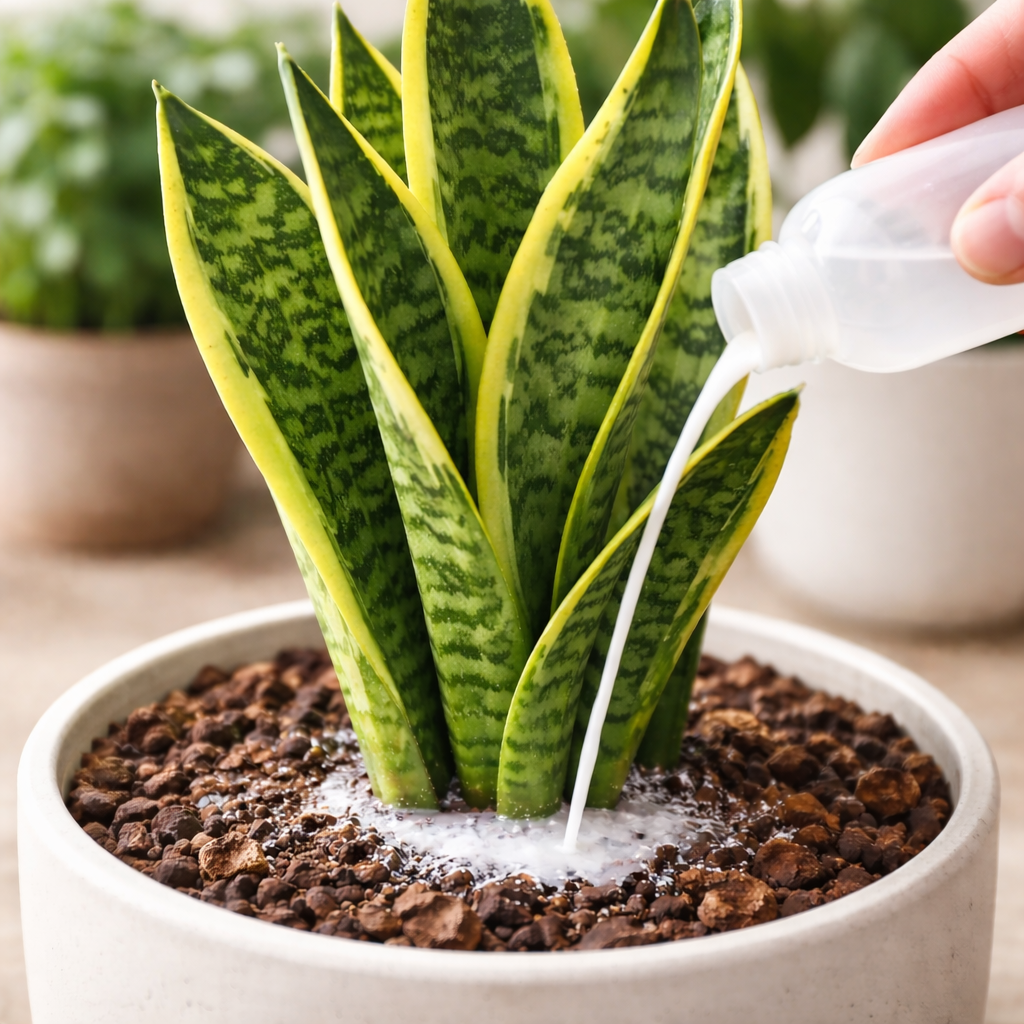
I almost gave up on this little snake plant.
It was still standing, sure.
But it had that tired, washed-out look that makes you think, “Yeah… this plant is judging me, and honestly it has a point.”
The leaves looked dull.
They did not feel as firm as before.
The whole plant seemed weak, like it had stopped trying to grow and was just surviving.
Before tossing it out, I tried one simple thing.
I poured a small amount of diluted rice water around the base.
That was the white liquid.
Not paint.
Not bleach.
Not some harsh chemical mix.
Just plain rice water, lightly diluted, used as part of a simple plant reset.
A little while later, the difference was noticeable.
The leaves looked cleaner.
They felt firmer.
And the whole snake plant looked more alive.
Now let’s be clear about one thing right away.
The white liquid was not magic.
The real improvement came from the full method, not just one ingredient.
But yes, the white liquid in this setup was diluted rice water, and it helped as part of the overall care routine.
What Is the White Liquid?
The white liquid was rice water mixed with regular water.
Rice water is the starchy water left after rinsing or soaking rice.
It has that cloudy white look, which is why it stands out so much in plant videos and photos.
For this method, it was not used full strength.
It was diluted so it would be much lighter and gentler around the base of the plant.
That part matters.
A little can be useful in some gardening routines.
Too much can turn into a messy experiment your plant never asked for.
The idea behind rice water is simple.
It contains a bit of starch and trace nutrients, and many plant lovers use it occasionally as a mild boost.
But it should never replace proper soil, correct light, good drainage, and smart watering.
That is where people go wrong.
They see one white liquid, one dramatic caption, and suddenly the plant is sitting in a swamp of kitchen leftovers.
Let’s not do that.
Why This Snake Plant Started Looking So Bad
Snake plants are tough.
That is why it is easy to assume they can handle anything.
But “tough” and “happy” are not the same thing.
A snake plant can survive bad care for a while.
Then one day it starts looking tired.
That is what happened here.
The leaves were not as bright.
They felt less firm.
The plant looked dull and slightly weak.
That usually points to a few common problems.
Too much water is the biggest one.
Snake plants hate wet soil that stays damp for too long.
Their roots need air.
If the soil stays soggy, the plant starts showing stress through the leaves.
Low light can also make a snake plant look lifeless.
It may still survive in a dim corner, but it will not look its best there.
Old compacted soil can make things worse too.
So can poor drainage.
And sometimes the plant just needs a small reset because the overall conditions have slowly become less ideal.
Why Diluted Rice Water Helped
The rice water was only one piece of the recovery.
It helped because it was used lightly and because the rest of the care improved at the same time.
That is the truth.
Rice water is often used by home gardeners as a mild plant tonic.
Since it is cloudy and white, it makes for a great “what is that?” moment in a post.
But the real value is not in the color.
It is in how gently it was used.
A small amount of diluted rice water around the base can be part of a simple refresh routine.
It is not something you pour constantly.
It is not something you drench the soil with every few days.
And it definitely is not a substitute for proper care.
Used once in a while, in moderation, it can fit into a home plant routine.
Used too often, it can create odor, buildup, or extra moisture issues.
That is why balance matters.
The Full Method That Made the Difference
The first thing I fixed was the watering.
This is where snake plants suffer the most.
I stopped watering on habit and started checking the soil first.
If it was still damp, I left it alone.
That alone helps more than people realize.
Then I looked at the light.
I moved the plant into a brighter spot with indirect light.
Not harsh direct sun.
Not a dark forgotten corner.
Just a cleaner, brighter place where the plant could actually recover.
After that, I checked the pot and the soil.
Snake plants need drainage.
If the water has nowhere to go, the roots stay stressed.
If the soil feels too dense or stays wet for too long, it is time to rethink the setup.
Then came the white liquid.
The diluted rice water was poured lightly around the base.
Not too much.
Not every day.
Just a small amount as part of the reset.
And then I let the plant rest.
That part is important.
Plants do not always need more interference.
Sometimes they need fewer mistakes.
The First Signs It Was Working
The change was not instant.
This was not one of those fake “ten minutes later” plant stories.
But after a bit of time, the snake plant started looking better.
The leaves seemed cleaner first.
Then they felt firmer.
Then the whole plant started looking more upright and healthy.
That is usually how a real plant recovery works.
Small signs first.
Then stronger overall growth later.
If a plant stops declining, that is already a big step.
Once it feels stable again, it can start rebuilding.
Mistakes People Make With White Liquid Plant Hacks
One mistake is using too much.
That happens all the time.
People see a little white liquid in a post and decide more must be better.
It is not.
Too much liquid around the base of a snake plant can do more harm than good.
Another mistake is using rice water too often.
This is not something to pour constantly.
It works best as an occasional part of a healthy routine, not as a daily ritual.
People also forget the basics.
If your snake plant is in soggy soil, low light, and a pot with no drainage, even the fanciest white liquid will not save it.
The setup matters more than the trick.
And of course, there is the classic mistake of trying five things at once.
Repotting, trimming, soaking, feeding, rotating, spraying, and pouring mystery liquids all in one weekend is not a rescue plan.
It is a stress test.
When the Plant Needs More Than Rice Water
Sometimes the problem is deeper.
If the roots are rotting, the base feels mushy, or the soil smells bad, the plant may need repotting.
Fresh, well-draining soil can make a huge difference.
A pot with drainage can too.
If the plant is severely overwatered, fixing the environment matters much more than adding any supplement.
That is why I always say the white liquid helped, but the method helped more.
The rice water supported the routine.
It did not replace it.
Final Thoughts
So yes, the white liquid was diluted rice water.
That is what it was.
A simple, cloudy white liquid used lightly around the base as part of a broader snake plant recovery method.
But the real reason this little plant bounced back was not because of one magic pour.
It was because the care improved.
The watering got smarter.
The light got better.
The setup became healthier.
And the plant finally had a chance to recover.
That is when the leaves started looking cleaner.
That is when they felt firmer.
That is when the whole snake plant looked alive again.
Sometimes a struggling plant does not need a dramatic rescue.
It just needs one small helpful step, a better environment, and a human who finally stops loving it to death.